
Todd Horwitz warns of a stock market crash of up to 60%: ‘A Black Christmas looms’
Stock market expert Todd Horwitz warns of a possible stock market crash of up to 60 percent. Concerns about AI and interest rates are putting pressure on Wall Street.
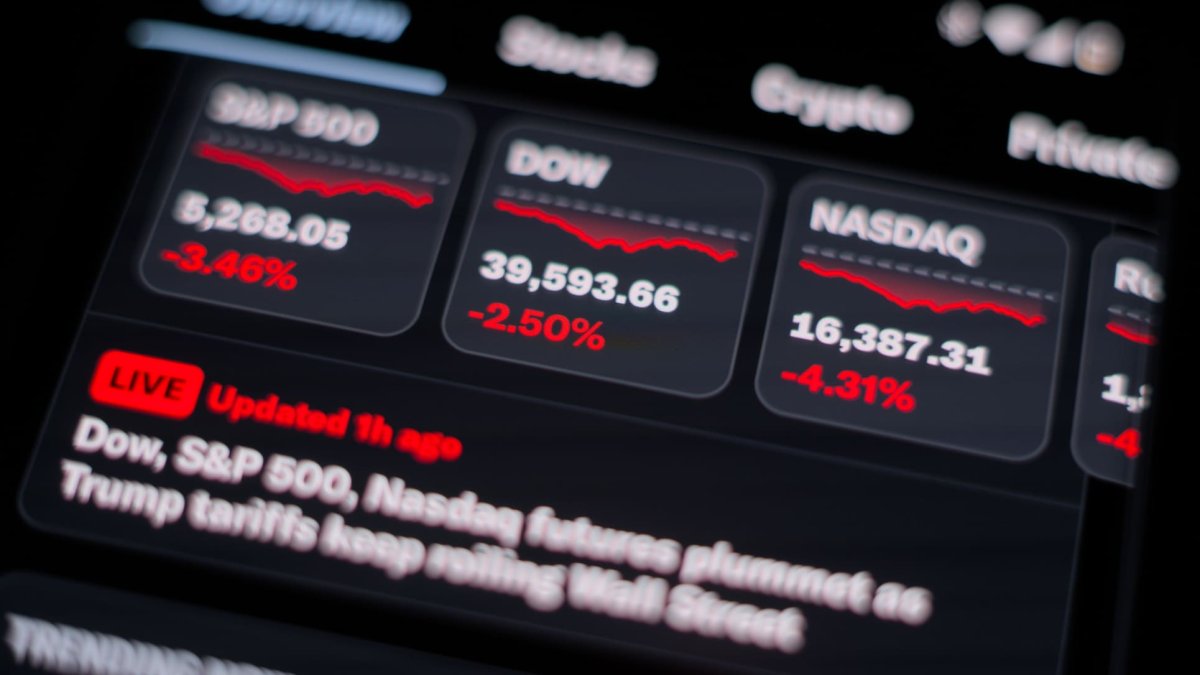
The U.S. stock market has just experienced one of its toughest weeks in years, but according to stock market expert Todd Horwitz, things could get much worse. The seasoned trader warns of a possible price drop of 40 to 60 percent and sees striking similarities with the financial crises of 2001 and 2008.
According to him, stocks are still overpriced, and the U.S. economy is at risk of getting into further trouble.
Todd Horwitz, founder of the trading platform BubbaTrading.com, is deeply concerned about the state of the U.S. economy. In an interview with financial journalist David Lin, he warns that the recent stock market losses may only be the beginning of a much larger downturn.
According to Horwitz, the current situation is reminiscent of a combination of the bursting of the dot-com bubble at the beginning of this century and the financial crisis of 2008. He anticipates a price drop of 40 to 60 percent and even suggests the possibility of a "black Christmas" for investors.
The trader points to several issues that, in his view, are converging at the same time. Despite recent declines, stocks are still highly valued, while the U.S. economy is grappling with high levels of debt, problems in the housing market, and persistently high interest rates.
He is particularly concerned about the high valuations. According to Horwitz, the stock market has been rising for years thanks to cheap money and low interest rates, but those conditions have now changed. As a result, the vulnerability of some companies and investments is becoming increasingly apparent.
Horwitz therefore expects that the selling pressure may continue for the time being. His forecast is decidedly pessimistic and does not mean that such a stock market crash will actually occur.
The warning is receiving extra attention now that the US stock market is under considerable pressure. On Friday, the broad S&P 500 index fell by 3.7 percent and closed at around 6,910 points. As a result, the index is now more than ten percent below its record high from early October.
Technology stocks, in particular, took a severe beating. The Nasdaq Composite fell by more than five percent on Friday and has now lost all of its price gains for 2026.
Nervousness among investors is also rising rapidly. The U.S. volatility index VIX, which indicates how much price fluctuation investors expect, rose to 35.89 points on Friday. That is the highest level in months.
Concerns mainly center on the enormous investments in artificial intelligence. Major tech companies are investing hundreds of billions of dollars in chips and data centers, while investors are increasingly questioning whether these expenditures will generate sufficient returns.
These doubts were further reinforced this week by the IPO of Anthropic, the company behind the chatbot Claude. The long-awaited IPO failed to restore confidence in the technology sector, and the stock lost significant value after its debut.
In addition to concerns about AI, Horwitz also sees the U.S. Federal Reserve’s interest rate policy as a major risk. The Federal Reserve is trying to get persistent inflation under control, which, in his view, could lead to further interest rate hikes.
He does not even rule out an increase of 0.5 percentage points. He also expects the yield on ten-year U.S. Treasury bonds to rise towards six percent.
That would be a major setback for the stock market. Higher interest rates make borrowing more expensive for businesses and consumers, while bonds become more attractive compared to stocks. Technology companies, in particular, whose valuations are highly dependent on future earnings, could suffer as a result.
Because of these risks, Horwitz has adopted a defensive stance. In the short term, he is betting on falling prices and, among other things, using options to protect himself against further stock market losses.
For investors who want to hold their shares for a longer period, he also sees such financial instruments as a possible way to mitigate risks. However, he warns that the current uncertainty may persist for the time being.