
Gold and silver continue to fall: lowest prices in over a year reached
The precious metals gold and silver continue their dramatic trend with once again deep red figures. Everything you need to know about the losses.
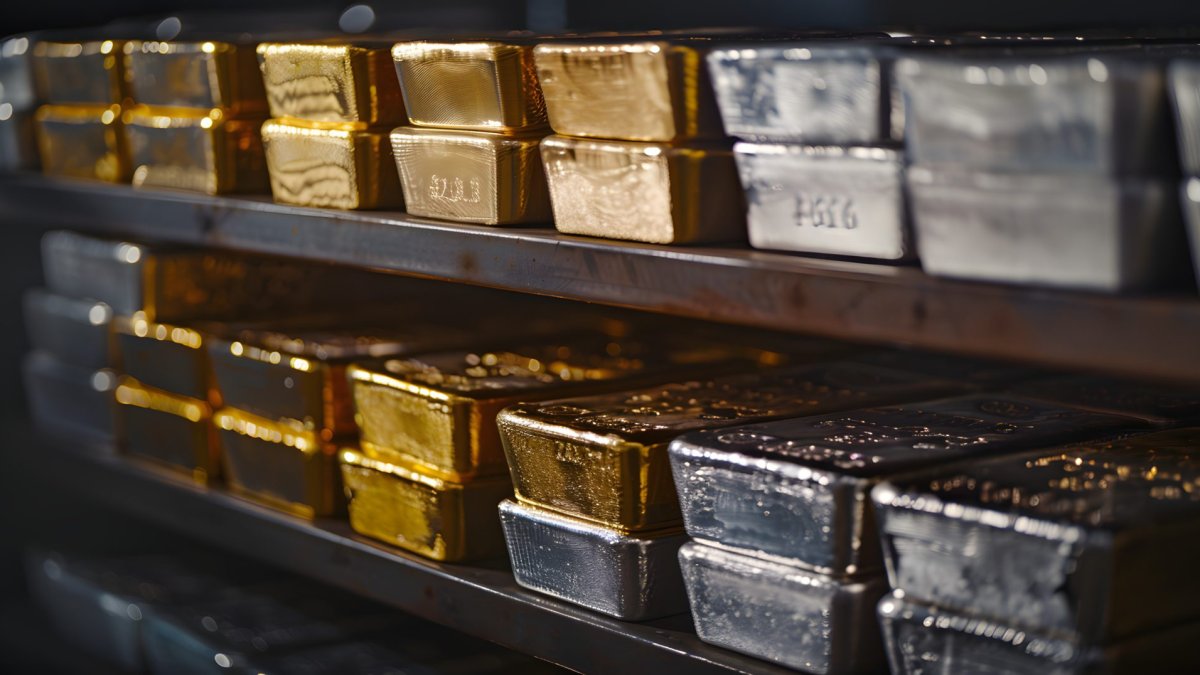
The sell-off in precious metals continues unabated today. Gold and silver have lost more than half a trillion dollars in market value. Both assets are now at their lowest levels in a very long time and are also heading for one of the worst years in their history.
Today, stock markets in Asia and the United States are in the green, but both gold and silver have fallen in value by several percentage points. Gold has lost 2.19 percent and silver has fallen by 3.12 percent.
The two precious metals, which together are worth over $29 trillion, have had a very painful week. Since Tuesday, almost every day has ended in the red, and the losses are mounting significantly: gold has already fallen by nearly 9 percent, and silver by over 14 percent.
Gold, by far the most valuable investment in the world, has fallen below $3,800 for the first time since September last year. For the first time since October last year, silver is priced below $46. Both prices are per troy ounce, the international unit of weight for precious metals, which is approximately 31.1 grams.
Gold has clearly lost the battle at the key level around $4,000. Since peaking at the end of January, it has already fallen by 32 percent and appears to be heading toward the next major support level of $3,400.
Silver has already lost 62 percent since the beginning of this year and is now at a critical level that must prevent things from getting worse. A historic peak was reached here in 2011, which was only broken again last year.
The main reason is that, following last week's heated inflation figures, the market is expecting a much tougher stance from the U.S. Federal Reserve. Investors no longer expect 0.50 percentage points of interest rate hikes through September 2027, but rather around 0.90 percentage points.
As a result, interest rates in the bond market surged last week. The U.S. ten-year yield rose above 5 percent again, having fallen sharply in the weeks prior due to concerns about the AI investment cycle.
It is mainly about the so-called real interest rate: what investors earn on a bond after deducting inflation. The market measures this through Treasury Inflation-Protected Securities (TIPS). These are U.S. government bonds whose value increases in line with inflation.
For gold and silver, this real interest rate is the real competitor, because they themselves do not pay interest. The more a safe government bond yields above inflation, the less attractive it becomes to hold gold or silver.
And that competitor is quickly becoming stronger. Last week, the US ten-year real interest rate rose from around 2.66 percent to approximately 2.87 percent. That is a jump of more than 0.2 percentage points in just a few trading days.
The increase is even greater over the entire year. At the end of last year, the real interest rate was around 1.9 percent, and at the beginning of October, it peaked at 2.92 percent. It has not been this high since the financial crisis of 2008, when the record of 3.15 percent was set.
The real interest rate is now rising because the nominal interest rate is increasing due to expected interest rate hikes, while inflation expectations remain unchanged. Investors therefore assume that a more stringent central bank will keep price rises in check.