
Gold and silver crash: nearly $400 billion evaporates in half an hour
Gold and silver plummet to their lowest levels in over a year. Nearly $400 billion has evaporated. Why are prices falling so sharply?
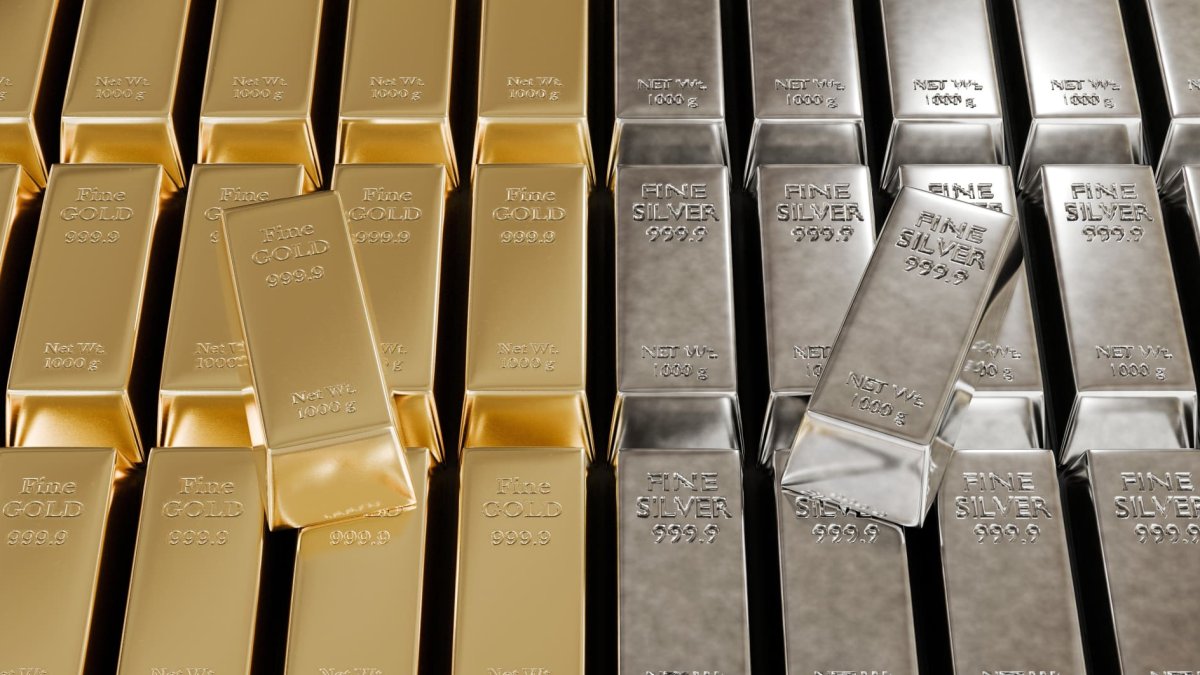
The prices of gold and silver plummeted on Monday morning. Both precious metals reached their lowest levels in over a year. During a sudden wave of selling, nearly $400 billion in market value reportedly evaporated in just thirty minutes. The main cause lies in the United States, where a strong dollar and the expectation of higher interest rates are deterring investors.
The price of gold fell to $3,840.52 per troy ounce on Monday morning, its lowest level since October 2025. That represented a drop of about one percent. U.S. gold futures for December delivery also lost ground, falling 1.1 percent to $3,843.60.
Later in the morning, the gold price had recovered somewhat. At around 10:28 a.m. Dutch time, the price was approximately $3,858, according to TradingView.
The decline is part of a broader downward trend. Last week, gold already lost about 4.6 percent. Since the record high of nearly $5,600 in early February, the price of gold has now fallen by more than thirty percent.
Silver took even harder hits. The price of silver fell by about three percent to $47.26 per troy ounce. The precious metal thus also reached its lowest level in about a year.
The losses are strikingly large. Calculations are circulating on social media that suggest gold lost around $343 billion in market value during a wave of selling. Silver would have lost another $44 billion. Together, that amounts to nearly $387 billion in just thirty minutes.
These are estimates of the decline in value, not actual money withdrawn. The exact amount of the loss has not been independently confirmed.
Do you want to take advantage of the low silver price? Get €20 worth of free silver at Bitpanda now and start investing.
The main cause lies with the U.S. central bank, the Federal Reserve (Fed). Investors are increasingly expecting the central bank to raise interest rates again in December to combat inflation.
According to figures from CME FedWatch, the market now estimates the probability of a 0.25 percentage point interest rate hike at 92 percent. The remaining eight percent expect a larger increase of 0.50 percentage points.
These expectations are driving up U.S. government bond yields and strengthening the dollar. The U.S. currency is trading near its highest level since April 2025.
That's bad news for precious metals. Gold and silver themselves do not yield any interest. When investors can achieve higher returns on government bonds, these metals become relatively less attractive. Moreover, gold and silver become more expensive for foreign buyers when the dollar strengthens.
Statements by Fed officials are also fueling the unrest. Jeff Schmid, President of the Federal Reserve Bank of Kansas City, warned on Sunday that U.S. inflation remains too high.
Tim Waterer, Chief Market Analyst at KCM Trade, expects gold to remain under pressure for the time being. In doing so, he points to the combination of a strong dollar, high bond yields and the expectation of further interest rate hikes.
There is another issue with silver. Global demand for the precious metal is expected to decline by five percent this year, according to research by Metals Focus for the Silver Institute.
The jewelry industry and solar panel manufacturers, in particular, are using less silver. Due to the sharp rise in prices, manufacturers are looking for ways to reduce their silver consumption.
Investors are also pulling back. Metals Focus expects listed silver products to lose a combined total of around 45 million troy ounces this year. Last year, 278 million troy ounces flowed into these products.
From a technical standpoint, the outlook also appears weak. The silver price has now fallen below the key $50 threshold. Analysts at TradingKey identify $45 as the next key support level. If that threshold is also breached, the price could fall further towards $40.
For a recovery, silver must first return above the $48 to $48.80 zone. After that, $50 represents a significant hurdle.
Meanwhile, investors are looking forward to a speech by Fed Chair Kevin Warsh later today. Furthermore, the minutes of the October interest rate meeting will be published on Wednesday. These could provide more clarity on the US Federal Reserve's next interest rate move.