
Peter Schiff warns of S&P 500 crash: ‘This looks bad’
Peter Schiff warns that the S&P 500 looks vulnerable as a small group of large stocks keeps the index close to record highs.
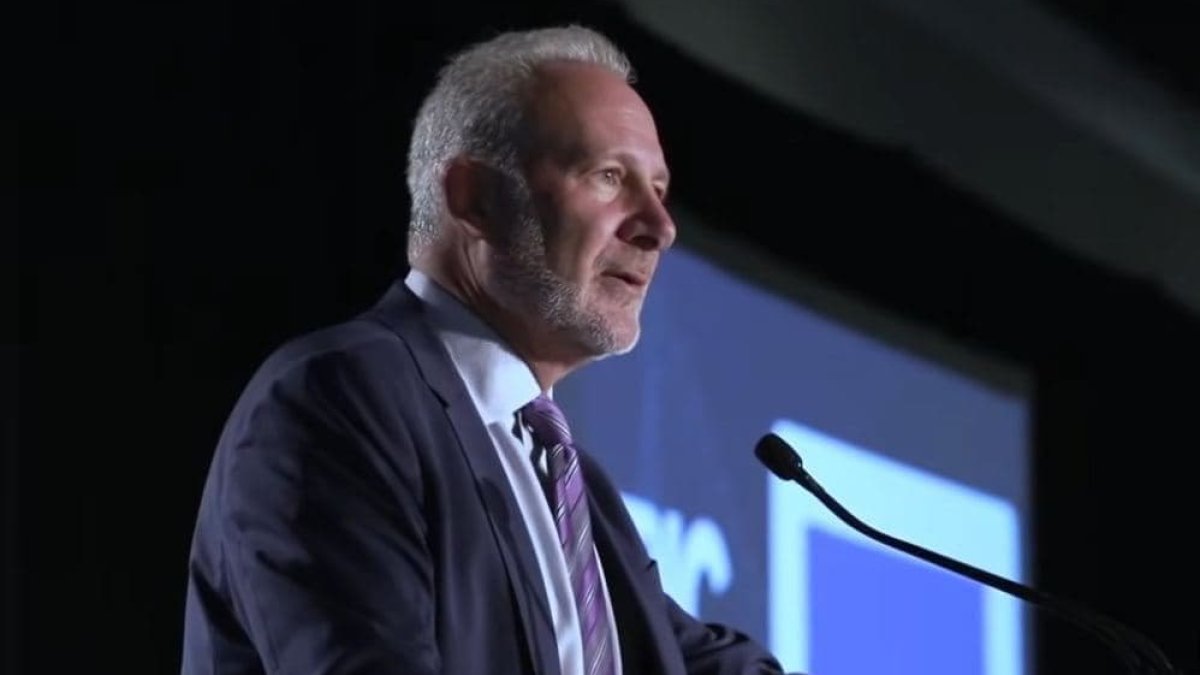
The S&P 500 is still close to a record, but according to economist Peter Schiff, the market looks a lot weaker below the surface. He warns that only a small group of large stocks keeps the index afloat.
According to Schiff, about 86 percent of companies in the S&P 500 are on average more than 21 percent below their own record levels. It is precisely this combination of a strong index and weak underlying stocks that he sees as a possible warning signal.
Schiff mainly points to the market breadth. This shows how many shares actually participate in a rise in the stock market.
According to him, that width is remarkably weak at the moment. Much of the profit in the S&P 500 comes from a relatively small group of very large technology companies, including Nvidia and Apple.
As a result, the index remains close to a record, while many other stocks have already fallen sharply.
Schiff states that 430 companies from the S&P 500 trade more than 21 percent below their own highest level on average. For him, this is a sign that the rally is being carried much less broadly than the status of the index suggests.
The economist draws a comparison with two previous periods in which the market also became heavily dependent on a small group of shares.
According to him, a similar situation was visible in January 1973 and during the dot-com bubble around 1999 and 2000. In both cases, severe stock market declines followed, with the S&P 500 eventually losing almost half of its value.
This does not automatically mean that the same decline will follow again. Historical agreements can warn of risks, but do not predict when or how much the stock market will fall.
Other signals also make investors more cautious. Fewer stocks are trading above their average price of the past 50 and 200 days, while many companies are well below recent peaks.
Added to this is rising US interest rates. Higher bond yields make government bonds more attractive and at the same time put pressure on equity valuations, especially in companies that are priced expensively.
Schiff has long warned of high valuations, inflation and rising US government debt. He himself prefers gold and silver as protection against financial turmoil.
Not every analyst shares his gloomy conclusion. Some market followers point out that the current S&P 500 is much more dominated by some highly profitable technology companies than during previous stock market cycles. As a result, weak market width does not automatically mean that a crash is close.