
Palantir CEO: Europe ‘misses the boat’ with AI, just like before with the internet
Palantir CEO Louis Mosley sees Europe making the same mistake with AI as with the internet. Nevertheless, Palantir itself also has an interest in it.
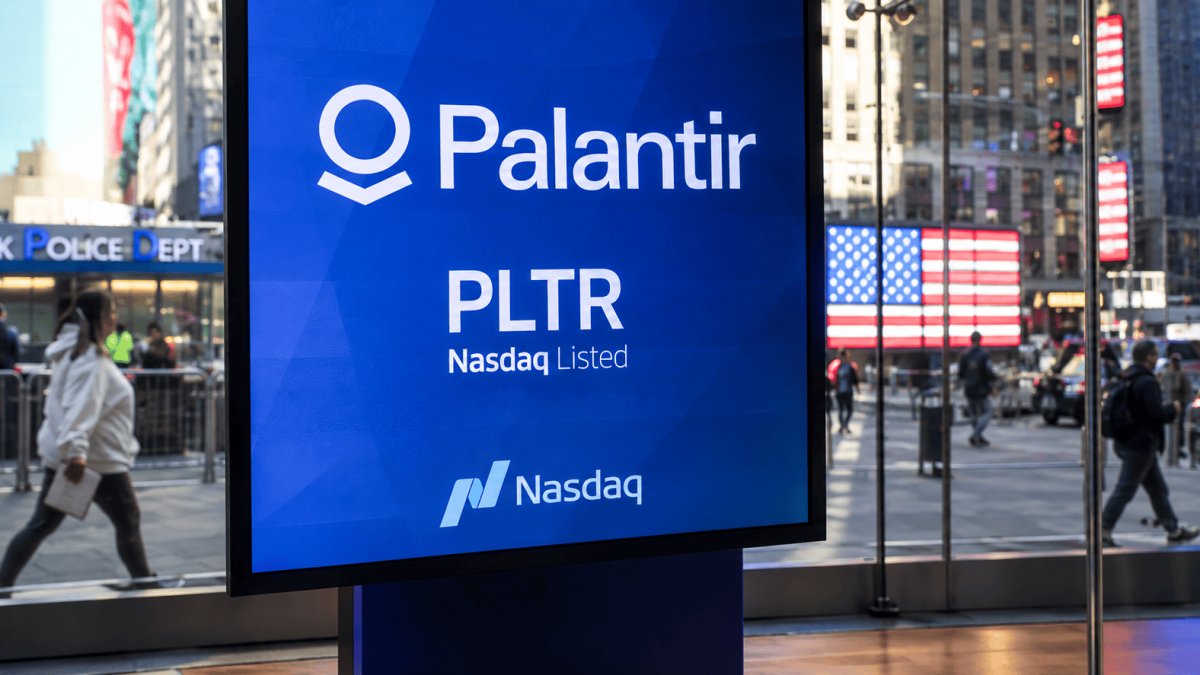
Europe is making the same mistake with artificial intelligence (AI) as before with the internet, warns the European CEO of Palantir in a new interview. American companies are fully integrating AI, while European companies prefer to wait and see. This could cost the region growth again, although the American software company Palantir itself also has every interest in Europe moving faster.
Louis Mosley leads Palantir Technologies (PLTR) for the UK and Europe. He compares AI to the internet. The United States then built a row of companies that now form the backbone of the digital economy. Europe “missed the boat,” he told CoinDesk.
That gap can be seen in the figures. Twenty years ago, Europe and the US were roughly equal in wealth per capita and in the size of their largest companies. Since then, America has continued to grow, while Europe has barely made any progress.
Only chip machine maker ASML grew into a true European tech champion, according to Mosley. “It is by far the largest European company. That is, it tells you that the value is in tech.”
According to Mosley, there is even more at stake with AI. Nevertheless, European companies look the cat out of the tree, with the attitude: "This is new, that means it can be risky. I'll take a look at it.”
The difference with America can also be seen in the money. According to Stanford University's AI Index, about $286 billion in AI investments went to the US last year, compared to about $21 billion across Europe. That's almost fourteen times as much.
In addition, Microsoft, Alphabet, Amazon and Meta want to invest around $725 billion together this year, mainly in data centers and chips. No European tech company can match that.
Mario Draghi, former President of the European Central Bank (ECB), already pointed out the causes in 2024. European companies pay two to three times as much for power as American ones, while AI data centers are huge power guzzlers. The capital market is also fragmented across 27 countries, making it more difficult for young tech companies to get growth money.
In addition, regulations play a role. The European AI Act, which imposes strict requirements on high-risk AI applications, has been in force since 2024. Brussels decided this year to postpone the toughest rules until the end of 2027.
Washington chooses the reverse route. President Donald Trump's administration scrapped his predecessor Joe Biden's AI rules last year and wants to get in the way of the industry as little as possible.
For Palantir, this European backlog is an opportunity to sell. The company builds an ontology, a digital map that connects all the data of an organization. On this basis, governments and companies can immediately release language models and AI agents, programs that independently perform tasks in healthcare, industry or defence.
Since its IPO in 2020, Palantir has become one of the most popular AI stocks among private investors. It is listed in the S&P 500, the index of the 500 largest US stock market companies.
Mosley calls the company “the purest gauge on public markets for the pace of AI adoption in an economy.” In doing so, he also praises his own product, because a wait-and-see Europe is an open market for ready-made AI platforms.
The headwind for Palantir in Europe is mainly political. The company provided surveillance software to the US immigration service ICE under President Donald Trump. The Israeli army (IDF) was given systems for target selection. Campaigners therefore oppose the use of Palantir in British healthcare (NHS).
According to Mosley, the resistance revolves around two topics. “The issues that really make those people fierce are Gaza and Trump. Palantir has contracts in America for the Trump administration and has contracts in Israel with the IDF and we have a contract with the NHS.”
He calls that a distraction. He wonders if a politician would make a voter wait longer for a new hip due to foreign contracts from a supplier.
With around 1,000 customers, Mosley sees Palantir still at the beginning. According to him, the biggest risk is that politicians do not explain what AI brings to people. “You all make the same mistakes again,” he said. “In the end, I want to believe that the good wins out over the bad.”