
Netanyahu investigates crypto as an escape from international sanctions
Netanyahu is investigating how Israel can use crypto to circumvent international sanctions. The plan leads to fierce criticism from the central bank and opposition.
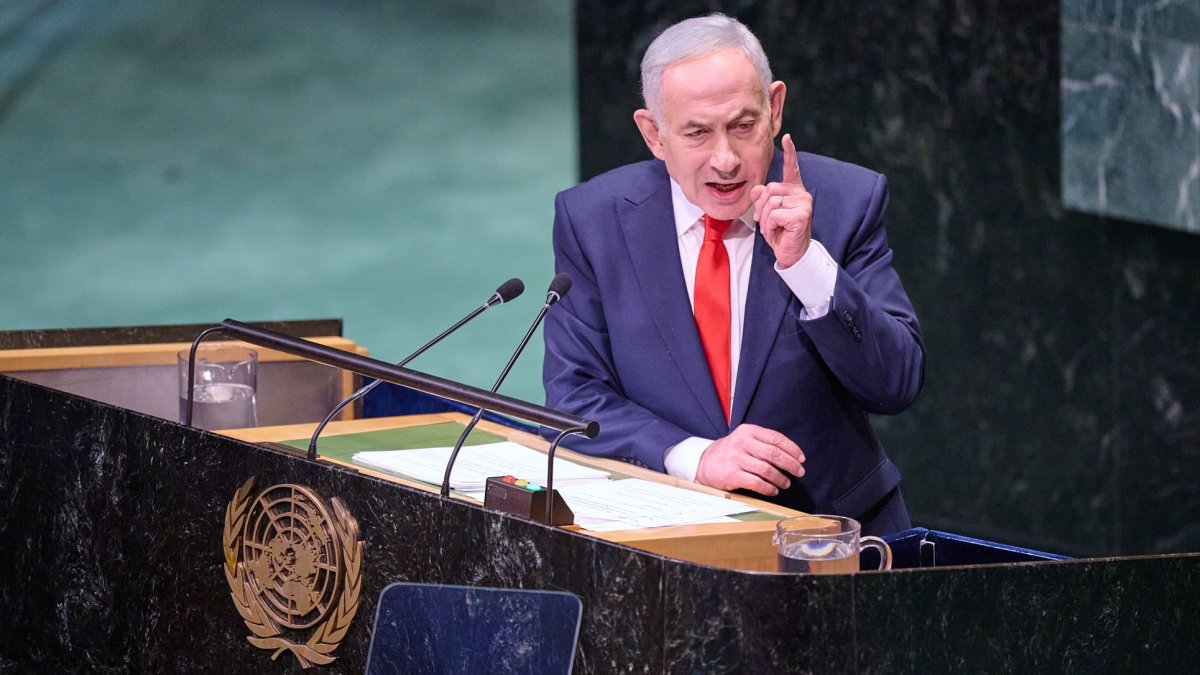
Israeli Prime Minister Benjamin Netanyahu is investigating whether his country can use crypto coins to circumvent possible international sanctions. He fears that foreign banks are restricting cooperation with Israel, making international payments more difficult.
The plan leads to strong criticism from the opposition and the Israeli central bank, just before the elections on Tuesday 27 October.
In an interview with Israeli Channel 10, Netanyahu acknowledged that he is concerned about possible financial sanctions against his country.
“We need to prepare ways to circumvent banking sanctions through an alternative economic system,” the prime minister said.
In doing so, he referred to digital currencies that may be able to circumvent international payment restrictions. When the interviewer asked if he meant crypto coins, Netanyahu confirmed that. According to the Prime Minister, he has since ordered the development of a plan for the use of blockchain technology.
Cryptocurrencies allow parties to transfer value directly over a digital network, without the need for a traditional bank. This makes the technology interesting for countries that fear being cut off from international payment systems. Netanyahu has not explained exactly how Israel would like to use crypto.
The rulings follow increasing international pressure around Israeli settlements in the occupied West Bank.
Last month, twelve countries, led by the United Kingdom, announced joint measures against these settlements. The restrictions also target individuals and companies involved in its financing and construction.
Concerns in Israel are mainly about possible sanctions against banks. If foreign banks terminate cooperation with Israeli institutions, this could seriously disrupt international payments and trade.
According to Yair Avidan, former supervisor at the Bank of Israel, the loss of international banking connections can severely limit Israel's ability to do business worldwide.
Netanyahu's crypto plan faces strong criticism. The Bank of Israel warned on Saturday that cryptocurrencies offer no solution to circumvent international financial sanctions.
According to the central bank, the government should focus on preventing sanctions and maintaining good economic relations with key trading partners.
Netanyahu said he takes the criticism seriously, but stressed that he ultimately decides for himself what measures he believes are necessary.
There is also fierce criticism from the opposition. Opposition leader Yair Lapid compares the proposal with the approach of countries such as Iran, Russia and Venezuela, which have been largely cut off from the global financial system by international sanctions.
According to Lapid, Israel is in danger of heading in the same direction, with major consequences for companies, banks and the economy.
Former Finance Minister Avigdor Liberman finds it particularly worrying that Netanyahu is openly taking economic isolation into account. According to him, the government should focus on preventing sanctions, rather than finding ways to circumvent them.
In the event of a change of power, Liberman promises to restore international relations and remove the threat of sanctions.
The discussion takes place just before the Israeli elections on Tuesday 27 October. Among other things, Netanyahu is opposed by former General Gadi Eisenkot.
Netanyahu made another striking prediction during the same interview. According to him, Israel must prepare for the disappearance of US military support. The prime minister warned that the tens of billions of dollars that Israel has received from Washington in recent years cannot be taken for granted.
According to Netanyahu, US politics have changed and financial support will eventually stop. He did not mention a specific date for this.
Israel currently receives about $3.8 billion in U.S. military aid annually under a multi-year agreement. That agreement runs until 2028. In addition, during the war that began after Hamas' attack on October 7, 2023, Washington provided at least $15 billion in additional military aid.
Netanyahu stressed that Israel can cooperate with President Donald Trump for another two years, but must take into account a less favorable relationship with Washington after his departure. That is why he wants Israel to make more money available for its own defence in the future.
According to the Prime Minister, economic growth in recent years has enabled higher military spending. Whereas defence spending was previously limited to stimulate economic growth, he believes that the economy should contribute more to national security.