
Klaas Knot about AI bubble: this can cause a financial crisis
Klaas Knot warns of risks with AI shares and European debts, but does not see a financial crisis arising for the time being.
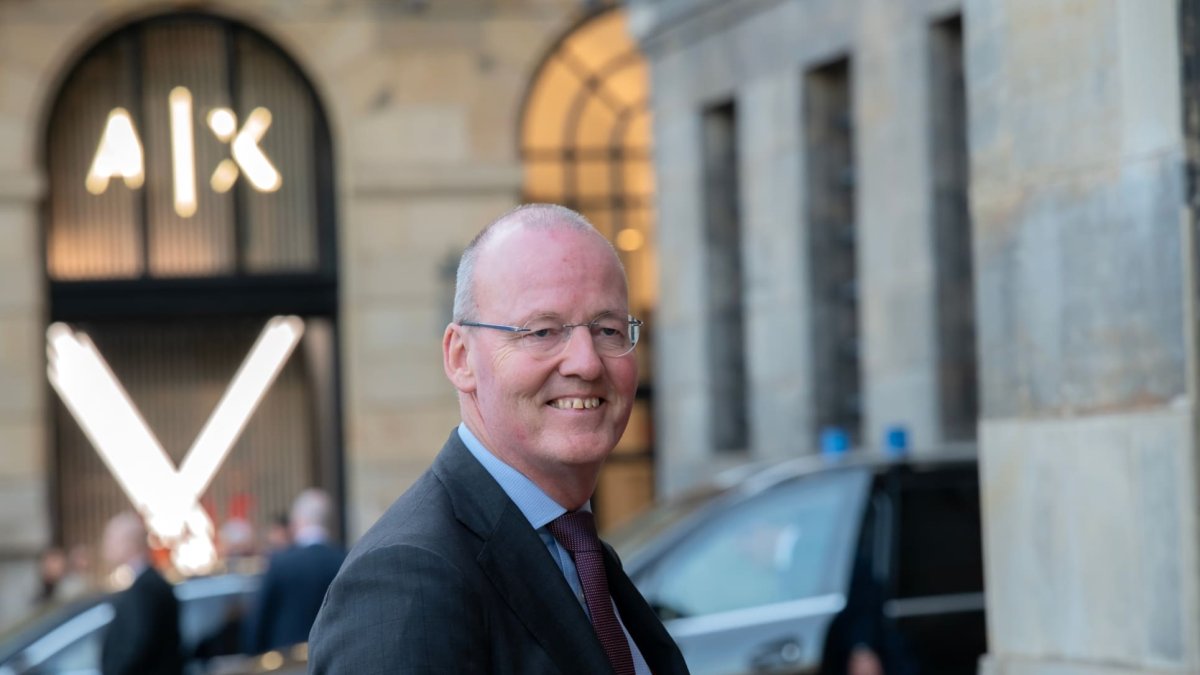
The sharp price declines in the stock markets have reignited concerns about a possible AI bubble. Klaas Knot, former president of De Nederlandsche Bank (DNB), also sees risks in the high valuations of technology companies.
Nevertheless, he does not expect a financial crisis for the time being. In an interview with the Financial Times, the candidate for the presidency of the European Central Bank (ECB) explains where the real danger lies.
European stock markets were hit hard last week. Chip companies in particular were under pressure, partly due to concerns that the Democratic election gains in the US midterm elections could slow down the growth of the AI sector.
According to Knot, the high valuations of companies engaged in artificial intelligence are a vulnerability. Nevertheless, a firm stock market correction does not automatically mean that the financial system is at risk.
According to him, it only becomes really problematic when investors have made large investments with borrowed money. If the shares then fall sharply, they may struggle to repay their debts. As a result, losses can spread to other parts of the financial system.
Knot emphasizes that he currently has no indications that this is happening on a large scale. Moreover, according to him, the traditional banking sector is significantly better off than during the global financial crisis of 2008.
Banks have solid capital buffers and make a relatively large profit. In recent years, they have absorbed financial shocks rather than amplified them.
Knot is more concerned about financial institutions outside of traditional banking. He mentions private lenders and hedge funds active in major financing markets, including the government bond market.
Problems with these parties can cause ECB interest rate changes to have a less effective effect on the European economy. According to Knot, this risk requires close monitoring.
In addition to the unrest surrounding AI shares, Knot is paying special attention to the public finances of European countries. France, in particular, is in a vulnerable position.
French public debt continues to rise, while economic growth is weak. At the same time, rising market interest rates mean that the government is spending more and more money on financing its debts. The approaching presidential elections are increasing political uncertainty.
Nevertheless, Knot does not believe that the ECB should simply intervene when the French bond market comes under pressure. As long as France can continue to borrow money independently, the responsibility for sound public finances lies with the French government.
That changes when financial turmoil spreads and the ECB's interest rate policy no longer functions well throughout the eurozone.
The central bank already has several tools at its disposal to tackle such problems. Knot does not rule out that new measures will be developed if existing resources prove insufficient.
In doing so, he does impose a clear condition. Countries need to address their own financial problems. The ECB can provide temporary protection against disruptive market movements, but may not take over structural budgetary problems.
Knot is one of the candidates to succeed Christine Lagarde as President of the ECB. His main competitor is Pablo Hernández de Cos, former president of the Spanish central bank.
The Dutchman is known as a proponent of a strict interest rate policy to combat inflation. He himself finds that image too simple. According to Knot, central banks should adapt their policies to economic conditions, instead of sticking to a certain conviction.
For the time being, according to him, the inflation trend calls for caution. The war with Iran has pushed up energy prices, causing inflation in the eurozone to rise again.
Under the current circumstances, Knot does not expect any major additional interest rate increases. That could change if the conflict in the Middle East escalates further and energy prices rise sharply again.
Hernández de Cos has also warned of inflation risks due to high energy prices. European leaders may be able to decide who will be the new ECB President by the end of November. A decision in December also remains possible. At least sixteen of the 21 euro countries must agree to the appointment.