
Iranian drones over Bahrain, US sends third aircraft carrier
Iran is once again carrying out drone attacks on Bahrain. Tensions are also rising around the Strait of Hormuz, while the price of oil remains high.
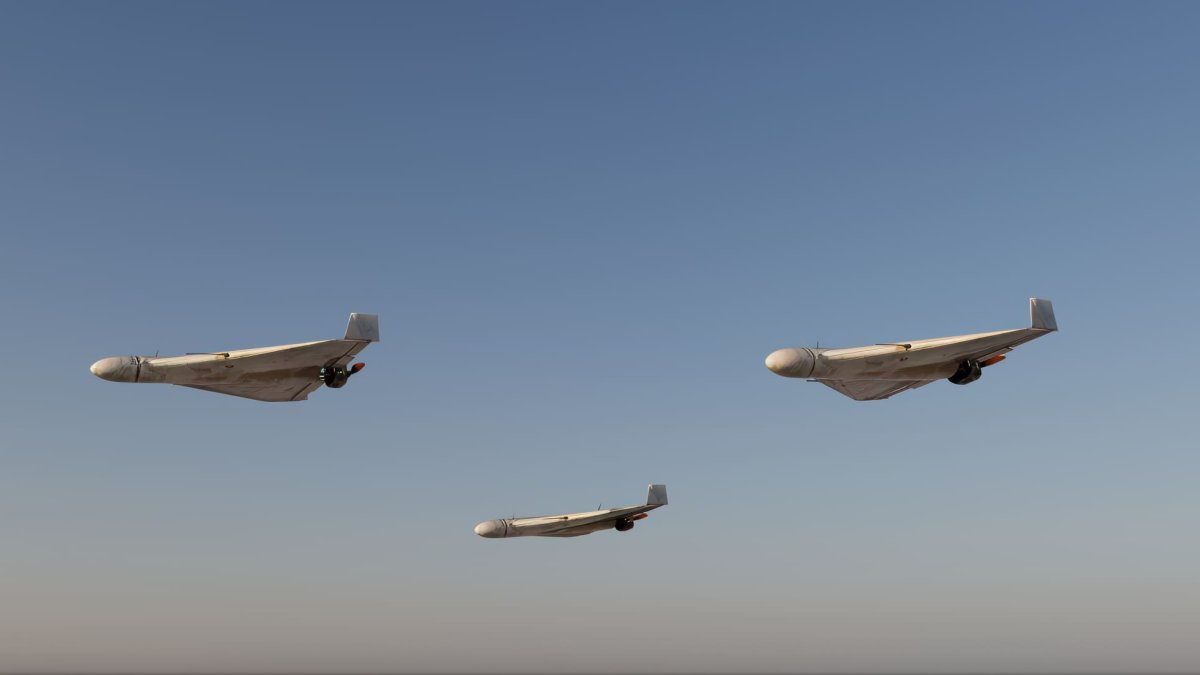
Iran has once again carried out an attack on Bahrain, a key ally of the United States in the Middle East.
According to the Iranian Revolutionary Guard, six drones were fired on Sunday at a military base where American systems are stationed. It was already the second attack in three days.
Meanwhile, tensions are rising in the Strait of Hormuz, where several oil tankers are reported to have been hit by sea mines.
On Sunday, the Iranian Revolutionary Guard announced that it had deployed six drones against a U.S. radar system at the Al-Riffa military base in Bahrain. The attack was reportedly in retaliation for previous U.S. attacks on Iranian targets.
According to Iran, the target was hit, but Bahrain disputes this. The country reports that its air defenses intercepted several Iranian drones before they could reach their target. There is no independent confirmation of damage to the base.
This is the second time in three days that Iran has carried out an attack on Bahrain. On Friday, U.S. military personnel intercepted two Iranian drones that were on their way to a radar system in the country. According to the U.S. military, there were no casualties and no damage.
Bahrain is home to a major U.S. naval base and thus plays a significant role in the U.S. military presence in the Persian Gulf. The new attacks come after a period of relative calm, during which the country has hardly been directly attacked since September.
Tensions are also continuing to rise around the Strait of Hormuz. Iran reported on Sunday that two oil tankers had struck sea mines while attempting to use an unauthorized route through the strait.
According to Iranian state media, the vessels included a huge oil tanker with more than two million barrels of crude oil on board. The ship is said to have caught fire and sunk after an explosion.
The reports have not been independently confirmed. Iran has not disclosed the names of the ships. However, the British Maritime Security Organization UKMTO did report an attack on a tanker in the Persian Gulf. According to the information available, the crew was safe, but there was still uncertainty regarding the damage.
The Strait of Hormuz is one of the world's most important oil trade routes. Normally, about one-fifth of the world's oil trade passes through this narrow strait between Iran and Oman.
Since the outbreak of war between Iran and the United States, shipping in the area has been under severe pressure. Iran is restricting the passage of ships, while the U.S. Navy is trying to escort oil tankers safely through the strait.
The new attacks are also causing uncertainty in the oil market. On Monday morning, the price of Brent crude oil continued to fluctuate around $96 per barrel.
Prices had actually fallen over the past two weeks, but the renewed tensions in the Middle East are keeping investors cautious.
The situation around the Strait of Hormuz is particularly important. If oil tankers cannot safely use the strait, it could disrupt the global oil supply. This could push oil prices even higher and fuel inflation.
A higher oil price can also have consequences for the financial markets. When energy becomes more expensive, inflation can remain high for longer. As a result, central banks have less room to lower interest rates, which is generally unfavorable for risky investments such as stocks and Bitcoin (BTC).
Meanwhile, the United States is reinforcing its military presence in the region. According to US media, a third aircraft carrier and its accompanying warships have been dispatched to the Middle East.
This concerns the USS Theodore Roosevelt, which is joining two other U.S. aircraft carriers. This gives Washington an exceptionally large military presence in the region.
President Donald Trump has indicated that he does not intend to launch any new large-scale attacks on Iran for the time being, as long as there are no further provocations. At the same time, he explicitly keeps military intervention as an option.
Iran also indicates that a diplomatic solution is still possible. Parliament Speaker Mohammad Bagher Ghalibaf stated on Sunday that the path to ending the conflict remains open if Washington is willing to accept Iran's terms.
However, the countries remain divided over these conditions. For example, Iran does not want to negotiate restrictions on its nuclear enrichment program for the time being.
This means that the situation remains tense. While both countries say they are open to a solution, the military attacks and the problems surrounding oil shipments will continue for the time being.