
Gold and silver prices are skyrocketing, but why exactly?
The prices of both gold and silver are showing a nice increase today, and that’s mainly due to oil and the dollar. What’s going on here?
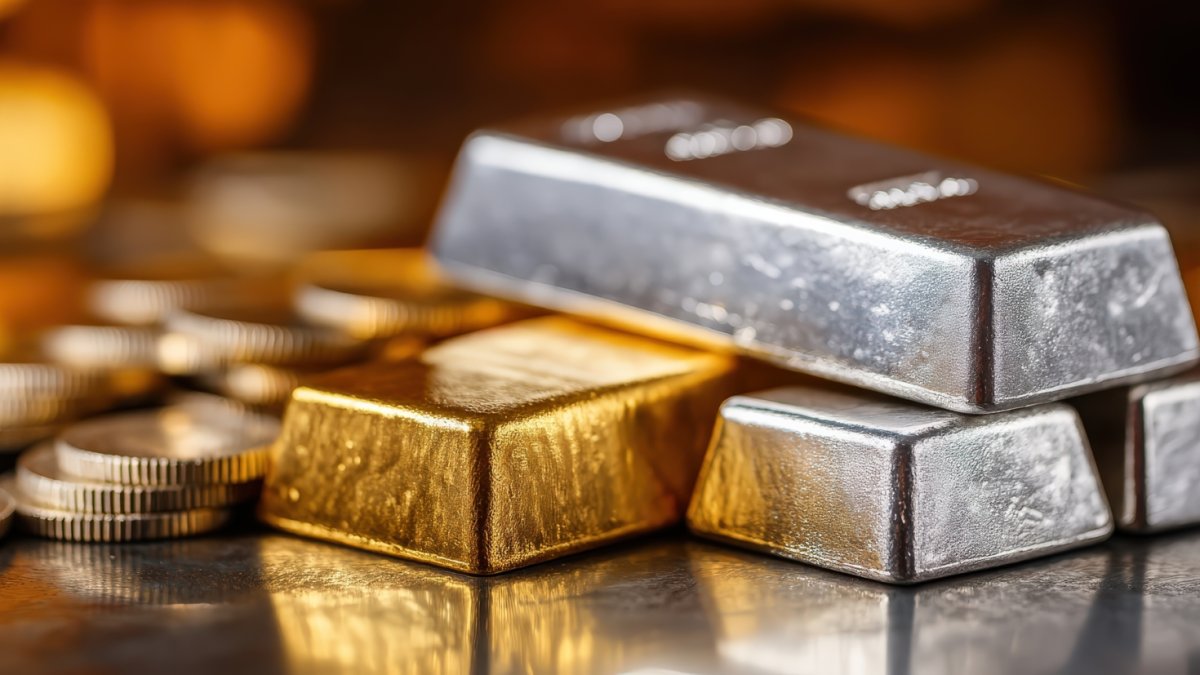
Oil prices are falling sharply, and as a result, the market no longer believes that the U.S. Federal Reserve will raise interest rates next month. Stocks, Bitcoin (BTC), and precious metals are all reaping the benefits of this. Gold and silver have seen a significant jump, and gold in particular has posted a major gain on the charts.
For the umpteenth time, Iran and the United States appear to be heading toward a (temporary) deal. As a result, oil prices dropped by as much as 6 percent yesterday.
Cheaper oil means less inflationary pressure. And without rising inflation, the central bank has less reason to raise interest rates.
At the next meeting in September, such a move is no longer expected. The yield on two-year bonds—which is most closely linked to the central bank’s policy—has fallen back below the level seen before this week’s interest rate meeting.
At that meeting, rates were kept unchanged, but three of the twelve policymakers had already voted in favor of a hike.
This shift is favorable for gold and silver, as neither yields a return on its own. The higher the interest rate on a government bond, the greater the return you forgo by holding precious metals. If that interest rate falls, that disadvantage shrinks.
What matters for gold isn’t the nominal interest rate, but what remains of it after inflation. That so-called real interest rate falls as soon as the market prices in a less restrictive monetary policy—and that is exactly what is happening now.
It works exactly the same way for Bitcoin. Stocks benefit primarily from lower borrowing costs for investments and because future profits are worth more when interest rates are lower.
On top of that, there’s the weak dollar. Gold and silver are priced in dollars, so if the dollar loses value, both metals become cheaper for buyers outside the United States. That boosts demand.
Gold rose 1.70 percent today, and silver rose 2.69 percent. Bitcoin and global stock markets are also in the green.
Something interesting is happening in the gold chart as well. The price has broken out of a descending triangle—a pattern in which the peaks get lower while the base remains flat. Ever since the peak in late January, the highs have been getting lower and lower, but that could now be changing.
The decline in oil prices began during the last weekend of July, when an unofficial ceasefire took effect. In the two weeks prior, oil had risen by more than 43 percent after the previously agreed-upon framework agreement had collapsed.
New attacks on both sides—and especially the closure of the Strait of Hormuz—then triggered a second major surge in the energy markets.
Last weekend, U.S. President Donald Trump said he had halted the attacks on Iran because an agreement to end the war was reportedly in the works.
Yesterday, Finance Minister Scott Bessent said that the agreement on reopening the Strait of Hormuz could be finalized as early as today.
Here is what is currently expected:
- The agreement will be in effect for 60 days and can be extended thereafter
- Ships entering the Gulf will take a northern route through Iranian waters
- Ships sailing out of the Gulf will take a southern route past Oman
- No tolls or transit fees will be charged during those 60 days
- The sea mines in the central channel must be removed within 30 days
- After that, the central channel will open to traffic in both directions, under a permanent agreement that Iran and Oman have yet to negotiate
For Tehran, the benefit lies in that second point. It will gain control over incoming shipping traffic, something it did not have before the war.
Despite last month’s rise, the trend for Brent crude is still downward. But ultimately, the fate of the chart depends mainly on whether a definitive peace deal can be reached.