
Hatching economy likely to keep ECB rates at 2.5 percent on Thursday
The ECB is likely to keep interest rates at 2.5 percent on Thursday. Weak economic growth and high inflation make the decision difficult.
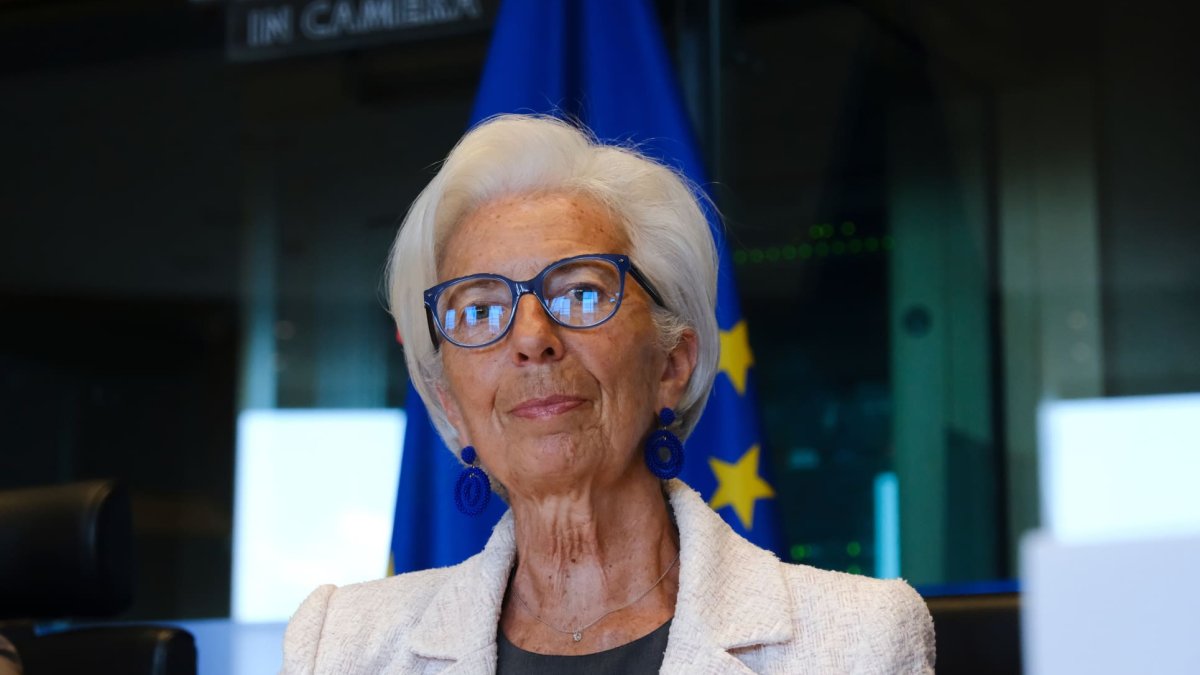
The European Central Bank (ECB) appears to be keeping interest rates unchanged on Thursday. Although inflation remains high in the eurozone, the European economy is growing less and less fast. Economists therefore expect the central bank to refrain from raising interest rates for the time being.
The ECB will meet on Thursday 29 October to discuss interest rates. According to economists, the central bank will keep the deposit rate at 2.5 percent for the time being, after it was raised in September.
The main reason is the slowdown in economic growth. According to a Bloomberg poll, the eurozone economy probably grew by only 0.2 percent in the third quarter. A quarter earlier, growth was still 0.6 percent, thanks in part to exceptionally strong figures from Ireland.
The official growth figures will be announced on Friday. New inflation figures from various European countries will also appear.
Meanwhile, inflation remains a problem. Due to high energy prices, it is expected to rise to four percent by the end of the year. This is twice as high as the ECB's target.
Nevertheless, economists still do not see enough evidence for October that the price increases will accelerate further. Therefore, they expect the central bank to intervene again only in December.
A further interest rate increase would bring the deposit rate from 2.5 to 2.75 percent.
In addition to inflation, the ECB is facing increasing concerns about the European economy. France in particular is under pressure from political unrest, problems with public finances and sharply rising interest rates on government bonds.
Investors are now demanding a much higher interest rate to lend money to the French government. The difference with German government bonds has increased to levels last seen during the European debt crisis.
Companies are also feeling the consequences. French activity contracted unexpectedly in October and supermarket chain Carrefour warned that national unrest and looting were weighing heavily on the results.
Germany is doing slightly better thanks to large government investments, but growth there is also limited. The German central bank expects the economy to have barely grown in the third quarter.
According to Simona Delle Chiaie, chief economist for the eurozone at Bloomberg Economics, the risks increase as a result.
“Now that inflation remains high and financial conditions are rapidly deteriorating, the risks of disappointing economic growth are increasing,” she warns.
The ECB must prevent high inflation from continuing for a long time, without further slowing down the European economy. A higher interest rate can limit price increases, but it also makes borrowing more expensive for households, companies and governments.
The problems are exacerbated by the war around Iran and its consequences for energy supply. In particular, high gas prices remain a risk for Europe.
Jens Eisenschmidt, chief economist Europe at Morgan Stanley, warns that a cold winter can lead to new problems. According to him, even energy rationing cannot be ruled out if gas supplies in Germany prove insufficient.
At the same time, the increased interest rates on government bonds mean that borrowing is already becoming more expensive, even without an additional interest rate hike by the ECB.
According to Bank of America economists, the central bank will therefore have to pay more attention to the consequences of the financial turmoil for economic growth. On Thursday, it will become clear whether the central bank will indeed decide to stop for the time being.