
ECB keeps interest rate at 2.5 percent despite inflation concerns and Lagarde departure
The ECB is keeping interest rates at 2.5 percent despite rising inflation. Analysts expect a new rate hike in December.
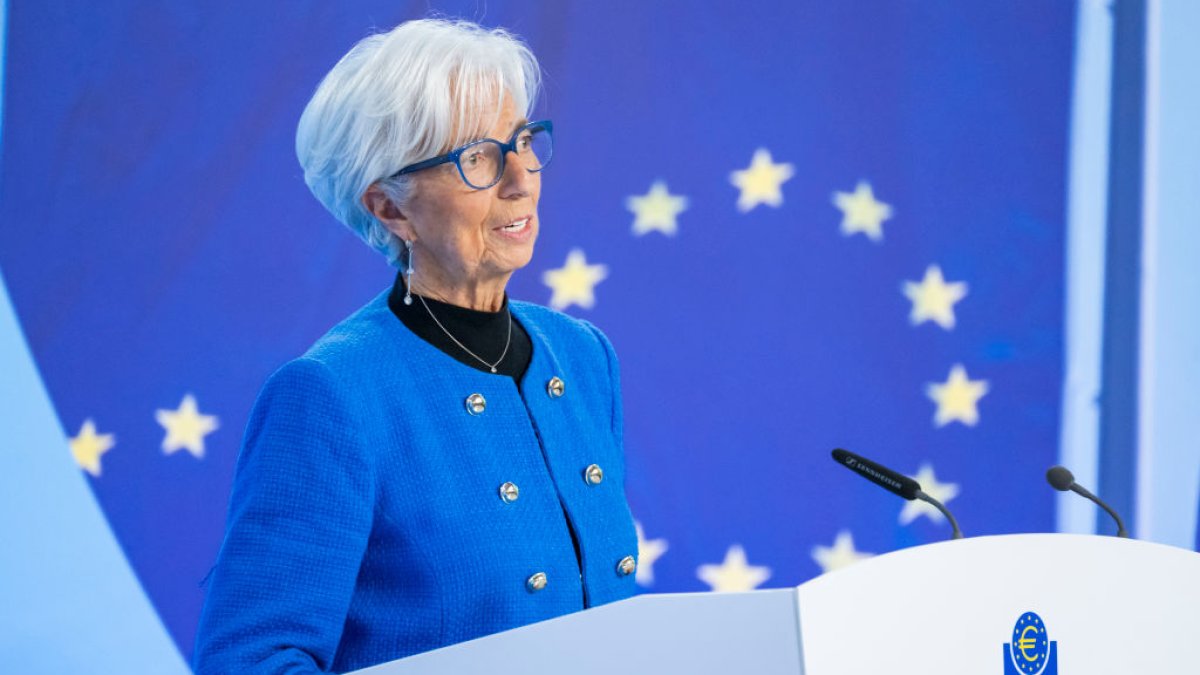
The European Central Bank (ECB) decided on Thursday to leave interest rates unchanged, despite the sharp rise in inflation in Europe. The central bank is facing a difficult dilemma. Due to the war in the Middle East, energy prices are rising sharply, while economic growth is under pressure. Nevertheless, analysts expect the ECB to intervene again this year.
The ECB leaves the deposit rate, the most important interest rate for financial markets, at 2.5 percent. The other two interest rates also remain unchanged, at 2.65 and 2.90 percent respectively.
The decision follows two rate hikes earlier this year. In doing so, the central bank is trying to reduce inflation towards its target of two percent. For the time being, the ECB chooses to wait for the consequences of these earlier measures.
The situation is complicated. Higher energy prices mean that consumers and companies have to pay more, but can at the same time slow down economic growth. A new interest rate hike could limit inflation, but it also makes borrowing more expensive.
In its explanatory memorandum, the ECB warns that the consequences of the energy shock are not yet fully visible. Underlying inflation has remained fairly stable for the time being and wages are also barely responding to higher prices.
Nevertheless, there is an increasing risk that inflation will remain high for longer. The central bank therefore emphasises that future interest rate decisions depend on new economic figures.
Inflation in the eurozone has risen sharply in recent months. In September, consumer prices were on average 3.8 percent higher than a year earlier, according to figures from Eurostat. This brought inflation to its highest level since September 2023.
Rising energy prices in particular play an important role. Oil prices have risen sharply due to the war in the Middle East and the blockade of the Strait of Hormuz. Through more expensive fuel, transport and production, these costs ultimately also end up with consumers.
In February, before the conflict broke out, inflation was still 1.9 percent. In the meantime, inflation is expected to be around three percent for the whole of 2026.
Analysts therefore expect the ECB to raise interest rates again in December. George Moran, European macro strategist at RBC, expects an increase to 2.75 percent.
dFinancial markets even allow for up to three additional rate hikes. At the same time, Moran warns that rising interest rate differentials between European government bonds could make the ECB cautious.
France in particular is a point of attention. The interest rate differential between French and German government bonds rose to almost 1.78 percentage points last week, the highest level in about fifteen years.
The US central bank, the Federal Reserve (Fed), also decided on Wednesday to leave interest rates unchanged. The US policy rate therefore remains between 3.75 and 4 percent. Investors are counting on a new hike there in December as well.
These developments are important for Bitcoin (BTC) and other cryptocurrencies. Higher interest rates make savings and bonds more attractive, which could put risky investments under pressure. Moreover, persistently high energy prices can increase uncertainty in financial markets.
In addition to the interest rate decision, the ECB announced other important news on Thursday. President Christine Lagarde has confirmed that she will step down on 7 February 2027, eight months before her term officially expires.
Her early departure means that European leaders can appoint a successor before the French presidential elections in April. As a result, French President Emmanuel Macron can play a key role in the appointment.
Former Dutch central bank president Klaas Knot has long been mentioned as a possible successor. He faces competition from, among others, Pablo Hernández de Cos, the former president of the Spanish central bank and current head of the Bank for International Settlements.