
Google’s new AI reveals hidden genetic clues in new immune-cell test
AlphaGenome 2 tailors predictions to cell types and states, with DeepMind reporting benchmark gains and reproduction of established disease biology. Read the full story on CryptoSlateUnderstand the crypto stories that matter and what to watch next. Get The Catalyst in your inbox
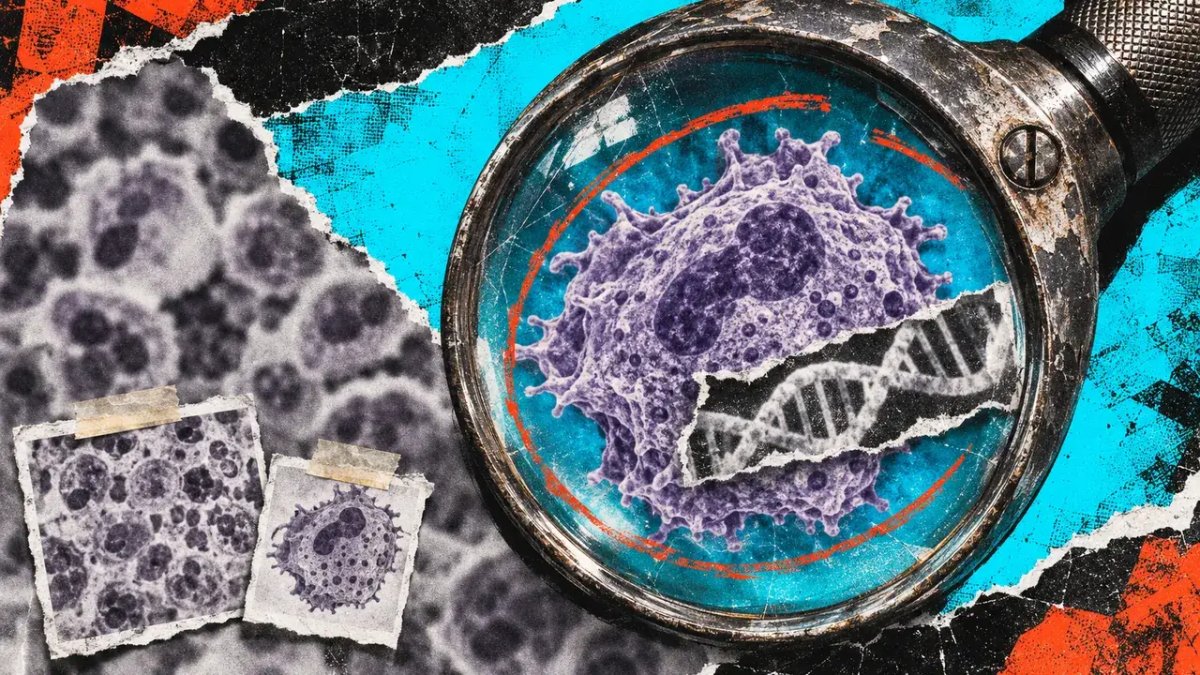
Google DeepMind announced AlphaGenome 2 on Nov. 11, 2026, a DNA prediction model designed to show how genetic changes act in specific cell types and states. The approach aims to expose disease-linked effects that broad tissue measurements can obscure, giving scientists a more focused starting point for experiments.
The original AlphaGenome produced fixed parallel outputs across tissues and experiments from a million-letter DNA sequence. AlphaGenome 2 instead takes a target condition, such as a tissue, cell type or cell state, alongside the sequence and uses that condition throughout its architecture, according to DeepMind.
Its announcement pairs a reported improvement on an immune-cell benchmark with a computational reproduction of an established bowel-disease mechanism. The examples show how the model could focus laboratory work on particular variants and cells.
Related ReadingThat allows predictions to ask how the same stretch of DNA behaves in different cellular settings. DeepMind says this can help identify effects confined to particular cells that broader tissue models miss. A tissue-level result can provide useful context while still leaving the cell responsible for a disease-linked effect unresolved.
The company reports training the model on bulk and single-cell data from human and mouse samples, including more than 107 million individual cell profiles. The profiles supply training material for learning how DNA activity varies across biological settings.