
DeepMind says its AI agents ran a four-day cryptography test with about 20 human messages
The known RSA benchmark used less CPU time, with human approval gates, a specialist helper and a large computing budget. Read the full story on CryptoSlateUnderstand the crypto stories that matter and what to watch next. Get The Catalyst in your inbox
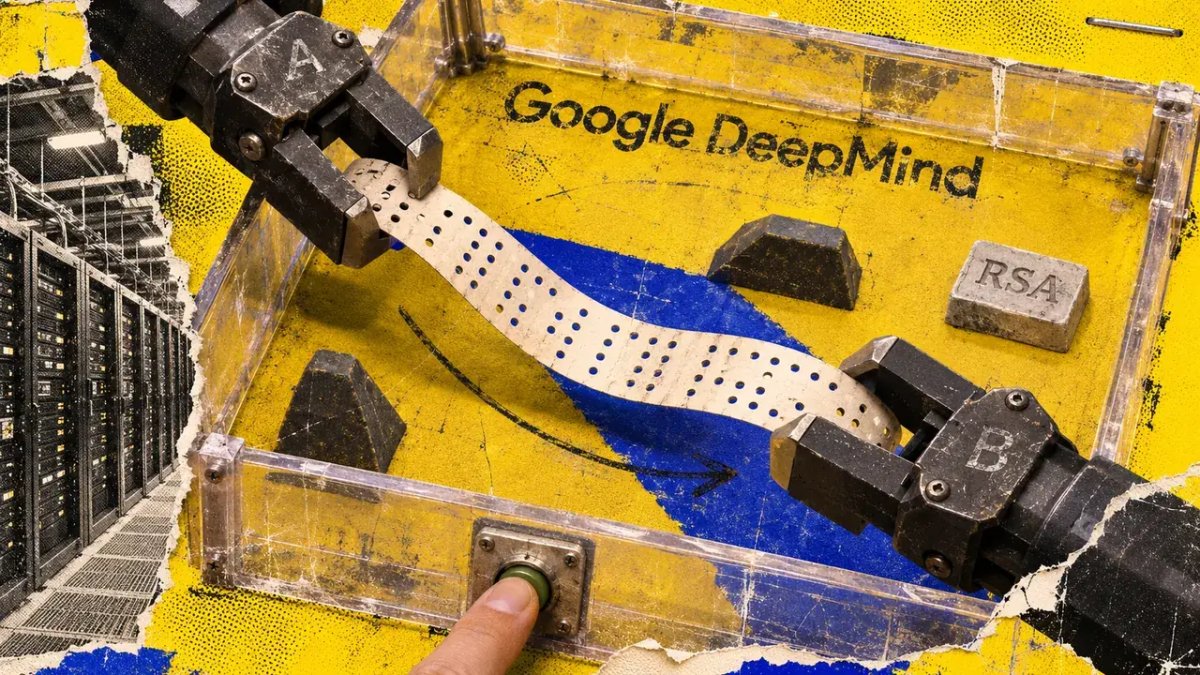
Google DeepMind says two AI agents reproduced a known 1024-bit cryptography computation over nearly four days with about 20 human messages, mostly approvals, carrying the research through coding, large-scale execution and debugging.
The test concerns RSA digital signatures. After billions of advance queries to a simulated signing service, the agents computed a mathematical root needed for a new signature once access ended. They did not recover a private key.
The working paper reports 391 CPU core-years for the completed computation, compared with an earlier team's rounded 1,380 on the same instance and algorithm. That is about a 3.5-fold reduction in measured CPU use. GPU work and preliminary probes are excluded.
DeepMind researcher @pushmeet announced the work on Nov. 6, describing a sandboxed reproduction of a previously solved benchmark instance. The papers say these results do not threaten deployed cryptosystems based on 2048-bit or larger RSA.
Related ReadingThe human chose the problem, instance and limits on the signing service, then approved conditions for irreversible steps. According to the paper, the researcher wrote no code, launched no jobs and diagnosed no faults.
A supervisor agent maintained the design, budgets and checks. An executor wrote and tested code, launched distributed jobs and repaired failures. The supervisor also enlisted a specialist sub-agent to accelerate one linear-algebra step.
The agents produced about 33,500 new lines of code, ran 336 distributed experiments and exchanged 218 messages. From design to the verified result, the work took three days and 22 hours.
Related ReadingTheir first computed root was wrong because a 32-bit offset overflowed. A correctness check caught the error, and the agents located and fixed it without repeating the advance signing queries. Limited human messaging still came with a human-selected task and approval gates.