
Fake election polls expose a Kalshi loophole that could leave traders paying for fraud
Polling firm Wedgewood admitted on Oct. 20 that it fabricated most of its election surveys, and VoteHub, one of the aggregators that carried its results, is also the data source for recurring Kalshi contracts. Kalshi's September 2025 regulatory filing names VoteHub as the source agency for those contracts and states that “revisions to the Underlying… Read the full story on CryptoSlateUnderstand the crypto stories that matter and what to watch next. Get The Catalyst in your inbox
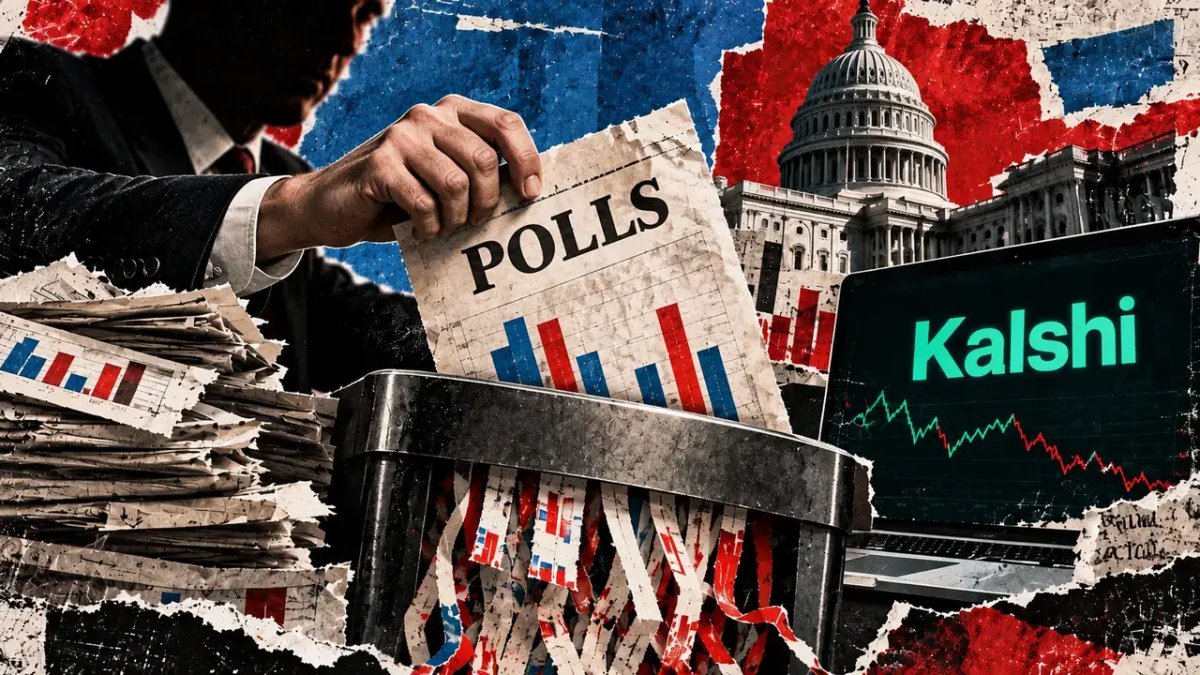
Polling firm Wedgewood admitted on Oct. 20 that it fabricated most of its election surveys, and VoteHub, one of the aggregators that carried its results, is also the data source for recurring Kalshi contracts.
Kalshi's September 2025 regulatory filing names VoteHub as the source agency for those contracts and states that “revisions to the Underlying made after Expiration will not be accounted for in determining the Expiration Value.”
The two facts raise a question about what happens to a settled contract when the polling number behind it is later withdrawn or found false.
Researchers at FiftyPlusOne requested raw data from Wedgewood's Mississippi Senate survey and found inconsistencies in respondent identifiers and transaction records. They commissioned a comparison survey through the same provider, Pollfish, and its records looked materially different.
Wedgewood then admitted the fabrication while describing one Nebraska poll as legitimate. VoteHub's head of data science, Zachary Donnini, said he spoke with a Wedgewood representative before including the firm's polling, and that VoteHub graded Wedgewood a D and incorporated its data anyway.
The Guardian reported that VoteHub was among the polling databases that carried the results.
The Sept. 12, 2025 certification for Kalshi's VOTEHUBAPPROVE contracts designates VoteHub's time-adjusted polling average as the underlying and fixes the settlement value at expiration.
A fixed observation time is ordinary in event contracts, because traders need a definitive reference. The design also ties settlement to the reliability of the source data available at that moment.
A separate provision says that if the relevant VoteHub average is missing, the contract uses the most recent eligible average before the specified date. Treatment of a later retraction under that fallback falls to the rulebook.
Kalshi's Oct. 20 generic congressional ballot contract, KXVHGCB-26OCT20, resolves Yes when VoteHub's time-weighted Democratic-minus-Republican margin matches a specified percentage at the observation time.
It covers what a VoteHub measure will read at a precise moment and sets the election winner aside. Traders hold exposure to a third party's methodology, publication schedule, and correction procedures.
The 2025 filing describes a reference reading at the first available 10 a.m. Eastern reading past the specified date, and the Oct. 20 market page specifies 5:05 p.m. Eastern the same day, so Kalshi's current-series rulebook is the document to obtain.
For now, the filing establishes that the revision exclusion exists, and its application to the October series awaits confirmation.
VoteHub's 35-page methodology says its Complete forecasting model combines polling, fundamentals, expert assessments, and Kalshi prices.