
Wall Street wakes up from historic AI sale, Asia is now the cheat
Stock market crash sweeps trillions of dollars off Wall Street amid fears of Democrats' AI rules. Europe and Asia are also hit hard.
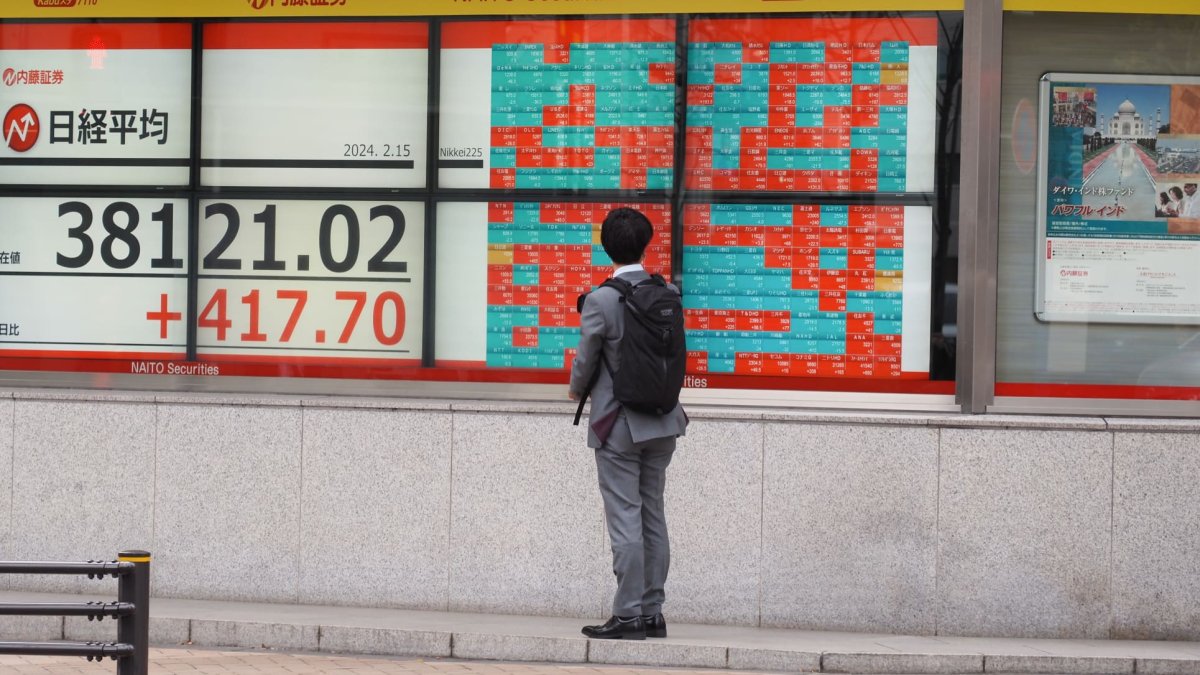
The change of political power in Washington yesterday caused a stock market crash on Wall Street. Investors fear that the Democrats will use their new majority in Congress to impose strict rules on AI, especially for data centers.
AI and chip stocks were hit hardest, with Nvidia experiencing one of the worst trading days in its history. Last night, the panic spread to Asia, while US futures bounced cautiously.
The Nasdaq Composite, with almost all shares on the Nasdaq tech exchange, fell 5.52 percent to 24,315 points yesterday. The index is now about 12 percent below the record of October 6 and is therefore in a correction.
At the Nasdaq-100, with the hundred largest non-financial companies on that exchange, the loss was even greater at 6.36 percent. That is the worst day since March 2020 and, at around 2.3 trillion dollars, the largest daily loss in dollars ever.
The S&P 500 fell 4.36 percent, the worst day since April 2025, and the Dow Jones 3.44 percent. For the Dow, it was the worst second trading day after the midterms, the midterm elections, since 1896.
All 30 Dow funds and all 11 sectors in the S&P 500 closed lower. In that index, some $3 trillion evaporated, three-quarters of the $4 trillion lost since October 6.
Chip shares got the full load. The chip index SOX, a gauge for thirty large chip companies, plummeted 12.25 percent and experienced the worst day since March 2020.
Chip giant Nvidia (NVDA) lost 9.26 percent to $181.60, wiping out this year's full share price gain. The loss in value of some 430 to 450 billion dollars is the largest since the DeepSeek crash of January 2025.
Broadcom and Intel lost over 10 percent and AMD lost as much as 17 percent. Memory makers Micron and Sandisk lost up to 22 percent, while Elon Musk's SpaceX and Tesla lost 9 and nearly 11 percent.
The large cloud companies, also known as hyperscalers, were relatively spared. They pay for the data centers themselves and a slower expansion saves their cash. Microsoft, Alphabet and Amazon lost 2 to 3.5 percent.
For a large part of the sector, the damage is already much greater. There are now 25 major tech stocks in a bear market, with Sandisk at the top at 66 percent below the top. Nvidia, Meta and TSMC are also 25 to 28 percent lower.
In the meantime, investors were looking for a safe haven. The US 10-year yield fell to 4.84 percent due to additional demand for government bonds, and gold rose to about $4,098 per ounce.
Europe already felt the blow yesterday. Chip stocks were also under fire here: chip machine maker ASML fell 6.6 percent and German chipmaker Infineon even 8.5 percent.
There was also a setback from the defense corner. Rheinmetall dipped 16 percent in Frankfurt after the group lowered its annual forecast for the second time this year due to delayed orders. Other defense stocks went down with it.
In Asia, the stock market crash last night mainly hit the chip-heavy stock markets. In South Korea, the Kospi fell about 9 percent shortly after the opening, falling below 5,000 points for the first time since February 2.
As a result, a so-called circuit breaker was triggered: an automatic emergency brake that stops trading for 20 minutes to mitigate panic. Memory makers SK Hynix and Samsung Electronics were 10 to 12 percent lower at rock bottom.
The Korean stock market was already under pressure. Foreign investors sold around 6.4 billion dollars worth of shares on balance in five trading days.
In Taiwan, TSMC, the world's largest contract chipmaker, even went limit-down. The stock dropped to the maximum drop allowed by the stock market per day, to 2,020 Taiwan dollars.
The Japanese Nikkei 225 dipped about 7 percent just after the opening, to below 60,000 points. It is the largest decline since April 2025 and the index is therefore in a bear market.
The Democrats captured both Houses of Congress in the midterms of November 3. After that, there was a lot of criticism from the party about AI, and especially about the construction of data centers.
Senator Bernie Sanders called for a “national moratorium on data centers, now,” or a temporary freeze on construction. House member Yassamin Ansari even wants a break from advanced AI development.
Calm returns cautiously this morning. The futures on the Nasdaq-100, with which investors bet on the index outside trading hours, are now about 1 percent higher, although the S&P 500 is just in the minus.
The market is now mainly looking forward to the jobs report that will be released this afternoon at 2:30 pm.
As a result of the crash, the likelihood of an interest rate hike next month has fallen sharply, but the figures are still of great importance for the central bank's policy.
The VIX, Wall Street's anxiety gauge, shot up nearly 70 percent yesterday. The Nasdaq Relative Strength Index (RSI) is also at its lowest point in 17 months.
That RSI indicates whether a market is oversold, and that often precedes an upturn.
At times like these, it's good to zoom out as an investor. The S&P 500 is still 9 percent higher since the beginning of this year, and as much as 80 percent higher since the launch of ChatGPT at the end of 2022.
AI is arguably the most disruptive technology ever, and that potential didn't change yesterday. And Donald Trump will not allow the US to lose the race with China.
Whoever stops data centers, according to him, chases them straight to China, and with his veto he holds the brake himself.