
Should you leave Australia to avoid paying 47% tax on crypto gains?
Some Australian crypto investors are moving overseas to avoid the huge CGT increase from July 2027. But there are also less drastic ways you can pay less tax.

In part one of our special on how to avoid Australia’s massive hike in capital gains taxes on crypto in July next year, we looked at borrowing against your Bitcoin or setting up a self-managed super fund (SMSF), among four ways to mitigate the impact of the taxes.
While an SMSF offers Australians the greatest tax advantages, it’s only suitable for older investors, or those who are willing to lock up their crypto for decades until they retire. For younger investors, moving overseas could reduce your future crypto tax bills to 0% — but there are less drastic options to save on tax too.
Australia’s impending tax changes have already inspired crypto king Fred Schebesta, founder of Finder.com, to become a tax exile in Singapore.
From July, the top rate on real, long-term crypto gains will increase to 47%, minus the effects of inflation on the cost basis.
For upwardly mobile, single crypto investors, the “nuclear option” of leaving the country to avoid giving almost half their gains to the government will look increasingly attractive.
Many of the world’s top crypto hubs — Singapore, Portugal, Malta, UAE and Hong Kong — offer 0% capital gains taxes on long-term crypto gains in an attempt to attract wealthy investors.

Also read: The one thing these 6 global crypto hubs all have in common...Should you leave Australia to avoid paying 47% tax on crypto gains?
Ben Simpson, founder of crypto advisory service Collective Shift, says some of his members have already pulled the trigger.
“Yeah, we’ve had a number of people that have sort of packed up and gone basically, ‘f—- this. I’m off to the Bahamas or whatnot,’” he says.
Andrea Yuen, CEO of Sywftx, says she is keenly aware of the tax advantages of living outside of Australia.
“I lived in Singapore for 30 years. I do miss my no capital gains tax,” she says. But she didn’t move there for tax reasons, and cautions that uprooting your life to avoid a bit of tax is a pretty drastic step.
“I would never say that we should structure our lives only to think about tax outcomes,” she says. “There are many other wonderful reasons why I’ve come back to Australia and continued to live in Australia.”
“I think if you’re moving countries solely based on a decision about whether you know your crypto is going to get taxed, then you probably need to think a little bit harder.”
Simpson has considered the idea, given he already spends half the year in America looking after Collective Shift US, but looking into the rules put him off.
“You really have to cut pretty much all ties to Australia. So if you are genuinely happy to leave and don’t want to come back for the majority of the year, and cut your healthcare and cut all your ties back to Australia, then that is a strategy.”
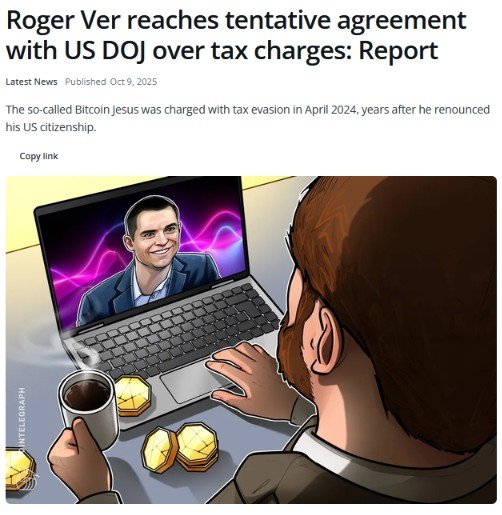
“Bitcoin Jesus” Roger Ver gave up his US residency in 2014, and ten years later he was arrested and charged over failing to correctly report the value of his crypto holdings and paying exit taxes. He was forced to pay almost $50 million to make the case go away.
Similarly, Australians leaving the country face a hefty exit tax on departure, which may require selling a decent amount of your stack.
“They tax you on the way out. If you’ve got a lot of gains or profits you’re sitting on, they’ll catch you when you leave,” says Adrian Forza, director of Crypto Tax Australia. “Arguably it’d be bigger in the future, but it’s still difficult to stomach selling off everything to leave.”
Forza explains you also have the option of paying the Australian taxes later on, but on the full value of the gain after you sell the asset. So if you expect Bitcoin to go up, you’d be best off paying the exit tax now.