
US stock market awaits exciting opening after big blow Nvidia
Inflation from the US puts Bitcoin and stocks on high alert. Due to missing annual figures, investors mainly look at monthly figures and interest rate expectations on Tuesday.
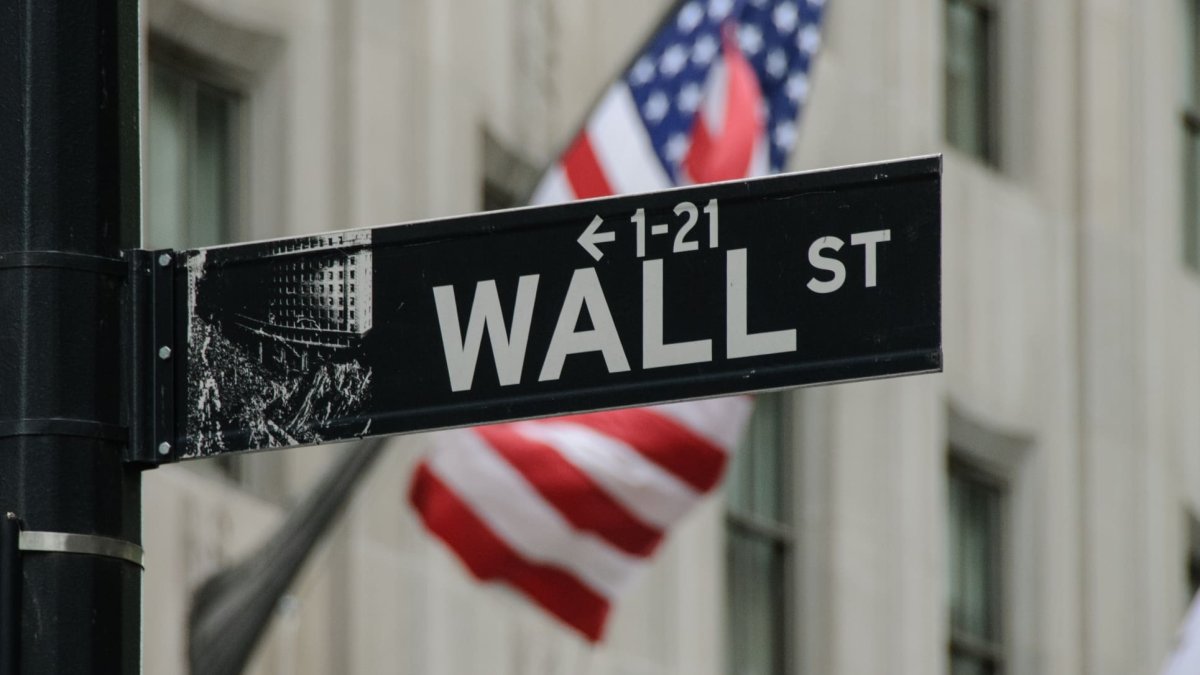
The US stock market is gearing up for a restless trading day. Although the most important stock market indices are predominantly at profit on Monday, technology company Nvidia (NVDA) is taking a big hit. The share loses about five percent due to uncertainty around CEO Jensen Huang. As a result, the technology sector is again under pressure, while investors are also looking forward to important US inflation figures.
The turmoil follows a turbulent week on the stock exchange in which technology shares in particular suffered considerable losses. Investors are increasingly doubtful about the huge investments in artificial intelligence (AI) and the high valuations of companies that benefit from it.
The US stock market futures show a divided picture on Monday morning. The Dow Jones futures rise by about 0.7 percent and the S&P 500 futures gain about 0.3 percent. The Nasdaq 100 futures are also slightly higher at times, but the technology index is clearly struggling to gain ground.
Among other things, this has to do with Nvidia, one of the most important companies within the Nasdaq. The stock fell from $186.64 on Monday morning to a low of about $176.28. As a result, the company temporarily lost more than five percent of its market value.
At its lowest point, more than $200 billion in market value evaporated on paper. By 11 a.m. Dutch time, the Nvidia price had already recovered to around 179 dollars, although the loss remained significant.
The decline follows the announcement of an independent investigation into CEO Jensen Huang. That investigation revolves around his relationship with a businesswoman suspected by US intelligence of having ties to Chinese espionage. China denies the allegations.
For investors, it is mainly about the question of whether Huang can remain as a top executive. Analyst Dan Ives warns that the investigation could cause long-term uncertainty, precisely because Huang is so important to Nvidia's strategy.
The problems at Nvidia come at an unfortunate time. Last week, US technology stocks took a beating as investors worried about the huge investments in AI and data centers.
Political developments in Washington also play a role. After the Democrats' election victory, investors fear stricter rules for the construction of data centers and the energy consumption of large technology companies. That could slow down the growth of the AI sector.
On Friday, Wall Street made up for some of the previous losses. The Nasdaq Composite rose 1.09 percent and the S&P 500 gained 0.31 percent. The Dow Jones, on the other hand, closed 0.46 percent lower.
Nevertheless, trust has not yet fully returned. According to Vanda Research data, private investors sold even more shares on Thursday than on any other trading day since the coronavirus pandemic.
Moreover, the weakness is not completely limited to Nvidia. Chip companies such as Intel, Qualcomm, Marvell and Arm were also under pressure on Monday, with initial losses of more than one percent.
In the coming days, several important events are on the agenda that can once again significantly move the US stock market.
The US consumer price index (CPI) will appear on Tuesday and producer prices (PPI) will follow on Friday. Both figures provide insight into the development of inflation and may change expectations about the Federal Reserve's interest rate policy.
In addition, several major technology companies publish their quarterly results. CoreWeave, Cisco and Applied Materials, among others, are coming up with figures this week. Investors will mainly look at whether the demand for AI technology remains strong enough to justify the billion-dollar investments.
An important test will follow for Nvidia itself on 17 November. Then the chip giant presents its quarterly results. They must make it clear whether the strong growth of recent years continues, while at the same time the company is facing increasing political pressure and uncertainty around its CEO.