
Public wallet logs expose founder histories, and Zcash group demands fix
A Zcash policy group wants the SEC’s proposed fundraising regime to protect unrelated wallet activity without concealing material holdings or conflicts. Read the full story on CryptoSlateUnderstand the crypto stories that matter and what to watch next. Get The Catalyst in your inbox
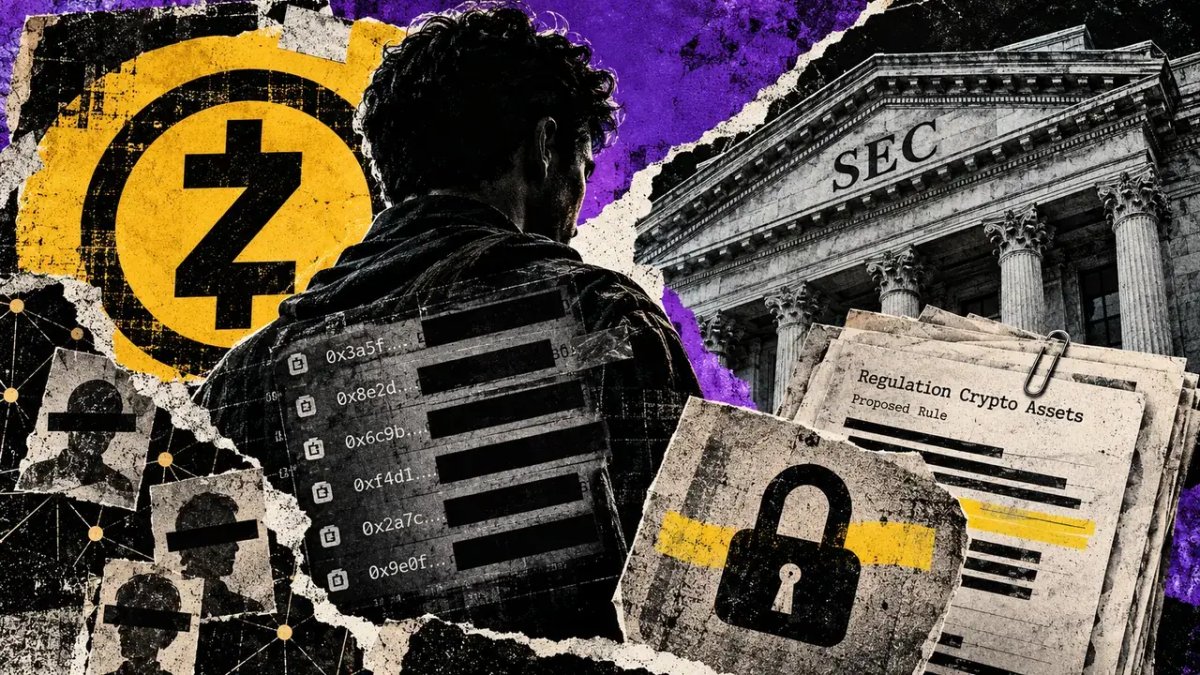
A Zcash policy group is asking the SEC to let token issuers substantiate their fundraising claims without exposing unrelated wallet activity, giving Chairman Paul Atkins’s earlier financial-privacy arguments a concrete test in the agency’s proposed disclosure regime.
Pretty Good Policy for Zcash (PGPZ) argues in its Oct. 20 submission that evidence should answer the claim investors need checked.
It says proving that a transaction obeyed a network’s rules does not establish how an issuer spent investor money. Accounting records or other financial evidence may still be needed.
Atkins discussed the policy ambition behind this approach in remarks on Dec. 15. He described zero-knowledge proofs, selective disclosure and wallet designs as tools for demonstrating compliance without surrendering an entire financial history.
He also expressly said his views were his own and not necessarily those of the SEC or other commissioners.
PGPZ wants a public account of material holdings and conflicts alongside supporting evidence that does not expose unrelated financial activity, and it asks the SEC to make that approach explicit.
As of Oct. 26, the SEC docket still labels Regulation Crypto Assets a proposed rule, with its October 20 comment deadline now past. The letter’s suggested protections are requests for the final text, rather than an adopted compliance route.
The proposal, issued Aug. 18, would create a startup exemption for offerings of up to $5 million over four years and a fundraising exemption for up to $75 million over 12 months.
Eligible issuers would receive a tailored route around securities registration requirements, with disclosures and federal antifraud and antimanipulation provisions still applying.
Rule 103 would supply narrative disclosure requirements for issuers using those exemptions. Paragraph (b)(7) covers material token economics and allocations: supply, pricing, lockups, distribution methods, related-person holdings and release schedules.
It also covers mechanisms for generating and destroying tokens and methods to verify their transaction history.
Other provisions address the intended use of offering proceeds, management, related-person transactions, and conflicts. Related persons’ transfer or resale restrictions would also have to be described.
Rule 103(a) would also allow disclosures tailored to the issuer’s circumstances. It says disclosure need not be provided where a requirement is inapplicable or responsive information is unknown or not reasonably available.
A description of token supply says little about the investment bargain if it leaves out material insider allocations or conflicting interests.
PGPZ’s submission isolates a narrower issue inside it: how much underlying financial activity must become visible to make an issuer’s account meaningful.
PGPZ asks for an instruction that expressly allows accounting records, cryptographic proofs, and selective disclosure of relevant records. Issuers would explain what the chosen method verifies and its limitations.
A transaction can satisfy the network’s rules while leaving unanswered the issuer-accounting question of how investor funds were used.
PGPZ says accounting records or other financial evidence may be necessary for that claim, so privacy technology would sit alongside conventional records, with the evidence chosen to fit the assertion.
The group wants the SEC to distinguish what investors need in public disclosures from supporting records that an auditor or regulator may need to examine. Its request expressly preserves applicable audit standards.
That would make the audience for the evidence part of the design, alongside what the evidence proves.