
Kraken drops Monero spending questions but keeps a $1,500 rolling 30-day withdrawal cap for individuals
Crypto exchange Kraken has withdrawn intrusive compliance demands sent to Monero customers after its co-CEO admitted the requests were unjustified. On Oct. 24, Arjun Sethi said that customers who purchased and withdrew Monero (XMR) had received emails requesting information about their employers, sources of funds, and intended use of the cryptocurrency. He acknowledged that no… Read the full story on CryptoSlateUnderstand the crypto stories that matter and what to watch next. Get The Catalyst in your inbox
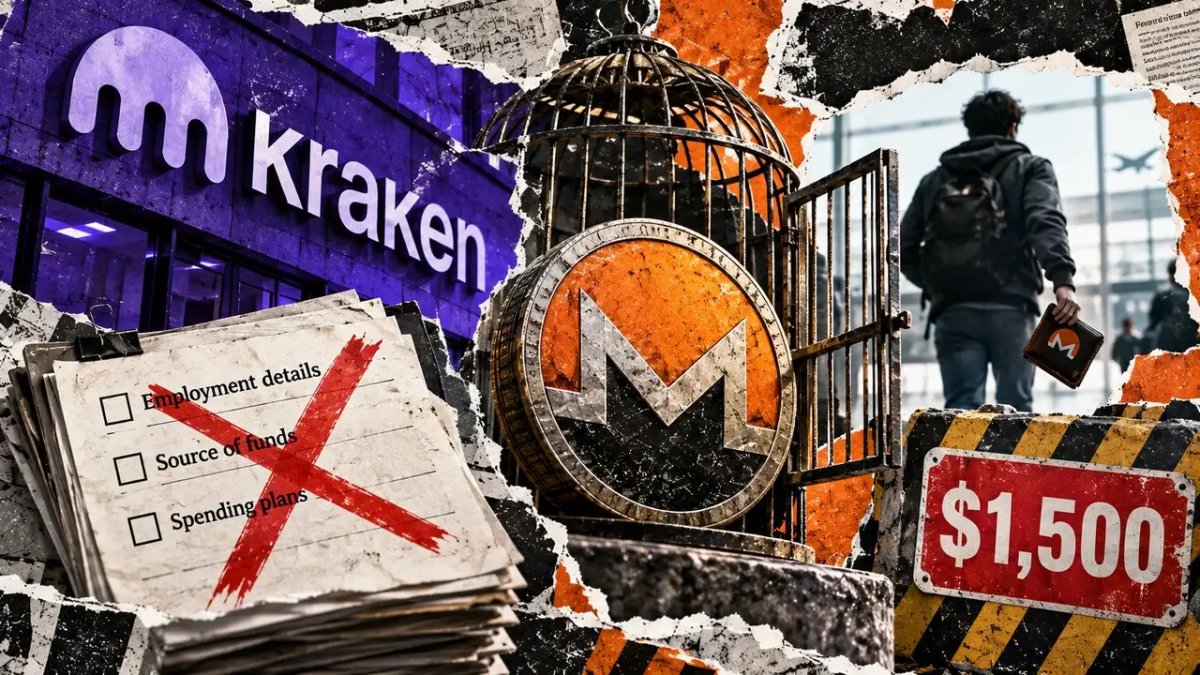
Crypto exchange Kraken has withdrawn intrusive compliance demands sent to Monero customers after its co-CEO admitted the requests were unjustified.
On Oct. 24, Arjun Sethi said that customers who purchased and withdrew Monero (XMR) had received emails requesting information about their employers, sources of funds, and intended use of the cryptocurrency.
He acknowledged that no regulation required the disputed requests and confirmed that affected customers no longer needed to respond.
The reversal followed criticism of the exchange's treatment of Monero users, particularly its decision to classify a young customer holding substantial funds as suspicious.
Sethi rejected that assessment, arguing that a customer's age and financial position should not automatically trigger heightened scrutiny.
“Someone saw a young client with a lot of money and called it a red flag. That is not a red flag. That is our customer and client,” he said.
The admission raises questions about how cryptocurrency exchanges apply internal compliance controls to privacy-focused assets, particularly when those measures exceed explicit regulatory requirements.
Sethi's statement distinguished between verifying the origin of customers' funds and questioning how they intend to use cryptocurrency after withdrawing it from an exchange.
He said:
“Where your money came from is a fair question. What you do with it after it leaves is not.”
He called the latter inquiry unacceptable and confirmed Kraken will remove it from its compliance procedures.
Under its existing compliance policy, Kraken may request bank statements, investment records, and other documentation establishing how customers acquired their money or accumulated their wealth.
These checks support the exchange's anti-money-laundering obligations, which require financial institutions to assess suspicious transactions and, when appropriate, verify customer information.
A separate policy updated on Oct. 1 allows Kraken to seek additional documentation following routine account reviews or changes in transaction activity, including unusually large transfers.