
USDC splits global reserves as EBA enforces Nov 12 handover
The EBA's designation brings dual supervision of Circle's EU issuer, while its Oct. 1 response seeks more flexible reserve requirements. Read the full story on CryptoSlateUnderstand the crypto stories that matter and what to watch next. Get The Catalyst in your inbox
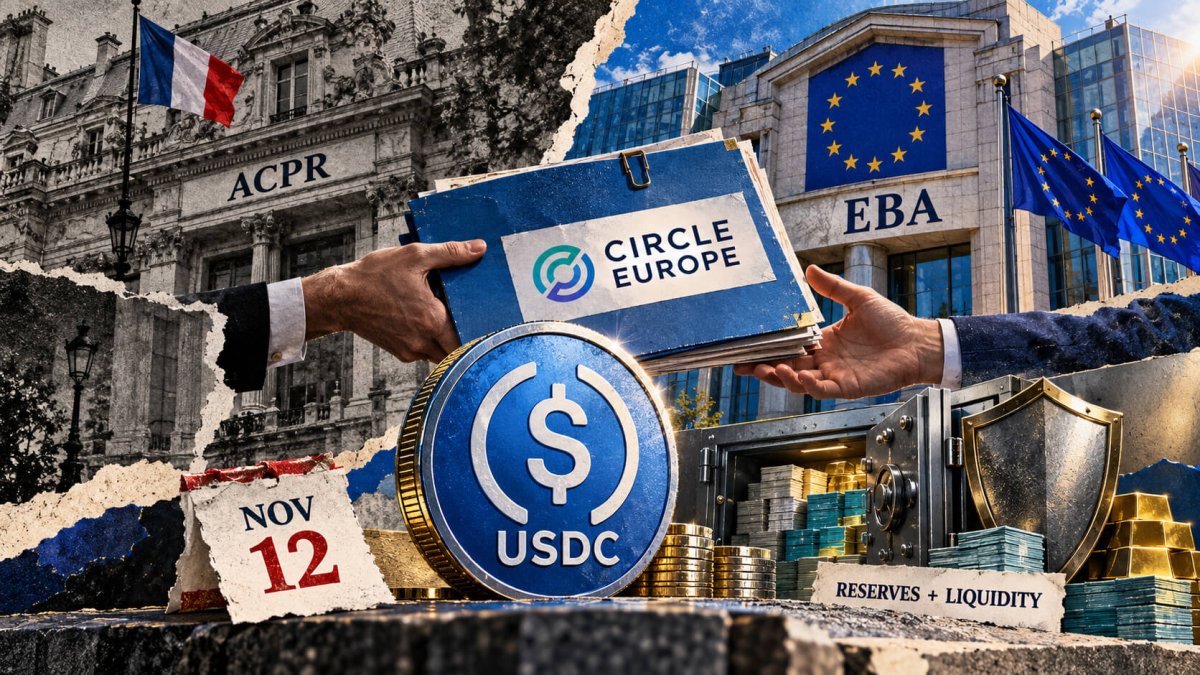
The European Banking Authority announced on Oct. 14 that USDC issued by Circle Internet Financial Europe SAS is the European Union's first significant e-money token under the EU's Markets in Crypto-Assets Regulation (MiCA).
The designation sets up a Nov. 12 transfer of key supervisory responsibilities from France's financial regulator to the EBA.
The authority said USDC is the first token to receive that classification among 45 e-money tokens notified under the EU's crypto regulation. France's Autorité de Contrôle Prudentiel et de Résolution (ACPR) will retain other responsibilities.
The handover also gives fresh relevance to Circle's earlier push to change the reserve framework. In its Oct. 1 consultation response, the company argued that rigid bank-deposit requirements can expose stablecoin issuers to banking-sector risk.
From Nov. 12, the EBA will take over direct supervision of the EU issuer's own funds, meaning regulatory capital. The EBA will also supervise its reserve of assets. The authority will oversee liquidity requirements and supervise recovery and redemption plans.
The ACPR will continue supervising governance and will retain supervision of qualifying holdings and fit-and-proper assessments, as well as oversight of outsourcing and conflicts of interest. The EBA said the two authorities will cooperate on the transition.
That allocation gives the European agency a direct role in the financial safeguards supporting EU-issued USDC, while national supervision continues over other aspects of the issuer's operations.
MiCA's legal framework assigns the EBA supervision of a significant e-money token issuer that is an electronic money institution for compliance with Articles 55 and 58. Those provisions cover recovery and redemption planning, as well as additional reserve, liquidity, and own-funds obligations.
The existing statutory baseline in Article 54 requires credit institutions to keep at least 30% of funds received in exchange for e-money tokens in separate accounts. The remainder must be invested in specified secure, low-risk and highly liquid instruments denominated in the token's referenced currency.