
Google invests €13 billion in Finland, largest ever EU investment
Google is investing 13 billion euros in new AI data centers in Finland, which will immediately lead to substantial price increases.
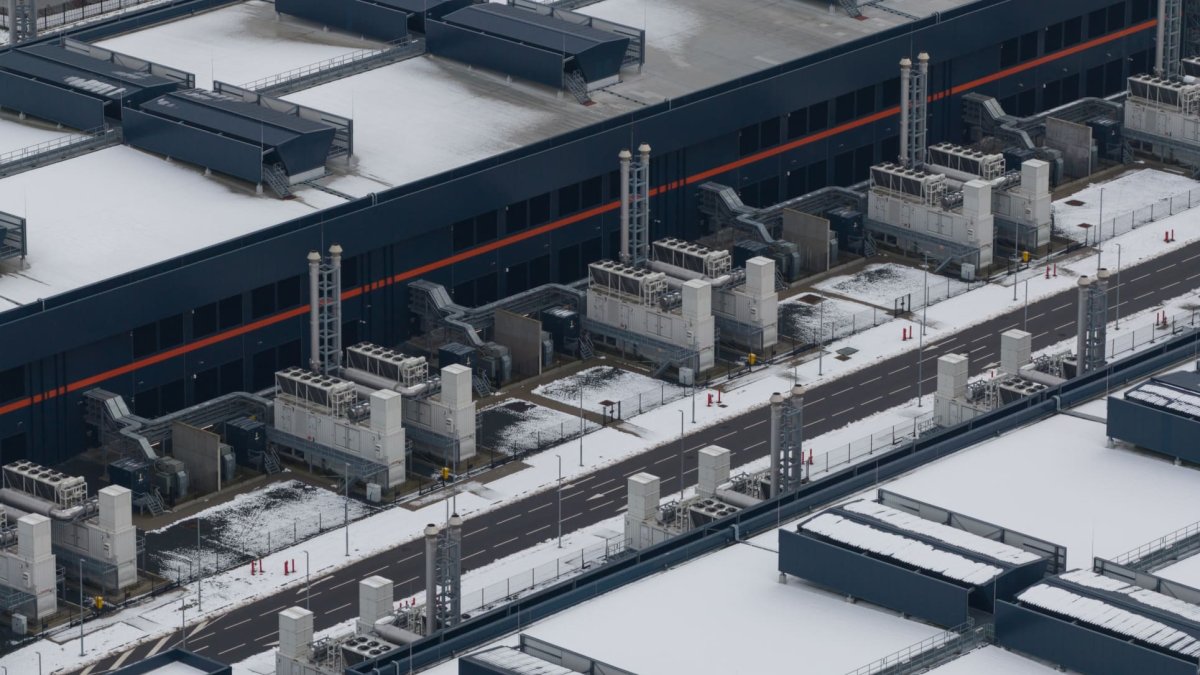
Google will invest at least 13 billion euros in AI infrastructure in Finland over the next two years. With this, the American tech giant is making its largest investment ever in Europe.
Google is building at least three new data centers and is also expanding its existing complex in Hamina. Finland is attractive because of the cold climate, the large amount of CO2-free electricity and the strong power grid. The huge investment should also create thousands of new jobs.
The three new data centers will be located in Kajaani, Muhos and Vaala, in northern Finland. Google had already bought land there before. The existing data centre in the southeastern city of Hamina will also be further expanded.
According to Google, the locations were chosen, among other things, because of their strong connection to the Finnish electricity grid. From the new data centers, the company wants to deliver the enormous amount of computing power needed for the further growth of artificial intelligence.
Google is not the only tech player that Finland has discovered for this. An estimated €43 billion worth of data centre projects are already being planned or built in the country.
Finland has a number of important advantages for this. Due to the relatively cold climate, less energy is needed to cool servers. The heat produced by the data centers can also be reused to heat homes.
Finland also has a relatively large amount of clean energy. About 96 percent of electricity is generated without CO2 emissions, mainly from nuclear energy and renewable sources.
“Google is proud to further expand its presence in Finland with the company's largest single investment in Europe,” said investment director Ruth Porat.
Google's investment of billions immediately led to significant price increases for Finnish companies that can benefit from the new data centers.
Energy company Fortum rose by more than eleven percent, the largest price jump in almost four years. The company entered into a long-term agreement to power Google from its nuclear power plant in Loviisa.
The agreement runs for 22 years. Between 2030 and 2049, Google will eventually purchase electricity equivalent to fifty percent of the capacity of the nuclear power plant's two reactors.
Nokia also benefited from the news. The share rose by up to six percent, while telecom company ELISA gained about two percent. Both companies will contribute to the network connections for the new data centers.
Google is also investing in additional wind energy and energy storage. A battery system with a capacity of 94 megawatts will be installed at the new data centre in Kajaani. This should help to better balance supply and demand on the Finnish electricity grid.
The multi-billion dollar investment in Finland is part of the global AI race between the biggest tech companies. Alphabet, Google's parent company, raised its investment forecast in July to a maximum of $205 billion this year.
Much of that goes to data centers and other infrastructure needed to train and use increasingly powerful AI models.
For Finland, the investment comes at an important time. The country is struggling with weak economic growth, the loss of a lot of trade with neighbouring Russia and austerity measures to get public finances in order. Unemployment has now risen to more than ten percent, the highest rate in the European Union.
Google expects that around 16,000 employees will be needed to build the new infrastructure alone.
Moreover, the company is by no means the only party that has discovered Finland as a location for data centers. Microsoft, Nscale, AtNorth, Pure Data Centres, Nebius, DayOne and Polarnode are also building or planning new capacity there.
The number of projects is growing so fast that the Finnish government is working on a law that requires operators to register data centers, so that the government can keep a better eye on the rapid expansion of the sector.