
Gold and silver in free fall: What can stop this bloodbath?
The financial markets are turning red, and precious metals are bearing the brunt. Everything you need to know about losses in gold and silver.
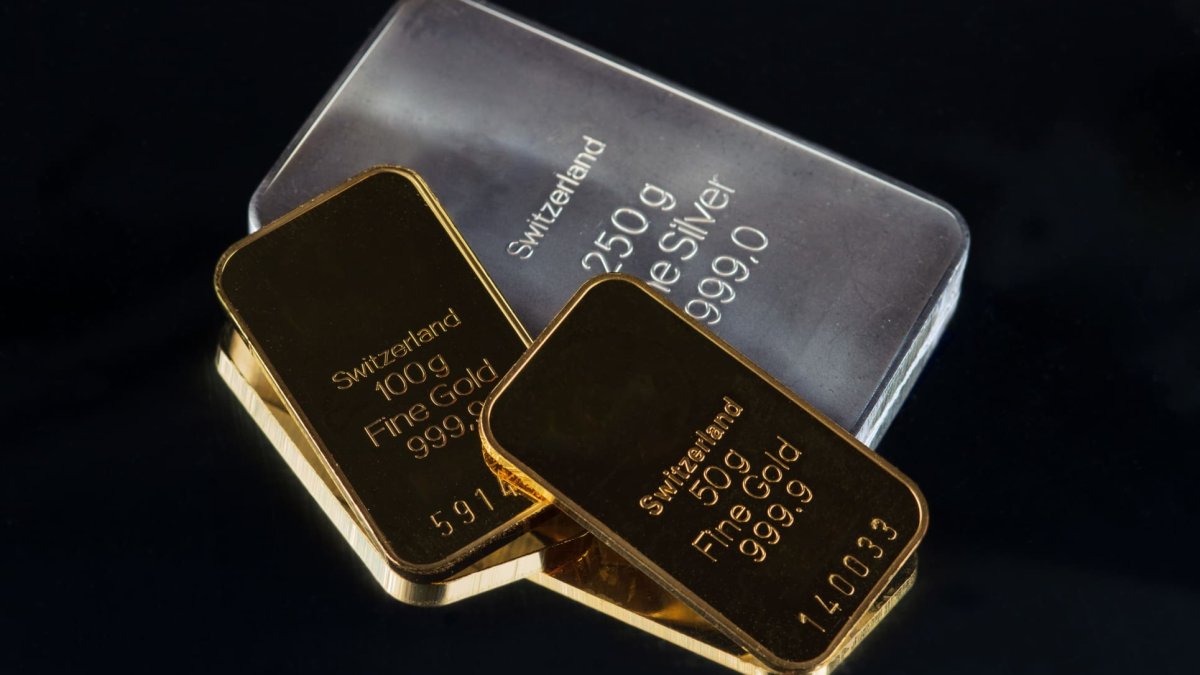
The wave of selling in the financial markets continues, and once again, precious metals are under heavy fire. Gold and silver prices have now reached their lowest levels in over a year following a sharp decline. There seems to be no end to this year's dramatic performance, even though these assets are known as safe havens.
Gold and silver have already lost about $15 trillion in market value since their record highs at the beginning of this year. In other words, 15,000,000,000,000 dollars. That's almost as much as the current value of the four largest companies in the world: Apple, Microsoft, Nvidia and Alphabet.
Recently, these companies have also lost a lot of market value. The U.S. stock market peaked in early October, after which the correction in precious metals also accelerated. Since then, gold has lost roughly 14 percent of its value, representing a loss of more than $4 trillion.
So, today is dramatic again. Gold is currently down 3.50 percent, which is a significant drop for the most valuable asset in the world. Silver, which is usually somewhat more volatile, has even lost 5.14 percent.
Gold is now selling for around $3,550 per troy ounce (standard unit of weight, approximately 31.1 grams), and it hasn't been this cheap since early September last year. A key support level is now within reach, but it has fallen by 36 percent since January.
Silver is currently trading at around $42.18, which is the lowest price since the middle of that month. The price has now dipped below its 2011 peak and appears to be heading even lower. It is now more than 65 percent lower than its peak in January.
Gold has fallen by over 8 percent this week, and silver has already lost nearly 14 percent. Over the past few decades, there have only been a handful of weeks with larger losses.
The biggest culprit is the US dollar. It has been on the rise all year, but in recent weeks it has been rising much faster, which is putting pressure on the valuations of gold and silver.
A stronger dollar has a tightening effect: because loans and trade are largely denominated in dollars worldwide, money becomes scarcer and more expensive everywhere. That is also bad news for stocks and Bitcoin (BTC).
The dollar is rising because investors are expecting a tighter policy from the U.S. Federal Reserve (Fed). In recent weeks, everything has been pointing in the same direction: more interest rate hikes are on the way to get inflation under control. A strong jobs report, heated inflation reports, strong economic figures, and even the policymakers themselves want higher interest rates.
One Fed policymaker after another has recently said that interest rates need to rise, and Christopher Waller even wants a rare increase of 0.50 percentage points. Moreover, this week's minutes show that almost the entire Federal Open Market Committee shares this view.
Gold, in particular, is known as an inflation hedge: an investment that retains its value when money loses value. However, a central bank that tackles inflation is bad news for the precious metal.
Higher interest rates draw money out of the market and make bonds more attractive. Long-term interest rates are now falling, but that has everything to do with concerns about the AI investment cycle. Normally, that would give gold some breathing room, but for now, the stronger dollar carries more weight.
What gold and silver need is a Fed that doesn't have to intervene as aggressively. An end to the war with Iran could lower the price of oil and, consequently, inflation, and it would also help if tech companies took a more measured approach to AI investments.
The declines in stock market prices also have a tightening effect, causing the market to take over some of the Fed's work. In addition, the dollar is losing some strength. The chart shows a bearish divergence: the price is climbing to a new high, but the momentum – the force behind that rise – is lagging behind.