
Fed Governor Waller wants a leading role for the central bank in tokenization
Fed Governor Waller wants the Fed to lay the groundwork for tokenization. However, the $6.3 billion Binance hack is a cause for concern.
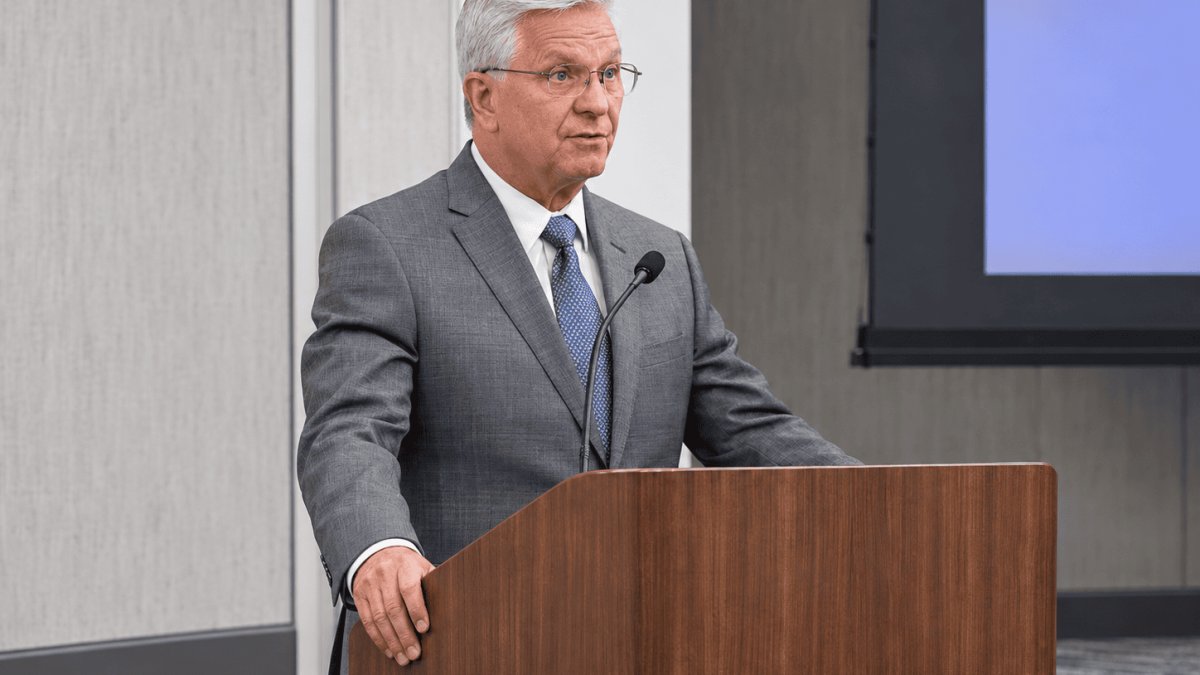
Fed Governor Christopher Waller wants the U.S. central bank to maintain a leading role as more and more investments move to the blockchain. He believes that the Federal Reserve can provide a secure foundation for this, although yesterday he also warned about the risks, citing the billion-dollar hack at Binance as an example.
Waller spoke yesterday at The Clearing House's annual conference in New York, where banks and payment companies gather. He wants the Fed’s payment systems to remain the foundation for tokenization, the conversion of stocks or bonds into crypto tokens.
“Where market forces alone cannot solve a major problem, and where it falls within our mandate, the Fed can act as a convener and facilitator,” Waller said.
This aligns with his earlier proposal for a ‘skinny’ master account, a stripped-down Fed account for crypto and fintech companies. Last December, the Fed developed that idea into a proposal.
The biggest advantage of tokenization is that markets are suddenly open 24/7, which fits perfectly with AI agents that, of course, never sleep either.
Waller sees opportunities in this for agentic commerce, as trade conducted by AI agents is called. “Although agentic commerce is still in its early stages, tokenization and AI can act as catalysts for each other,” he said.
Waller also made headlines last week when he said in a speech in London that the central bank should raise interest rates. He believes that inflation is still too high and is even considering a rare intervention of 0.50 percentage points.
Following last week's heated inflation figures, an interest rate hike next month seems all but certain. Investors believe that further measures will follow, and this is a key reason why the markets are performing so poorly at the moment.
Nevertheless, Waller also raised questions about security. He referred to the recent hack at Binance. This was the industry's largest heist, in which $6.3 billion worth of crypto was stolen.
“Who bears the responsibility when fraudsters exploit the automatic execution of smart contracts?” he asked. Smart contracts are pieces of code that automatically execute agreements on a blockchain.
According to Waller, large, systemically important transactions belong on shielded networks with greater privacy and control. In addition, he wants clear rules for ownership, custody and settlement.
He is not alone in this view. Fed colleague Michael Barr, former Vice Chair for Supervision, warned on Monday that AI agents could trigger a bank run within minutes.
“Attackers only need to be right once, while defenders always have to be right,” Barr said.