
EU seeks €50 billion tech fund to keep AI companies in Europe
European scale-ups raise half as much money as companies in San Francisco. Brussels wants to close that gap with a fund of 50 billion.
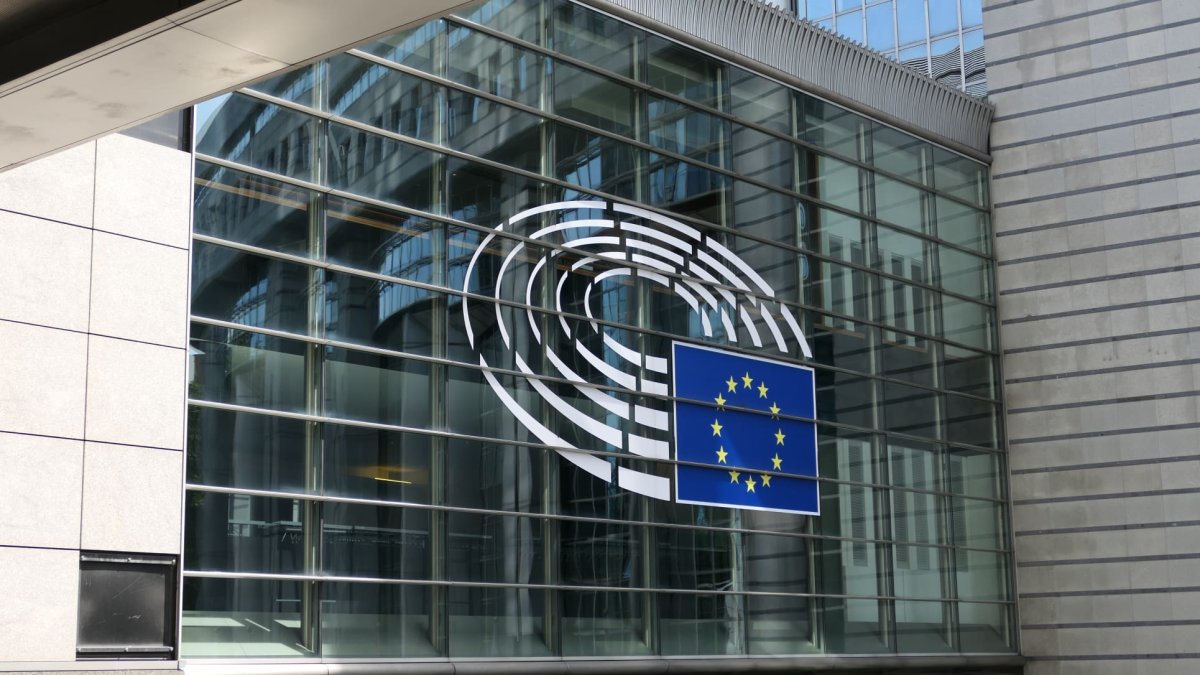
The European Commission wants to invest tens of billions of euros in European companies that are developing AI and quantum computers. Brussels aims to prevent promising tech companies from relocating to the United States for their growth.
The same bill also includes a deadline for new digital security, which affects Bitcoin investors.
On Wednesday, the Commission presented the Quantum Act, a legislative proposal aimed at strengthening Europe's position in quantum technology. This also includes the Sovereign Tech Equity Fund (Stef), a fund that takes stakes in AI and quantum companies.
The proposal does not specify an amount. According to the Financial Times, Brussels is aiming for a maximum of 50 billion euros, a target that is to be met primarily with money from private investors.
The EU aims to close a well-known gap with this initiative. European scale-ups, young companies that experience rapid growth after the start-up phase, raise about half as much capital after ten years as their counterparts in San Francisco.
This was revealed in 2024 by a study conducted by the European Investment Bank (EIB). In more than four out of five funding rounds for European scale-ups, the lead investor comes from abroad, compared to 14 percent in San Francisco.
Brussels already has a smaller fund for this type of company. The Scaleup Europe Fund is targeting €5 billion, €1 billion of which will come from the Commission, and made its first investment in Finnish satellite company ICEYE in August.
So Stef needs to become ten times bigger. The amount that the EU itself will contribute has not yet been determined, but according to the FT, Brussels wants to raise up to 6 euros for every euro of EU money. This would amount to roughly 7 to 8 billion euros in EU funds.
The details are expected to follow in February, when European government leaders will discuss competitiveness in Belgium.
The bill also provides for a joint transition to quantum-resistant encryption. A quantum computer uses quantum physics to solve certain calculations at lightning speed.
A powerful quantum computer could therefore crack the current security systems of banks and governments. For this reason, the EU countries already agreed on a timeline for the transition in 2025.
Member States must start by the end of 2026 and secure critical infrastructure by the end of 2030 at the latest. For less sensitive systems, the deadline is the end of 2035.
Bitcoin (BTC) also relies on the same type of encryption. Owners sign their transactions with a digital signature, and a powerful quantum computer could uncover the secret key behind it.
According to the research group Project Eleven, about one-third of all Bitcoins are held at addresses where the public part of the key is already visible. It is precisely these coins that are the most vulnerable.
Quantum computers of such power do not yet exist. Nevertheless, there is urgency, because with Bitcoin, there is no central party that can enforce a transition.
The industry is working on a solution. In July, nine companies, including BlackRock, Coinbase and Strategy, pledged a total of $15 million for three years of research into Bitcoin security. Part of this will go toward quantum-resistant cryptography.