
Eastern Europe crypto flows fall 7.9% as Ukraine draws $12B in stablecoins
Chainalysis found that Eastern Europe recorded the steepest decline in crypto activity of any region, while cross-border stablecoin transfers to Ukraine continued amid the ongoing war.
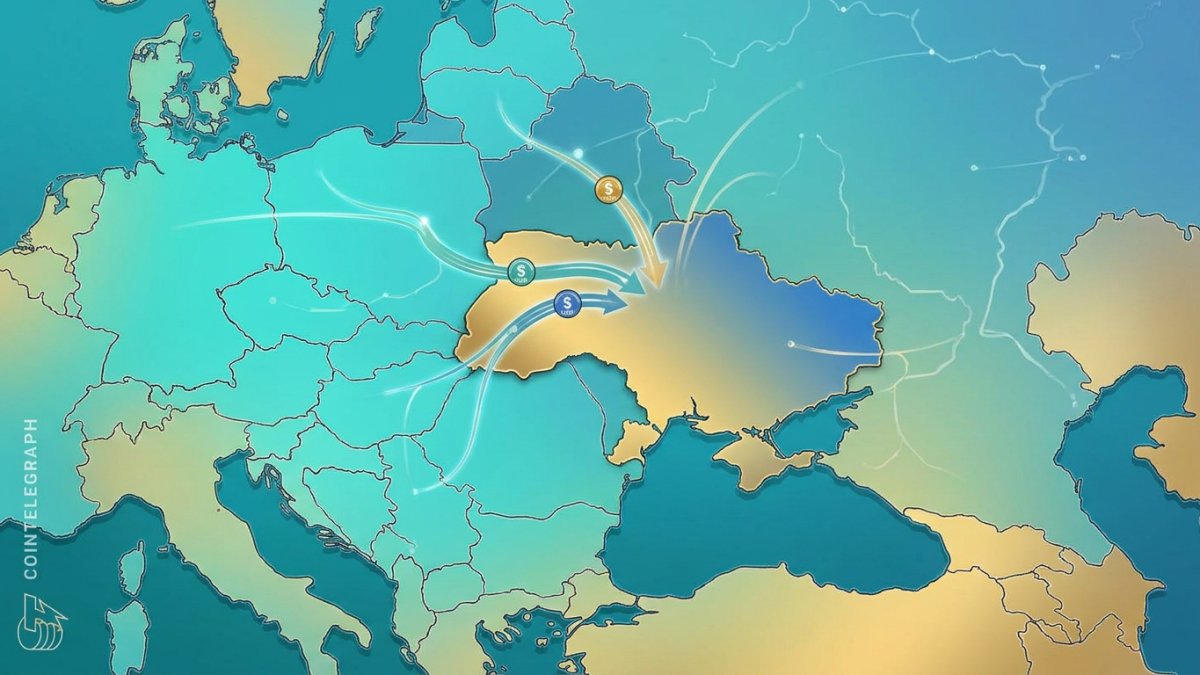
Eastern Europe recorded the steepest decline in cryptocurrency activity among the regions tracked by Chainalysis in the year ended June 2026, falling 7.9% even as retail-sized transfers increased in value, according to a report published Tuesday.
The region’s crypto economy shrank to $642.1 billion from $697.1 billion a year earlier, compared with a 1.6% decline globally, the report states. Russia, which accounted for roughly 44% of the regional total, saw activity fall 14.7% to $284.1 billion over the period. By contrast, Belarus recorded 27.6% growth, while Bulgaria, Moldova and Ukraine saw smaller increases.
The value of transfers of $10,000 or more to crypto services fell 17.4%, from $591.5 billion to $488.6 billion, according to the report.
The value of smaller transfers to crypto services, meanwhile, rose 8.3%. These retail-sized transfers accounted for 13.1% of the value sent to crypto services in Eastern Europe, the highest share of any region studied and above the global average of 10.1%.
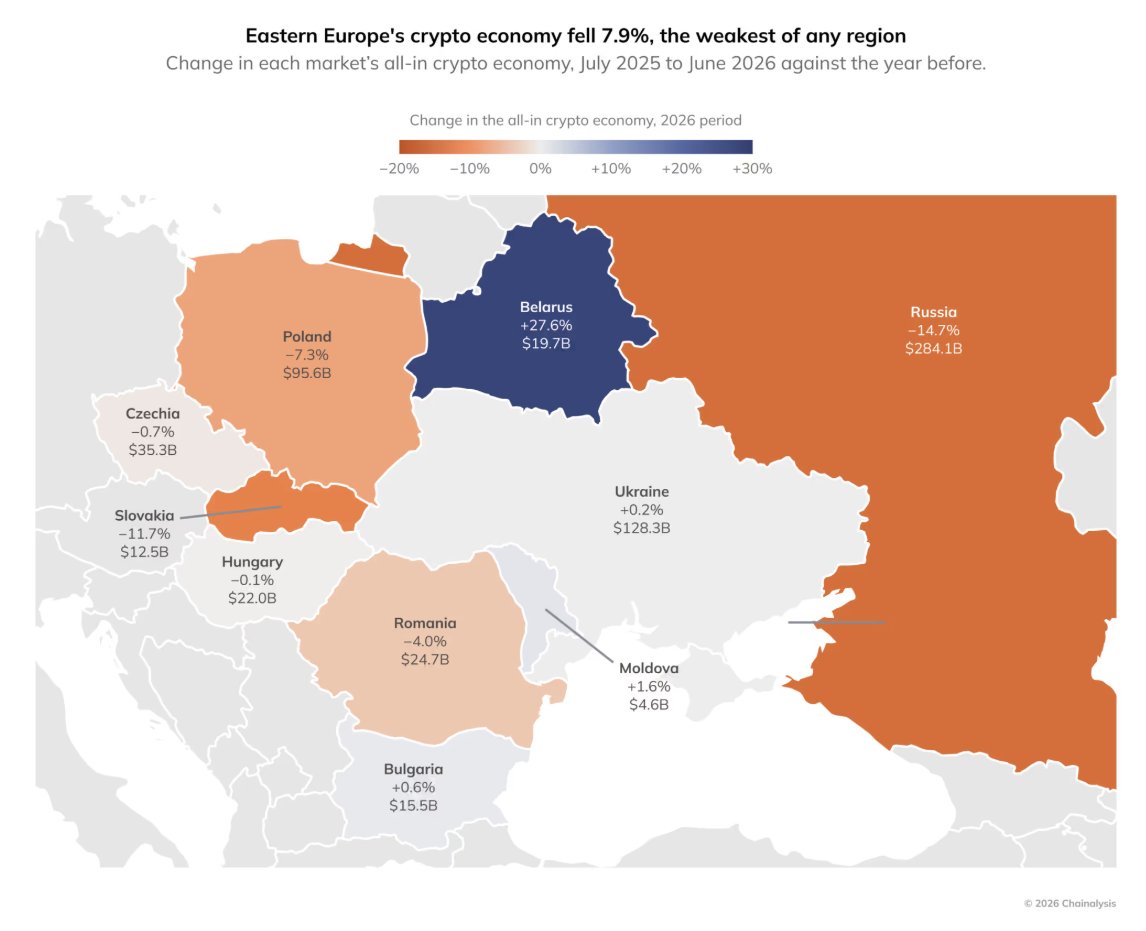
Eastern European crypto activity by country, July 2025 to June 2026. Source: Chainalysis report
Crypto ATM activity also increased across Eastern Europe, with transaction volumes nearly doubling from $17.3 million to $33.9 million. Poland recorded a 120% increase in ATM transactions despite a 5% decline in centralized exchange activity, with stablecoins accounting for roughly 90% of its ATM transactions.
Chainalysis measures the crypto economy using inflows to crypto services, domestic transfers between personal wallets and cross-border inflows to personal wallets. The figures are measured in dollars, so cryptocurrency price changes can also affect the totals, according to its methodology.