
Day and night with leverage on Tesla: Kalshi plans share perps
Kalshi wants to launch perpetual futures on Tesla, Apple and Nvidia. Experts warn of major risks and losses among investors.
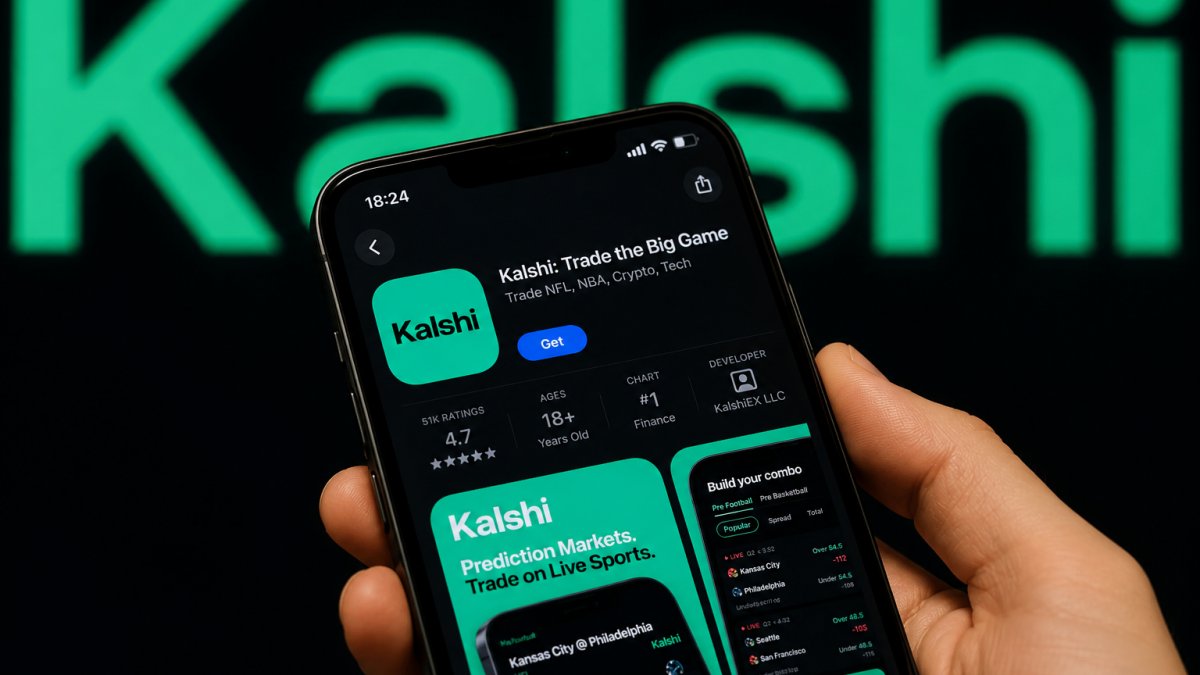
A trading product that is mainly known from the crypto world may soon enter the US stock market. Prediction platform Kalshi wants traders to speculate on shares of large companies via so-called perpetual futures, reports The Wall Street Journal.
Tesla, Apple and Nvidia, among others, are planned. Investors can trade these contracts 24 hours a day and use leverage. It is precisely this combination that also causes concerns about large losses among private investors.
Kalshi plans to seek approval from U.S. regulators, according to people familiar with the plans. The company aims to offer around sixty perpetual futures linked to popular listed funds and individual stocks.
In doing so, Kalshi focuses on companies with a market value of at least 100 billion dollars. Tesla, Apple and Nvidia are among the shares for which such contracts are planned.
Perpetual futures, often abbreviated to perps, are similar to traditional futures contracts but do not have an end date. As a result, a trader does not have to close his position at a predetermined time.
In addition, traders can use leverage. This allows them to open a much larger position with relatively little own money. A price movement in the right direction can therefore yield additional profit. If the market goes the other way, the losses will also increase much faster.
The popularity of these products has grown strongly within the crypto market. On the crypto platform Hyperliquid, the total trading volume in perpetual futures on individual shares rose from $4 billion at the beginning of the year to $212 billion, according to figures from Blockworks Research.
Kalshi's step doesn't come entirely out of nowhere. At the end of May, Kalshi and crypto exchange Coinbase received permission to offer the first true perpetual futures in the United States. Those contracts were linked to cryptocurrencies.
Trading volumes then increased rapidly. Kalshi further expanded the offering on Thursday with perpetual futures for gold and silver. According to the source, these are also the first regulated products of this type in the United States.
Now the focus is shifting to equities. Coinbase has also submitted documents that could pave the way for perpetual futures on individual shares.
For the American market, this is more complicated from a legal point of view. Futures on individual shares are referred to as so-called security futures. Companies wishing to offer such products therefore require approval from both the Securities and Exchange Commission (SEC) and the Commodity Futures Trading Commission (CFTC).
That means Kalshi can't just carry out his plans. Both supervisors must give the green light before trading can start.
Not everyone is eager for the arrival of the new commercial products. Critics mainly point to the combination of leveraged trading, continuous trading and the lack of an end date.
Perpetual futures also have so-called funding rates. These are periodic payments between traders to ensure that the price of the contract remains close to that of the underlying stock.
According to critics, the contracts can amplify losses during violent market movements. Benjamin Schiffrin, director of securities policy at Better Markets, compares the products with stock exchange funds that leverage on one share. Such products have previously led to large losses among private investors.
“I think there is simply a chance of huge losses, especially among individual investors,” Schiffrin said. “You're talking about trading 24 hours a day, seven days a week, which allows you to place these bets all the time.”
Kalshi disputes that the products are excessively dangerous. Risk director Udesh Jha argues that funding rates can reduce the risk of downward spirals. Moreover, according to him, the lack of an end date does not mean that investors automatically use more leverage.
Jha argues that Kalshi's perpetual futures offer the same leverage as traditional US derivatives exchanges.
Meanwhile, a legal battle is already raging over the American perpetual futures. Exchange operator CME Group sued the CFTC in June over the approval of Kalshi's products. CME argues that the regulator wrongly classified the contracts as futures instead of swaps.
Kalshi, Coinbase and the CFTC see the lawsuit as an attack on competition within the market. The CFTC has now requested that the case be dismissed.
Crypto.com CEO Kris Marszalek believes that US regulators should make room for the products. According to him, perpetual futures on stocks are already used by Americans through foreign, unregulated trading platforms.
“It makes sense for both regulators to work together and allow this to happen within the United States, in a more controlled environment where consumers are protected,” Marszalek said.