
Cardano founder clashes with Buterin over AI threat to crypto
Charles Hoskinson criticizes Vitalik Buterin for his AI warning. The Cardano founder fears consequences for the security of crypto.
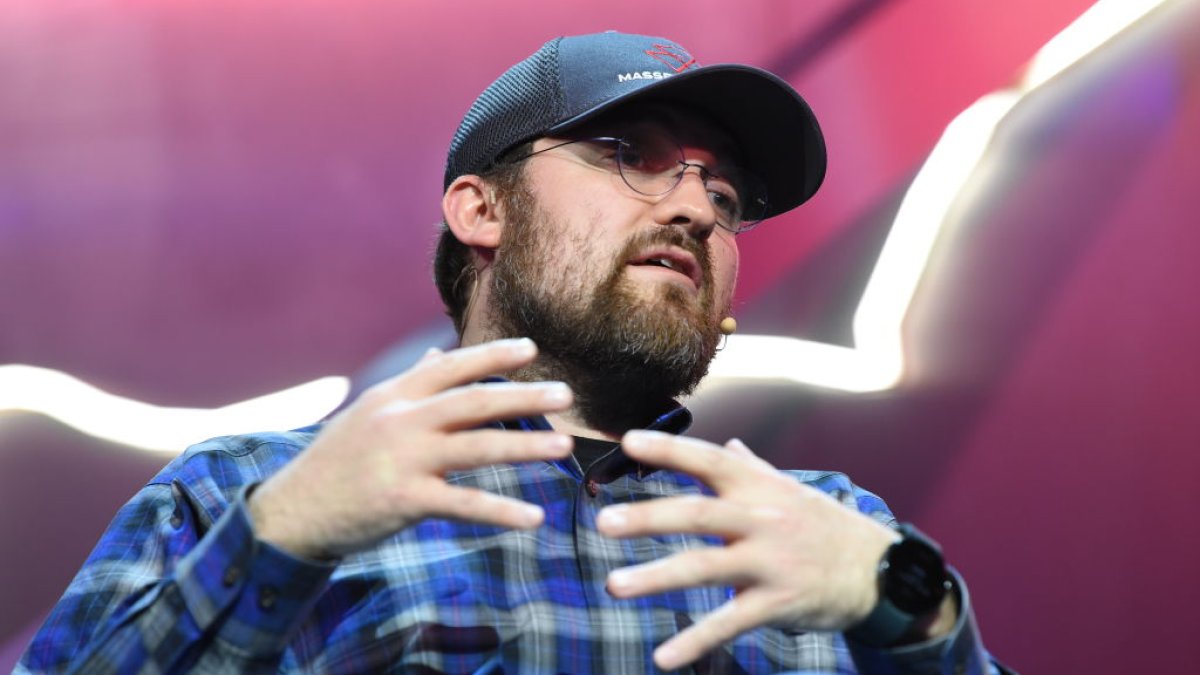
Cardano founder Charles Hoskinson has sharply criticized Ethereum co-founder Vitalik Buterin. He recently warned that artificial intelligence (AI) could weaken key digital security methods within two years.
According to Hoskinson, there is a lack of scientific evidence for that prediction. He also fears that such warnings could have dangerous consequences for digital security.
Buterin thinks that AI could lead to major mathematical breakthroughs in the coming years. As a result, security methods that are currently considered safe could become vulnerable much sooner than expected.
He mainly refers to so-called lattice cryptography. This technology plays an important role in the development of security that must be resistant to future quantum computers.
Quantum computers can perform certain calculations much faster than regular computers. As a result, they pose a potential threat to the security of crypto coins such as Bitcoin (BTC) and Ethereum (ETH) in the long term.
According to Buterin, AI can accelerate mathematical research so much that some security methods need to be adjusted sooner.
Hoskinson disagrees. In an extensive message on X, the Cardano founder states that Buterin does not provide sufficient evidence for his prediction.
According to him, lattice cryptography has been investigated and tested for decades. There is as yet no convincing evidence that AI can break this security within a few years.
Hoskinson is particularly concerned that the statements undermine confidence in new security techniques.
Governments and technology companies are currently working on switching to security methods that must be resistant to quantum computers. If such warnings cause organizations to hesitate and postpone their switch, he believes that this can lead to additional risks.
Many older security methods are not designed to withstand future attacks with powerful quantum computers.
The discussion follows an earlier warning from Ethereum researcher Justin Drake. He outlined a scenario in which AI discovers a vulnerability in a commonly used method to secure crypto transactions.
This concerns ECDSA, a technique that is used by Bitcoin, among others, to digitally sign transactions.
If someone can find out the private key of a crypto wallet, they may be able to send crypto coins without permission. With the currently known methods, it is practically impossible to derive such a private key from the public key alone.
Drake fears that an unexpected mathematical breakthrough could change that. He therefore spoke of a possible ‘bunker mode’, where additional measures are needed to protect digital assets.
Buterin shares those concerns, but stresses that investors should not panic or rush to move their crypto coins.
For the time being, there is no evidence that AI can actually crack the security methods discussed. The disagreement mainly revolves around the question of how seriously the crypto sector should take into account possible future breakthroughs.