
Buyer price drops, but China is paying record amounts: what's going on?
Copper prices are falling despite record prices in China. Declining stocks, Trump's import plans and stock market fears are putting pressure on the market.
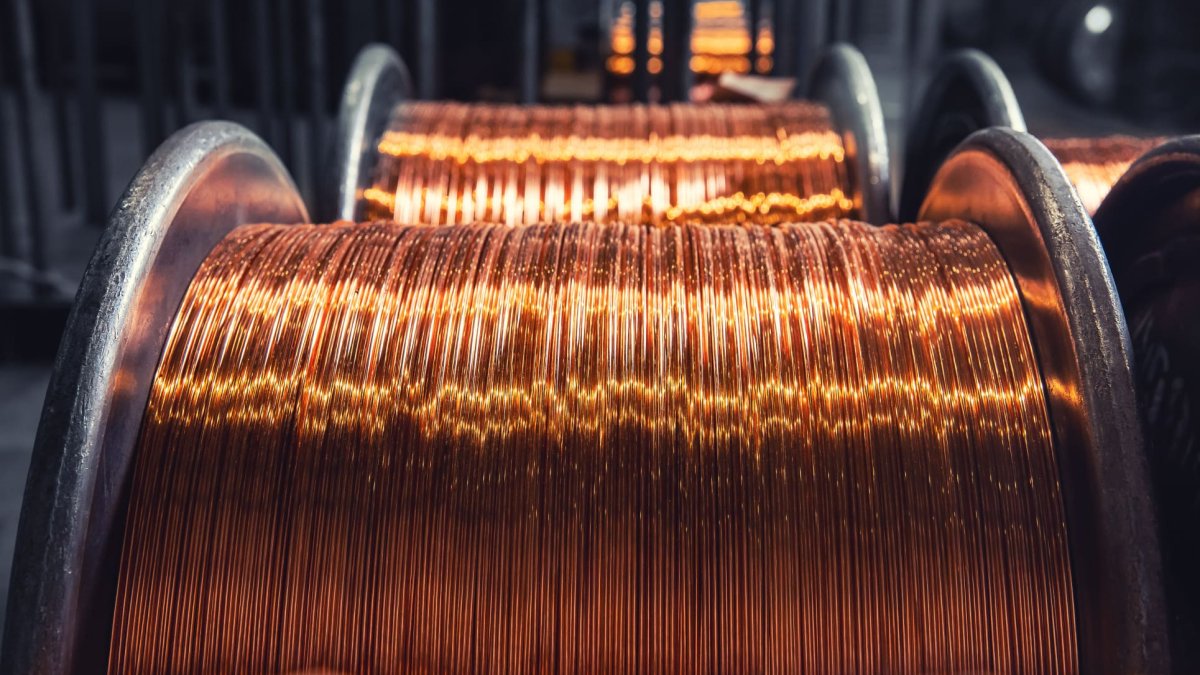
Copper prices are under pressure, while demand for the metal in China is picking up strongly. In the international commodity market, uncertainty about the global economy causes prices to fall, but Chinese buyers are now paying exceptionally high surcharges to get buyers. That contradiction shows how divided the global copper market currently is.
Copper prices fell 1.4 percent on Friday to $14,154.50 per tonne on the London Metal Exchange (LME). This puts the price below the record of $14,875 per tonne reached in September. The decline followed losses in technology stocks, where investors are increasingly questioning whether the huge investments in artificial intelligence will ultimately yield sufficient returns.
This uncertainty also affects the commodity market. Copper is widely used in power grids, data centers, and other infrastructure needed for the growth of artificial intelligence. If investors doubt the pace at which those investments continue, it could also affect expectations for future buyer demand.
Other industrial metals, including aluminium and zinc, were also under pressure. Shares of mining companies also fell. At the same time, oil prices spiked amid concerns about possible US military action against Iran. As a result, investors faced both economic uncertainty and rising geopolitical tensions.
While the international copper price is falling, there is a striking shortage of readily available copper in China. The so-called Yangshan premium, a surcharge paid by Chinese importers on top of the international copper price, rose to more than $200 per tonne. According to market data, this is the highest level since 2017.
The surcharge has more than doubled in three months and is now more than 700 percent higher than at the beginning of the year. This indicates that Chinese companies are willing to pay significantly more to get enough buyers. The development is at odds with the falling prices on the international futures market.
Stocks in China are also declining rapidly. According to data cited by Bull Theory, copper stocks fell by more than 25 percent to 54,356 tonnes. At the same time, Chinese production of refined copper in the third quarter was 1.1 percent lower than a year earlier. The combination of falling stocks and lower production increases the pressure on the local market.
An important explanation for the differences between regions lies in the United States. There, companies have stored large quantities of copper in the run-up to a possible import levy of 15 percent, which could apply from January 2027. Traders try to anticipate higher import costs.
Because of this stockpiling, there is a lot of copper in American warehouses, while Chinese customers have trouble finding enough metal. Worldwide, visible copper stocks have now risen to more than 1.2 million tonnes. That relatively high total conceals the fact that the buyer is not available wherever demand is greatest.
The tightness is also visible in the prices for immediate delivery. According to market commentary shared by The Kobeissi Letter, the premium for readily available buyer increased to $217 per tonne. Shanghai Metals Market expects the Chinese market to remain tight for the time being, although the research agency sees little room for an unlimited further increase in import premiums.