
Aave will freeze $279M in osETH, unless StakeWise wins this vote
Dmitri seeks a separate vote as Aave weighs who should bear osETH leverage risk and how existing borrowers can migrate. Read the full story on CryptoSlateUnderstand the crypto stories that matter and what to watch next. Get The Catalyst in your inbox
StakeWise founder Dmitri asked Aave governance on Nov. 11 to vote separately on freezing osETH, the protocol's staking token, challenging a plan to close it to new lending exposure on Aave's V3 Core market.
His forum response challenged a broader collateral overhaul proposed by risk adviser LlamaRisk on Nov. 10. The plan would stop new osETH supply and borrowing against it while leaving existing positions open.
LlamaRisk argues that V3's shared lending pool leaves Wrapped Ethereum (WETH) and stablecoin suppliers exposed to collateral risks at a pooled borrowing rate, while borrowers collect the additional spread from looping strategies that use borrowed funds to build larger staking positions.
Dmitri said StakeWise had experienced no hacks or validator slashings since January 2021 and described immutable, native leverage contracts that return borrowed ETH directly from validators.
A separate vote would let governance weigh that argument against its lending-risk criteria and give StakeWise time to address concerns before reassessment, as Dmitri requested.
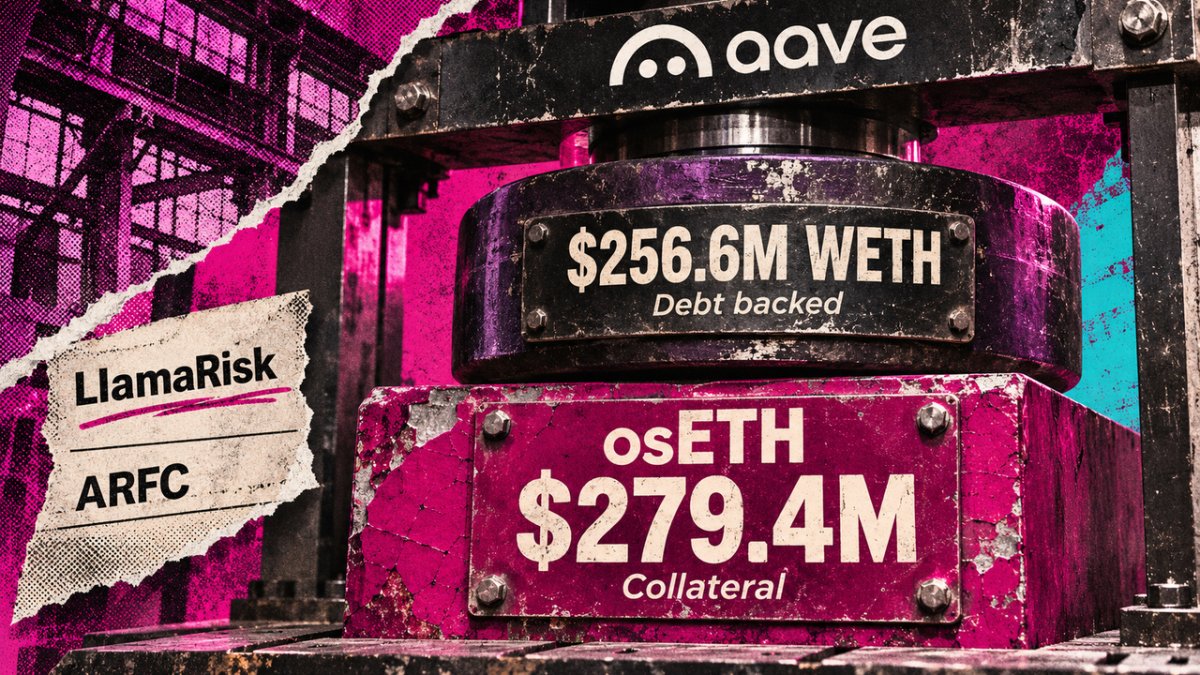
LlamaRisk's Nov. 9 analysis put osETH collateral at $279.4 million, backing an estimated $256.6 million of WETH debt. It attributed debt proportionally across each borrower's collateral mix.
The adviser estimated leverage at around 14 times in Aave's ETH-correlated efficiency mode (E-Mode), where osETH had a 93% loan-to-value limit. The 10 largest positions accounted for 66% of the attributed debt, and that concentration makes the treatment of existing positions central to the proposed transition.
Independent daily reserve snapshots show 122,900 osETH deposited on Nov. 9 and 122,400 on Nov. 11. Aavescan's 0.0074-osETH loan balance in both rows measures borrowing of osETH itself, so it does not contradict the much larger WETH debt backed by the token.
The initial freeze would set osETH's E-Mode borrowing limit to zero, while existing borrowers could repay or migrate, with withdrawals subject to their position constraints.
The proposal identifies wstETH, weETH, cbETH and WETH as replacement collateral already available within the same E-Mode, allowing collateral swaps without first repaying all WETH debt.
Related ReadingLlamaRisk's static analysis found that cutting liquidation thresholds by 2% to 5% would make most collateral in the highly leveraged rsETH and osETH loops eligible for liquidation.
The osETH category also contains other ETH collateral, limiting the ability to target it through a shared threshold.
LlamaRisk instead proposes issuer engagement and natural unwinding, with monthly progress reports. If exposure declines, no further measure would apply.
If migration fails to reduce it, a WETH base-borrow-rate increase would remain a last resort: up to 1%, in 0.5% steps no more than monthly.
Proposed rebates would offset the increase for WETH borrowers holding neither rsETH nor osETH, while an accompanying reserve-factor adjustment would keep the supply rate constant.