
XRP’s proposed upgrade could improve trading without boosting token demand
New pool-pricing curves could improve execution, but additional XRP holding demand would depend on adoption, routing and persistent funding. Read the full story on CryptoSlateUnderstand the crypto stories that matter and what to watch next. Get The Catalyst in your inbox
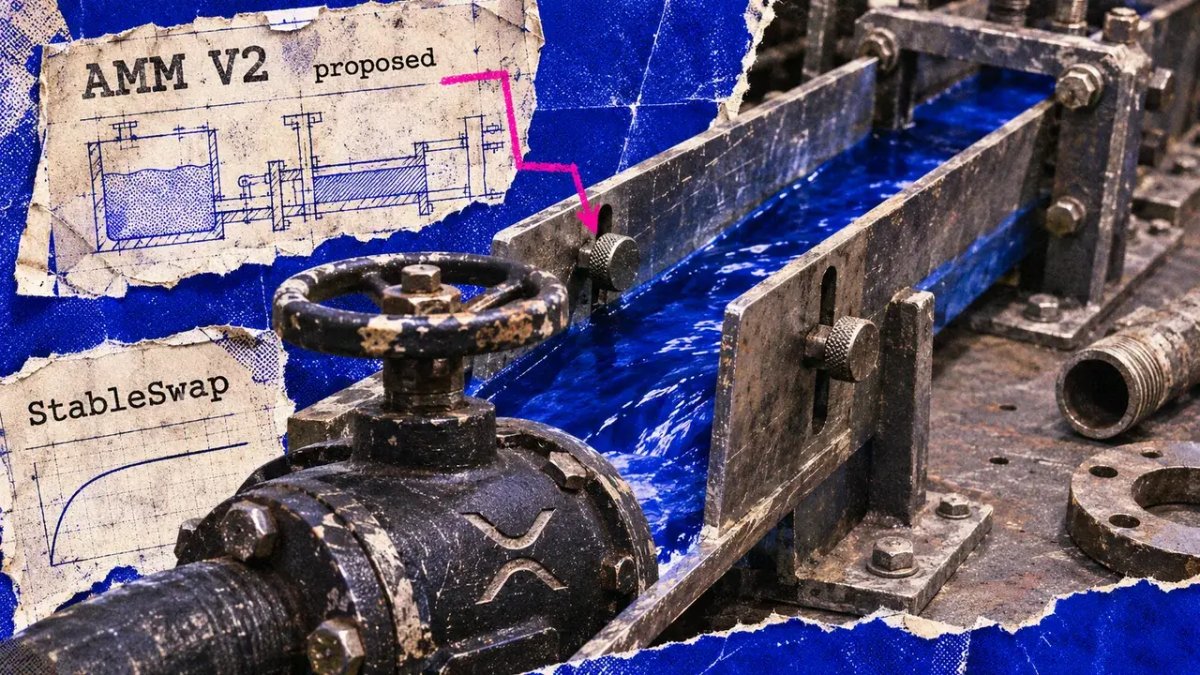
The XRP Ledger’s proposed AMM V2 overhaul would let creators of automated trading pools choose how those pools price trades, potentially giving traders more usable liquidity for the same deposit. For XRP holders, the potential benefits are better execution and new ways to provide liquidity; additional demand to hold the token would depend on which assets and routes attract capital.
The distinction is visible in today’s pools. XRPSCAN responses retrieved at 13:15 UTC on Nov. 15 showed roughly 25,065 of Ripple’s dollar stablecoin RLUSD and 25,068 of Circle’s USDC in the RLUSD/USDC pool, about $50,133 if both stablecoins are valued at $1. The XRP/RLUSD pool held about 1.94 million XRP and 1.88 million RLUSD.
Those are reserve snapshots, not amounts a trader could exchange at an unchanged price. They also illustrate two different inventory needs: the first pair holds two stablecoins, while the second holds XRP.
Related ReadingCryptoSlate’s XRP page displayed $0.97 when retrieved at 13:15 UTC on Nov. 15, with market data marked as updated eight minutes earlier.
An automated market maker, or AMM, lets users trade against a pool whose prices follow a formula. XRPL’s current design uses a constant-product-style curve. Liquidity supports trading across a broad price range, even when the assets usually trade close to one another.
The AMM Swappable Curves draft proposes alternatives. StableSwap would concentrate effective depth near the expected relationship between correlated assets, such as two dollar stablecoins. Concentrated liquidity would let providers allocate capital within chosen price ranges. Binned liquidity would place assets at discrete fixed prices, with execution moving to another price when a funded bin is exhausted.
The economic aim is more executable depth per unit of capital. A stablecoin pool could serve trades near parity with less money spread across distant prices. A provider choosing a narrower range could make the same deposit more useful while that range remains active.
The size of any trading improvement would depend on funding, price ranges, fees, trade size and whether correlated assets remain close in value.
Routing matters as much as the curve. XRPL already combines AMMs and order books. The draft would compare curve offers at each routing step using their actual output after fees at the offer’s size, rather than choosing solely by the displayed marginal price. Any execution comparison must therefore include order-book liquidity and alternative routes, not just these two pools.
Related ReadingA more efficient direct RLUSD/USDC pool could improve stablecoin execution without holding XRP as either trading asset. Users still face XRP transaction costs and applicable account or trust-line reserve requirements. Those requirements are separate from funding XRP inventory in a trading pair; current AMM ledger entries themselves have reserve exemptions, which do not automatically extend to new position entries proposed for AMM V2.
An XRP pair creates a different opportunity because its inventory includes XRP. Even there, capital efficiency cuts both ways. Less XRP could support a given amount of executable depth, while a larger, more active market could attract enough providers to raise aggregate deposits.