
World Bank tests USDC for development aid, but Circle's share price drops 5%
The World Bank is testing with Citi and Circle whether USDC can facilitate faster movement of development funds. Nevertheless, the CRCL share is approaching its lowest price ever.
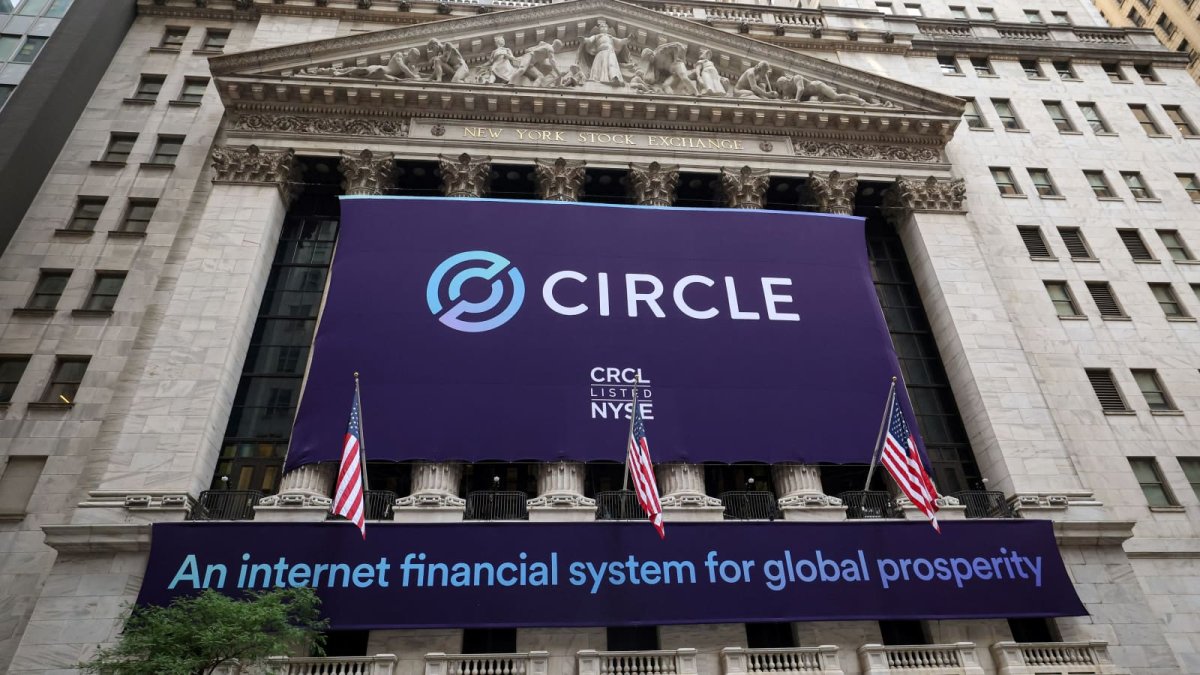
The World Bank wants to send development funds around the world faster and more cheaply using USDC, Circle's stablecoin. The institution announced this yesterday, thereby giving the crypto sector a heavyweight ally. Nevertheless, the American crypto company ended up with a painful loss on the stock market.
The World Bank, together with the U.S. bank Citi and Circle, is going to test whether regulated stablecoins can speed up its payments. This was announced yesterday in a press release.
A stablecoin is a cryptocurrency with a fixed peg to a currency, and for over 99 percent of the market, that currency is the dollar. This is also the case with USDC, the second-largest stablecoin in the world.
Currently, that money still flows through correspondent banks, a chain of intermediary banks that transmit cross-border payments. Each link in that chain costs time and money.
In the trial, Citi will provide the connection to the existing banking network, while Circle will create and settle the money in USDC. The test will only start in borrowing countries where digital currencies are permitted.
The project builds on FundsChain, a World Bank blockchain. More than 350 projects in 96 countries already use this shared digital ledger to track where their money goes.
Even a small saving makes a significant difference when it comes to the amounts that the World Bank disburses. In the financial year to the end of June, the Group provided over $123 billion in loans, grants, investments and guarantees.
If the bank reduces costs by 1%, around $1.2 billion more per year will be available for projects.
“When money can move faster and more cheaply, it has a real development impact: a health clinic is built on time, a farmer is paid before the harvest season ends, and a government can better respond to urgent needs,” says World Bank Group President Ajay Banga.
That sounds like good news for Circle, but the CRCL share fell by more than 5 percent yesterday and is now only just above its all-time low. In two days, it has now lost around 12 percent, and that loss only increases as we zoom out further.
This decline coincides with a difficult period on the stock market. The U.S. tech stock exchange, the Nasdaq, has been in a correction since the beginning of November, a drop of more than 10 percent from its peak, and the crypto market has also taken a significant hit recently.
Like other crypto stocks such as Coinbase, Circle is strongly correlated with the crypto market. If the prices of coins like Bitcoin (BTC) fall, those stocks often fall with them.
Over the course of this year, the share price is down by around 31 percent. There is also an underlying issue at play, as Circle's revenue is primarily dependent on interest rates.
Anyone who buys USDC exchanges dollars for it. Circle mainly invests those dollars in short-term U.S. Treasury bonds and cash and earns interest on them, while USDC holders receive nothing.
It is precisely that interest that is yielding less and less. The return on reserves fell to around 3.5 percent, causing interest income to decline by 8 percent to $657.6 million in the last quarter.
The currency is also barely growing: at the end of September, $73.9 billion worth of USDC was outstanding, the same as a year earlier. Circle is therefore unable to offset the lower interest rate with increased reserves.
At the same time, partner Citi is investing money in a competitor. The bank is one of the 21 financial institutions that are jointly investing around $270 million in their own stablecoin.