
Why Nvidia is far from out of the woods
Nvidia is surging spectacularly following the return of Jensen Huang, but it is still well below its record high. Is the AI correction over?
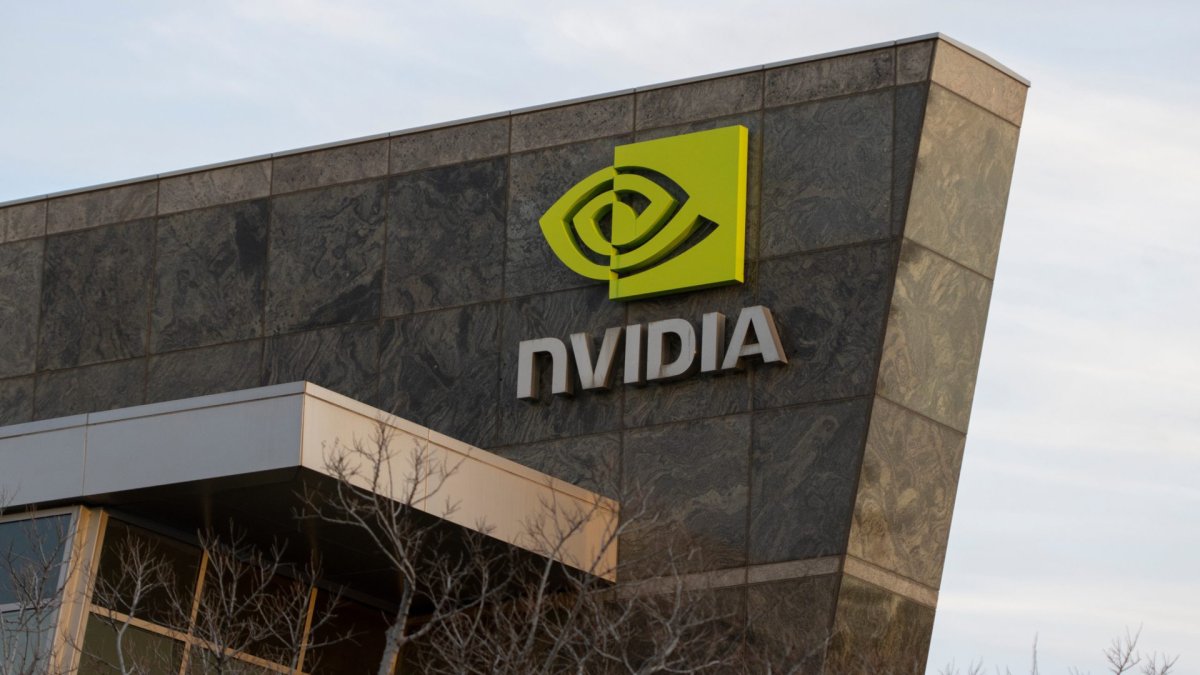
The return of Jensen Huang as CEO of Nvidia triggered a spectacular rise in share prices on Wall Street on Monday. However, the damage of the past few weeks is far from being repaired. Despite a rise of over thirty percent, Nvidia's share price is still 33 percent below its record high.
The question now is whether the AI sector is at the beginning of a sustained recovery, or whether the stock market rally is just a temporary upturn.
Although investors reacted enthusiastically to Huang's return, many shareholders are still at a loss. Since the controversy surrounding the CEO began, Nvidia's share price has fallen by twelve percent overall.
Compared to the record high in October, the loss has even risen to 33 percent. The price increase on Monday has therefore only made up for part of the previous losses.
Moreover, the uncertainty surrounding Nvidia has not yet completely disappeared. Huang's return has sparked new political debates in the United States. Several politicians are seeking clarification on the circumstances surrounding his departure and reappointment.
In the coming days, new developments in this matter may once again lead to price fluctuations.
The problems are not limited to Nvidia. Other major tech companies have also suffered significant share price declines in recent weeks. In particular, the huge investments in artificial intelligence (AI) are causing doubts among investors.
Technology companies are investing hundreds of billions of dollars in data centers, chips, and other AI infrastructure. Although the demand for computing power continues to grow, it is still uncertain whether all these investments will ultimately generate sufficient returns.
Huang's return removes a significant uncertainty surrounding NVIDIA but does little to alleviate these broader concerns.
At the same time, the recent decline does not necessarily signal the start of a prolonged bear market. AI stocks have risen exceptionally sharply in recent years, so a correction after such a strong period is not unusual.
The big question, therefore, is whether investors are currently witnessing a temporary downturn or the beginning of a longer period of falling stock prices.
Despite the recent losses, there are also reasons for optimism. According to market commentary, profit growth in the AI sector remains strong. The analysis provided mentions an annual profit growth of over 32 percent.
This is important because share prices have actually fallen sharply in recent weeks. When companies make more profit while their shares lose value, valuations decline.
This means that investors are now paying less for each dollar of corporate profit than at recent price highs. As a result, the stocks may become more attractive to investors who previously considered the valuations to be too high.
However, a lower valuation is no guarantee of recovery. To achieve this, tech companies must continue to demonstrate that their massive AI investments are actually contributing to profits.
The upcoming quarterly results will therefore be an important test. Investors will be particularly focused on Nvidia's revenue growth, profitability, and the outlook for demand for AI chips.