
Why cash hoarding in the UK proves the world still craves permissionless money
You can spend weeks paying for everything with your phone and still feel better knowing there's some cash at home. That might sound old-fashioned until your bank's app stops working, your card gets declined for reasons nobody can explain, or the power goes out while you need groceries. In those moments, the idea of financial […] The post Why cash hoarding in the UK proves the world still craves permissionless money appeared first on CryptoSlate.
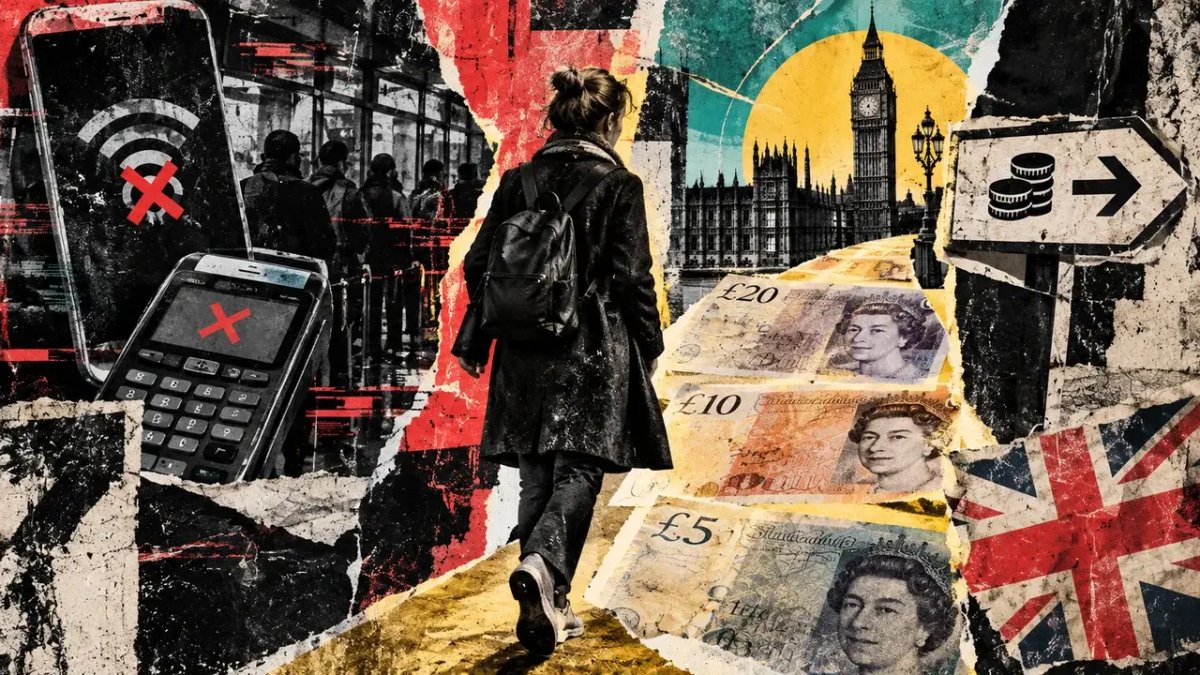
You can spend weeks paying for everything with your phone and still feel better knowing there's some cash at home. That might sound old-fashioned until your bank's app stops working, your card gets declined for reasons nobody can explain, or the power goes out while you need groceries.
In those moments, the idea of financial security stops being an abstract ideal you strive for and turns into something very practical. You need to be able to pay, and the money in your account only helps if you can get to it.
This seems to be what's going on in the UK, as Britain's newest cash numbers capture this change surprisingly well. In a Sept. 17 explanation of its banknotes, the Bank of England said cash made up just 8% of UK payments in 2025, down from 58% in 2009. However, the value of notes on its balance sheet went from £50 billion to £99 billion over that period, with £94 billion now held by the public in Britain and overseas.
Those are nominal pounds, so inflation accounts for part of the increase, and the overseas holdings mean we can't treat the total as money British households have stuffed into drawers. But even with those qualifications, the contrast is striking: people use cash less often but still want to own it.
The Bank describes this as the paradox of banknotes. Anyone who's kept emergency money in an envelope probably understands it without needing a central bank to give it a name.
Digital payments have earned their popularity. They're quick, they spare you a trip to an ATM, and they make buying something from another country almost absurdly easy. Most people have no desire to give that up.
But convenience depends on a collection of things working together. Your device needs power, communications networks need to function, and the institutions processing the payment need to let it through. Having three cards doesn't give you three independent backups if the same outage prevents every shop nearby from accepting them.
Cash gives you another way to pay. Once you have the notes, handing them to someone doesn't require a bank to approve the transaction or a phone to connect. That independence has a value even on the many days you don't need it.
Imagine being able to afford a tank of fuel but being unable to buy it because payments are down. Your balance hasn't fallen, but your practical freedom has. Money you can use immediately is a different kind of security from money an institution confirms you own.
Central banks understand this perfectly well. The Dutch National Forum on the Payment System, which includes the central bank, banks and consumer groups, advises households to prepare for three days of disrupted electronic payments. Its cash benchmark is €70 per adult and €30 per child, based on minimum expenses for essentials such as food, medicine and transport.
That's a local estimate, with households encouraged to adapt it to their circumstances and build it gradually. The accompanying advice also tells retailers to keep enough coins and notes to give customers their money back when they overpay.
There's a privacy benefit, too. Paying another person directly in cash doesn't create the same bank transaction record as a card payment. Wanting that option is a reasonable preference for an ordinary person buying ordinary things. Financial freedom includes being able to conduct some of your daily life without generating another entry in a company's database.
The European Central Bank's research on cash during crises documents surges in public demand during the 2008 financial crisis, Greece's sovereign debt crisis, the pandemic and the war in Ukraine.
Even though all of these were very different emergencies, they shared a reason for people to want more control over money they might need at short notice.