
Wall Street Seeks Recovery After a Setback from Tesla and Oil Prices Above $100
The price of oil has risen above $100, while doubts about the return on AI investments are hitting the stock markets hard. Here's what you need to know right now.
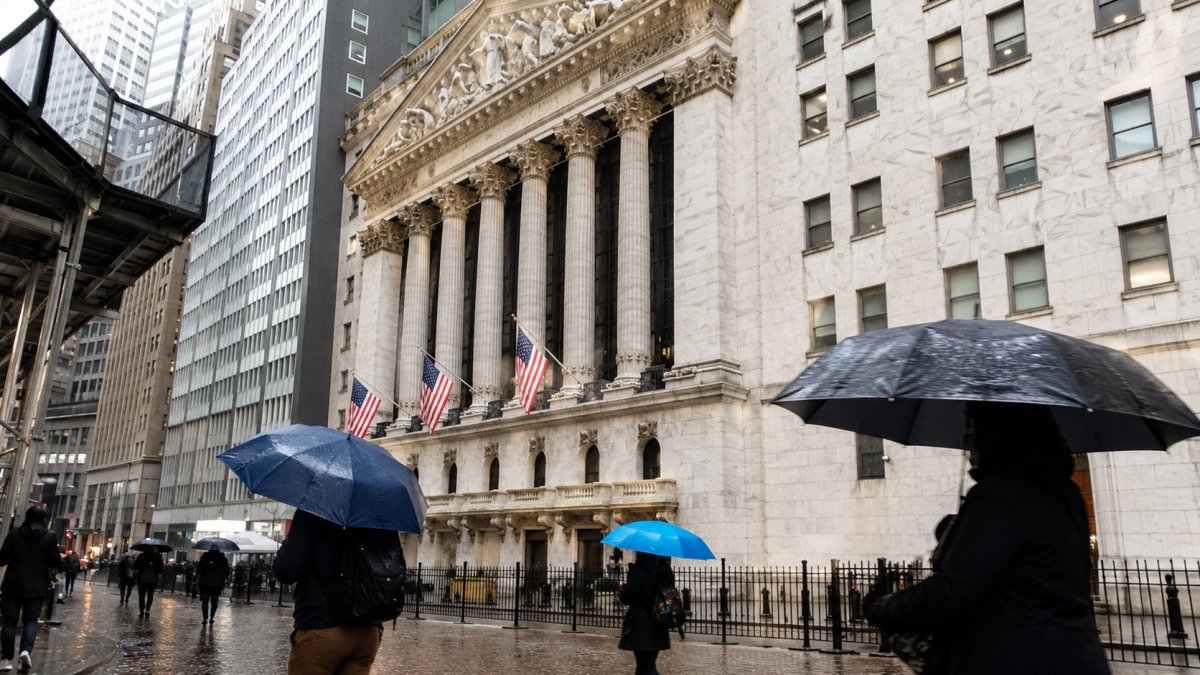
Wall Street is trying to recover from a sharp sell-off on Friday. S&P 500 futures remained virtually unchanged, while Nasdaq 100 futures were down 0.12 percent. Dow futures gained about 41 points.
This follows a painful trading day. The Dow Jones lost more than 500 points on Thursday, marking its fifth day of declines in six sessions. The S&P 500 fell 1.2 percent, and the Nasdaq lost as much as 2.2 percent.
Two factors in particular weighed on the market: a new surge in oil prices and disappointing earnings reports from Alphabet and Tesla.
The price of oil is once again the central macroeconomic issue. Brent rose by about 7 percent on Thursday, breaking above $100 per barrel for the first time since late May. WTI gained about 6 percent.
The immediate trigger was the attack on two Saudi oil tankers in the Red Sea. This marks a further expansion of the conflict in the Middle East into crucial shipping routes.
That is exactly what the market feared. Previously, the focus had been mainly on the Strait of Hormuz, but now the Red Sea is once again coming sharply into the picture. If multiple energy routes come under pressure at the same time, the risk of disruptions to the oil supply increases.
According to LPL Financial, the market was also poorly positioned for another rise in oil prices. Many investors were actually counting on stabilization or a decline. As a result, even a modest deterioration in the supply outlook could trigger a significant price reaction.
Oil prices above $100 change the calculus for central banks. Lower CPI and PPI figures had previously given investors hope that the Federal Reserve would not need to be as hawkish. But a new energy shock could quickly put that hope under pressure.
Higher oil prices can fuel inflation expectations. This affects transportation costs, production costs, consumer prices, and ultimately interest rate policy as well.
U.S. interest rates already reacted sharply on Thursday. On Friday, they stabilized during Asian trading, though they remained at high levels. The 10-year yield stood at around 4.70 percent and the 30-year yield at around 5.18 percent. These are not levels at which expensive growth stocks can easily breathe easy.
Added to this is a second problem: the enormous financing needs for AI. According to Interactive Brokers, oil isn’t the only factor putting pressure on the bond market. The heavy demand for credit associated with financing data centers, chips, and AI infrastructure can also push interest rates higher.
The AI bull market isn’t just about revenue growth; it’s also about massive investments. If hyperscalers continue to spend hundreds of billions of dollars, that capital has to come from somewhere.
In an environment of higher oil prices and higher inflation expectations, this could put additional pressure on interest rates. As a result, the cost of AI is becoming increasingly expensive.
The quarterly earnings reports didn’t help either. Tesla fell nearly 15 percent after reporting disappointing second-quarter results. That was its biggest drop since March 2025. Alphabet fell 7 percent after the company raised its projected capital expenditures for this year. The market sees this as further evidence that the AI arms race remains extremely costly.
That isn’t necessarily bad news for chip companies and infrastructure providers. Higher investments mean that demand for chips, data centers, and cloud capacity remains strong. But for investors in hyperscalers, the situation is more delicate.
The market doesn’t just want to see higher investments. It wants proof that those investments are translating into higher revenue, margins, and free cash flow. In Alphabet’s case, that proof apparently wasn’t convincing enough.
The selling pressure wasn’t limited to Wall Street. In Asia, stock markets were down sharply on Friday. Japan’s Nikkei lost 2.8 percent, while South Korea’s Kospi fell nearly 5 percent. The Kosdaq also took a heavy hit, dropping nearly 5 percent.
This shows that concerns about oil, interest rates, and AI are having a global impact. South Korea is particularly vulnerable, as its stock market relies heavily on chips, technology, and exports. When investors doubt the sustainability of the AI cycle, such a market is hit especially hard.