
Wall Street giant DTCC brings stocks and bonds to Solana
Solana is set to play a key role on Wall Street. From 2027, DTCC plans to offer stocks, ETFs and government bonds via the blockchain.
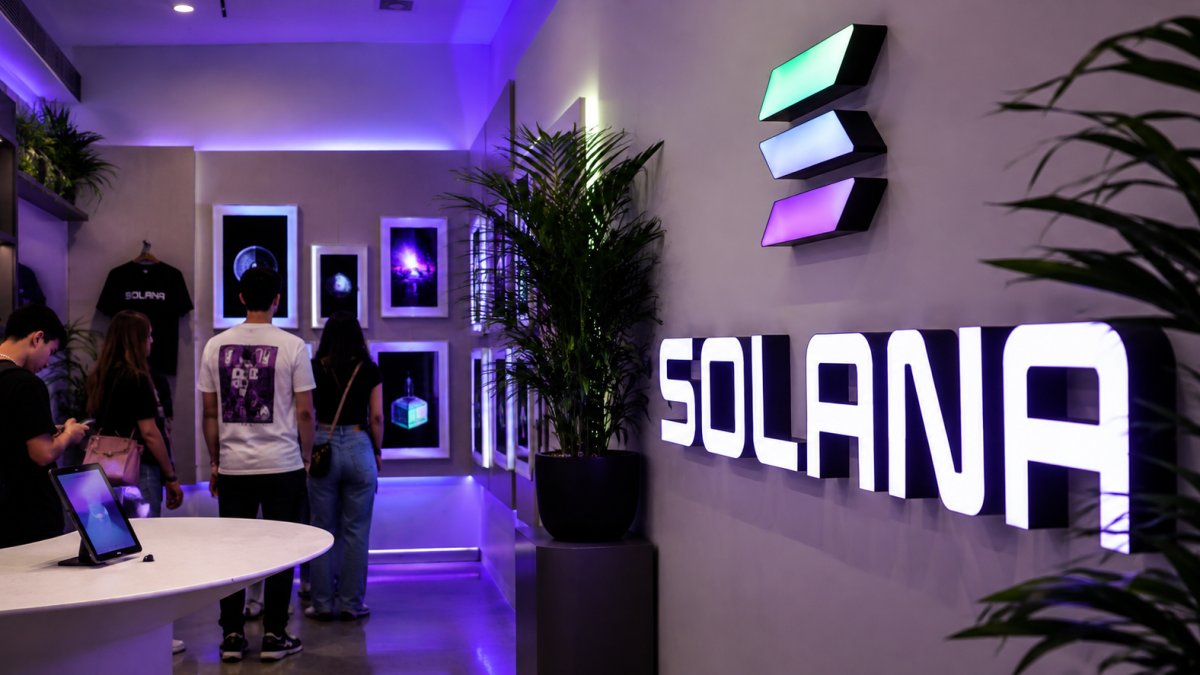
Solana (SOL) is set to play a key role in Wall Street's plans to bring traditional investments to the blockchain. The U.S. financial infrastructure giant DTCC has announced that it will expand its digital securities technology to the Solana network. This brings the cryptocurrency closer to a market where trillions of dollars are traded.
The Depository Trust & Clearing Corporation (DTCC) plans to make its service available on Solana in the second half of 2027. This will enable financial institutions to convert stocks, exchange-traded funds (ETFs) and U.S. Treasury bonds into digital tokens.
These are securities held by the Depository Trust Company (DTC), a subsidiary of DTCC. This organization plays a central role in the U.S. financial market and holds approximately $114 trillion in securities for banks and securities brokers.
The scale of the plans is considerable. When the new service was launched at the end of October, 34 securities were eligible for digitization, with a combined value of approximately $30 trillion.
Incidentally, this does not mean that this amount is already on the blockchain. It only concerns securities that are eligible for conversion into digital tokens.
DTCC started using the technology on the Canton Network and its own private blockchain, Besu, at the end of October. Stellar (XLM) and Arc, Circle's blockchain network, are also scheduled for 2027.
With Solana, one of the largest public blockchain networks is being added. According to DTCC CEO Frank La Salla, this will give financial institutions more choice when it comes to storing and using digital securities.
The technology behind this development is called tokenization. In this process, traditional financial assets are digitally represented on a blockchain. This can make it easier to transfer securities or use them as collateral.
An important advantage is that transactions may also take place outside the usual opening hours of stock exchanges. As a result, financial institutions could become less dependent on existing trading and settlement processes.
Interest in this technology is growing rapidly. The U.S. bank Citi expects the market for tokenized assets, including stocks, to reach $5.5 trillion by 2030.
Solana has already established a strong position within this market. According to data from RWA.xyz, there are approximately $600 million worth of digital stock tokens on the network. Only BNB Chain and Ethereum (ETH) have a larger market.
Trading activity is also substantial. This month, more than $11 billion worth of stock tokens were transferred via Solana. This places the network in second place in terms of transfer volume.
Nick Ducoff, responsible for institutional activities at the Solana Foundation, emphasizes that major financial players are already using Solana for existing financial applications. The partnership with DTCC should further strengthen that position.
Nevertheless, there is an important difference between the current digital shares on Solana and the securities that DTCC intends to introduce.
A large proportion of existing trading consists of synthetic stock tokens. These track the value of a share, but do not automatically grant holders the same rights as ordinary shareholders.
DTCC argues that its digital securities actually preserve existing property rights, investor protection and legal safeguards. In doing so, the organization explicitly focuses on regulated financial institutions.
Moreover, the plans go beyond simply transferring securities digitally. Earlier this year, at Consensus 2026 in Miami, La Salla stated that DTCC is exploring how blockchain technology can also improve dividend payments, takeover bids and other administrative processes.
The announced expansion to Solana is scheduled for the second half of 2027. It is not yet known how many securities will ultimately be processed through the network.