
Wall Street can stop a tokenized share, but can it stop a stock perp?
Costco recently made news when it strongly objected to a blockchain version of its shares. And while the supermarket giant did raise a set of pretty valid concerns regarding the potential risks of tokenization, the problem was that traders can actually already buy a blockchain-based contract (i.e., token) that follows its stock price. The company… Read the full story on CryptoSlateUnderstand the crypto stories that matter and what to watch next. Get The Catalyst in your inbox
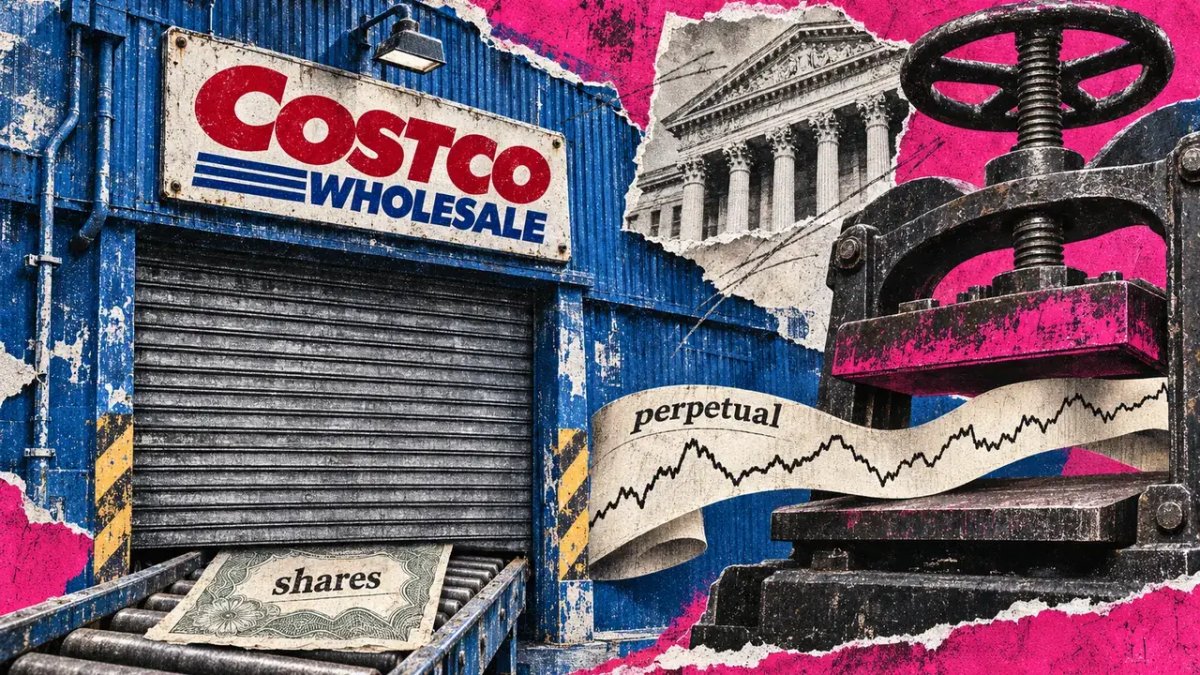
Costco recently made news when it strongly objected to a blockchain version of its shares. And while the supermarket giant did raise a set of pretty valid concerns regarding the potential risks of tokenization, the problem was that traders can actually already buy a blockchain-based contract (i.e., token) that follows its stock price.
The company is among 67 issuers in OKXICE's Nov. 5 objection notice, blocking third-party tokenized versions of their stock from the proposed venue backed by the New York Stock Exchange's owner.
Meanwhile, Kalshi lists a Costco perpetual, which offers price exposure without giving its buyer any shares.
The two products show how differently finance treats owning a company and trading its price: an issuer can stop its stock tokens from trading through one blockchain arrangement, while contracts tied to that stock follow a separate legal route.
That route is now being challenged in court, with established Wall Street firms competing to offer these contracts.
Shares give shareholders an interest in a business, along with the voting and distribution rights attached to the particular class of stock they own. Putting that interest on a blockchain can change how it's transferred while preserving what its owner is entitled to receive.
OKXICE's proposed model uses a tokenization provider acting through a registered broker-dealer to hold one underlying share for each token. Each token represents an entitlement to that share, and customers would trade them against dollar-linked stablecoins in automated asset pools.
Those pools can produce different prices from conventional exchanges. The ownership claim and the price you can get for it are separate concerns.
The Securities and Exchange Commission's September exemption allows qualifying venues to operate outside ordinary exchange registration, subject to conditions.
Tokens must preserve equivalent shareholder rights, including votes, dividends, and a claim on residual assets if the company is liquidated. Any token that just copies a share price doesn't qualify.
But the underlying company also gets a say. Before offering stock tokenized by an unaffiliated third party, an exchange has to notify the issuer, and each company has 30 days from receiving its notice to object.
The SEC's staff guidance confirms that a timely objection must be disclosed and prevents the venue from offering that token under the exemption.
Costco and dozens of others have already exercised that right, with their objections applying to OKXICE, and the companies haven't collectively explained their motives. The list therefore tells us little about their views on other forms of tokenization or contracts referencing their share prices.
A Costco perp works differently. You go long to gain when the stock rises, or short to gain when it falls. The contract has no scheduled expiry, and Kalshi's stock-perps documentation says holders receive neither shares nor voting rights.
That also means you can take substantial exposure with relatively little money. Costco's market page showed maximum leverage of 4.9 times on Nov. 6, meaning $1,000 of collateral supports $4,900 of price exposure.
A 10% move would cost $490 before fees and other adjustments, nearly half the original collateral. If collateral falls below the required minimum, the platform can close the position.
Even though the contract has no expiry, you may lose the ability to wait for a recovery.