
Wall Street bleeds after ‘blue tsunami’: market fears stricter AI regulation
The Democrats have a resounding victory in the US elections and the stock market reacts immediately. Are the concerns justified?
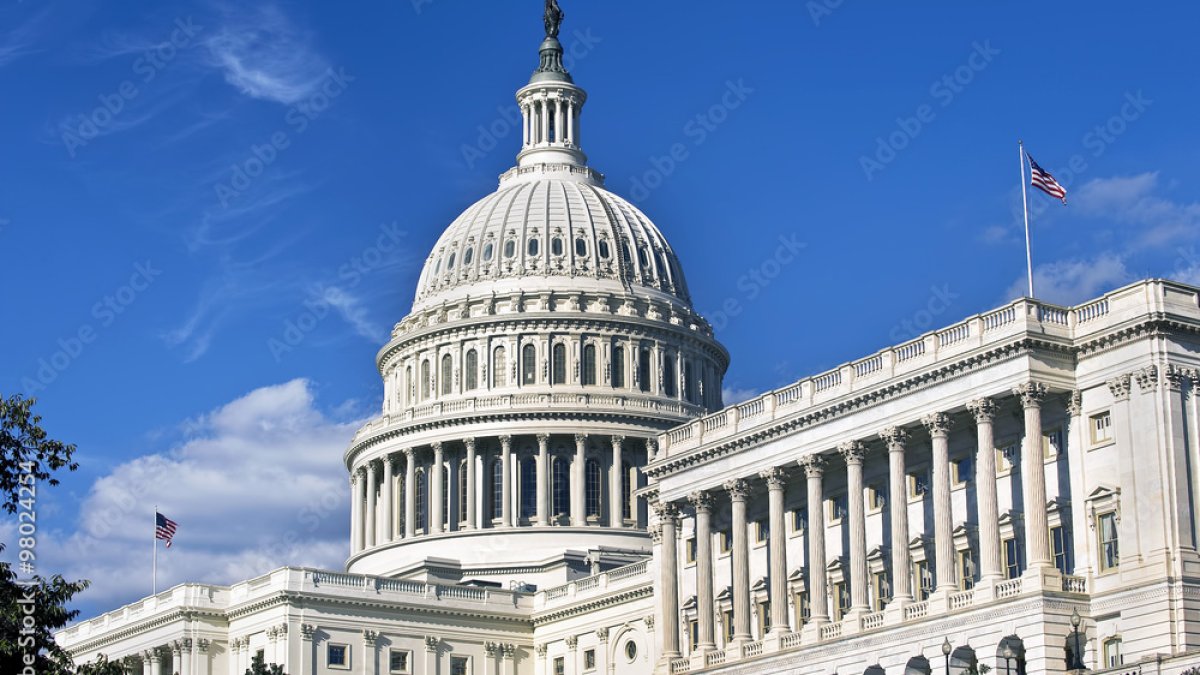
Wall Street has taken a hard hit after the big Democratic victory in the US midterm elections. Tech stocks in particular have fallen sharply, as investors fear that the new rulers will slow down the construction of AI data centers.
But in the meantime, the market has largely recovered and the bond market also seems to indicate that it is okay with the fear.
Futures on the S&P 500 were down 1.89 percent and futures contracts on the Nasdaq 100 were even down 3.15 percent. Both have reached their lowest levels since July, but have now nullified about two-thirds of the fall.
The decline started around midnight, when the first polling stations were closed. A so-called blue wave, in which the election card turns massively blue, was already expected. But the result was so great that American media now speak of a blue tsunami.
That makes governing a lot more difficult for the president. The Congress consists of two chambers, the House of Representatives and the Senate, and a law or budget only passes if both agree.
Until now, Donald Trump's Republican Party had a majority in both. As of January 3, the strings are in the hands of the Democrats, and they can block his plans.
Conversely, Trump can veto their laws. “Otherwise I'm just going to veto everything and they don't want that,” he told CBS. A political stalemate is therefore lurking.
At its lowest point, the tech exchange was almost 13 percent below the record level at the beginning of this month. With a fall of 10 percent or more, a correction can officially be spoken of, and this is also the largest fall since Trump's trade war at the beginning of last year.
Bitcoin (BTC) is already one step ahead of Wall Street: the largest crypto currency has already erased its entire nightly decline. Gold is now the big winner with a gain of more than 2 percent.
The biggest concern is not in Washington, but in the states. This is where the decision is made as to whether a data centre may be built, and what electricity and water it may use.
The Republicans have been rolling out the red carpet for the AI industry in recent years. Trump presented the Stargate project of OpenAI, SoftBank and Oracle at the White House in early 2025, accounting for up to $500 billion in AI infrastructure. After that, data centre permits had to be issued more quickly.
Many Democrats look at it very differently. Data centers are siphoning huge amounts of power, and in many states, residents are seeing their energy bills go up as a result. That became a grateful topic in the campaign.
Exactly in the states where many data centers are planned, the Democrats now won the governor's race. In Texas, Republican Greg Abbott lost to Gina Hinojosa. Amy Acton in Ohio and Keisha Lance Bottoms in Georgia have already argued for a break in construction.
Sarah Bianchi, strategist at investment bank Evercore, sees direct consequences. “Democrats winning governor's races in Texas, Ohio, and Georgia, which have a significant portion of the U.S. project pipeline, means new pauses and restrictions on data center development,” she wrote.
That hits the money engine of the stock market rally. The AI craze has pushed the Nasdaq up some 40 percent since the November 2024 presidential election.
But the bond market is telling a different story for the time being. The US 10-year interest rate fell by barely 6 basis points to 4.91 percent.
And that's telling. If the AI investment cycle really stops, companies will need much less money and the economy will slow down considerably. The interest should then fall like a brick. Chipmaker AMD also showed last night that the demand is still there: sales from data centers almost doubled last quarter to $8.5 billion.
Falling interest rates could eventually offer some relief. High interest rates put pressure on the valuation of stocks, bitcoin and gold, because investors can therefore obtain a good return on government bonds without any risk.
In addition, high interest rates make borrowing more expensive. And it is precisely the construction of data centers that is paid for in large part with borrowed money.
History also offers hope. Since 1950, the S&P 500 has been higher twelve months after each midterm, with an average gain of 16.6 percent. That is more than double the 6.9 percent in other years.
Even last night's scenario has seen the fair more often. Since 1954, the Democrats have taken both chambers seven times under a Republican president, and a year later the S&P 500 was higher and higher. On average, it was 15.5 percent.
The fact that politics is stalling can also be good news for the stock market. If the President and Congress block each other, there will be few major new laws, and therefore few surprises for companies.