
US stock perpetuals win clearance, but stock-market halts can still block exits
Kalshi's scheduled closures and Coinbase's September 2026 proposal show why no expiry does not guarantee an available closing trade. Read the full story on CryptoSlateUnderstand the crypto stories that matter and what to watch next. Get The Catalyst in your inbox
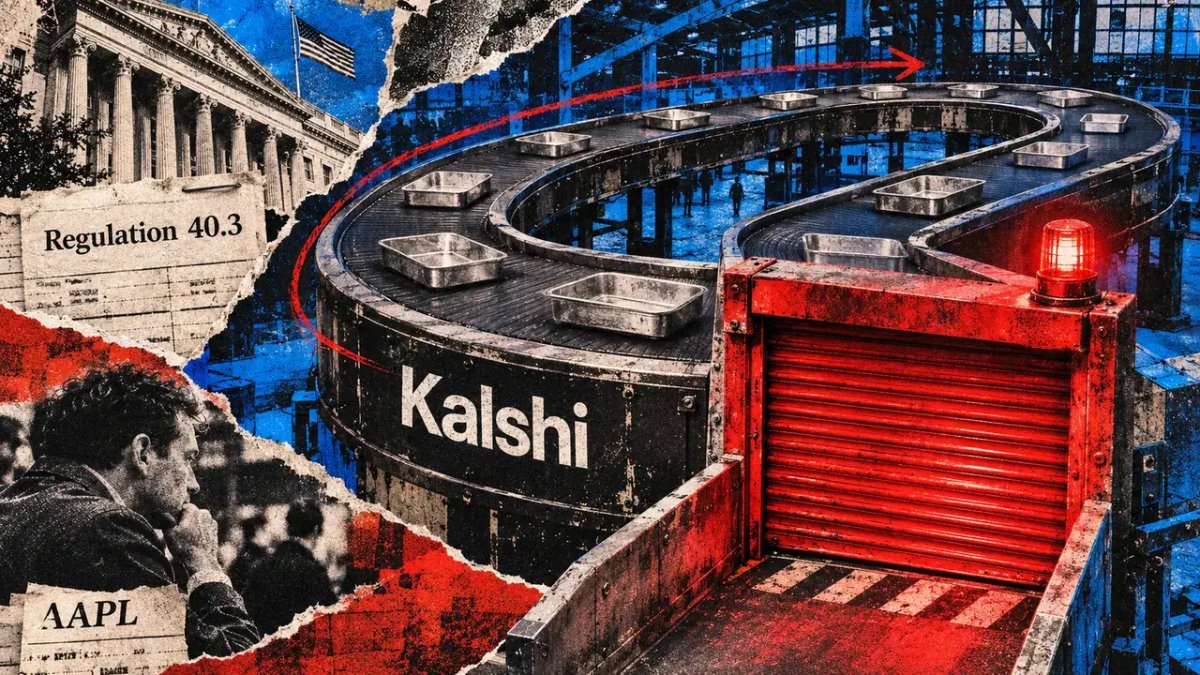
The CFTC said on Nov. 3 that US stock perpetual futures could begin trading on eligible regulated exchanges. These contracts track share prices without a fixed expiration date, but holders remain subject to stock-market halt rules that can interrupt an exit.
Chairman Michael Selig said the contracts had been deemed approved under Regulation 40.3. Eligible venues are designated contract markets also notice-registered with the SEC as securities exchanges, bringing the products into the agencies' joint security-futures framework.
Kalshi says it now offers single-stock perpetuals, with no expiration date, but explicitly warns that they do not trade 24/7. Markets follow schedules with regular closures, and customers cannot open or close positions while a market is closed. Access requires a perpetuals application and educational tutorial; leverage depends on the stock and position size.
For Coinbase, the individual CFTC product record still displayed “Approval Pending” when checked Nov. 4, while the SEC's rulemaking index marked its separate customer-margin proposal withdrawn. Those entries do not overturn the Nov. 3 announcement, but neither establishes a Coinbase customer launch or final terms.
Coinbase's September filing describes cash-settled futures on stocks and ETF shares, without ownership of the underlying shares. Its product submission uses AAPL as a representative specification and makes listing contingent on approvals. Its proposed controls apply to Coinbase's design, rather than setting the terms for every venue.
Related ReadingSecurities industry trade group SIFMA's Nov. 2 letter sought further review of proposals from Bitnomial, Coinbase, Kalshi and Nadex, raising concerns about manipulation, thin-liquidity trading and classification.
Under the security-futures halt requirement, a future on a single security must stop trading whenever that security is under a regulatory halt, subject to an applicable exemption. The agencies' joint-rule explanation says exemptions from both sets of requirements are needed.
These controls protect investors by allowing information to circulate and markets to regain order. Their immediate consequence is that an affected holder cannot use a closing trade in the halted contract to reduce exposure.
Buying or selling the same stock, or using its options, cannot be assumed to solve that problem: those markets generally honor the underlying regulatory halt too. A broader-market instrument might remain available during a company-specific interruption, but it leaves company-specific risk.
A venue-only derivatives outage presents a different case. If the cash market or another relevant instrument remains open and accessible, a separate trade may offset some exposure. That is a conditional hedge, dependent on access and liquidity, and it leaves the original perpetual open.
Related ReadingCoinbase's filed Rule 1207 would subject its contracts to US equity market-wide circuit breakers and coordinated halts, while also allowing restrictions for corporate actions, market disruptions and index-price or data outages. Reopening would follow the end of the halt condition and an exchange determination that resumption meets investor-protection and orderly-market requirements. The underlying stock reopening would not, by itself, promise an immediate futures exit.