
Trump's crypto revolution in Washington is coming to an end
After Trump's election defeat, stricter crypto regulations are looming in the US. His own crypto companies may also come under fire.
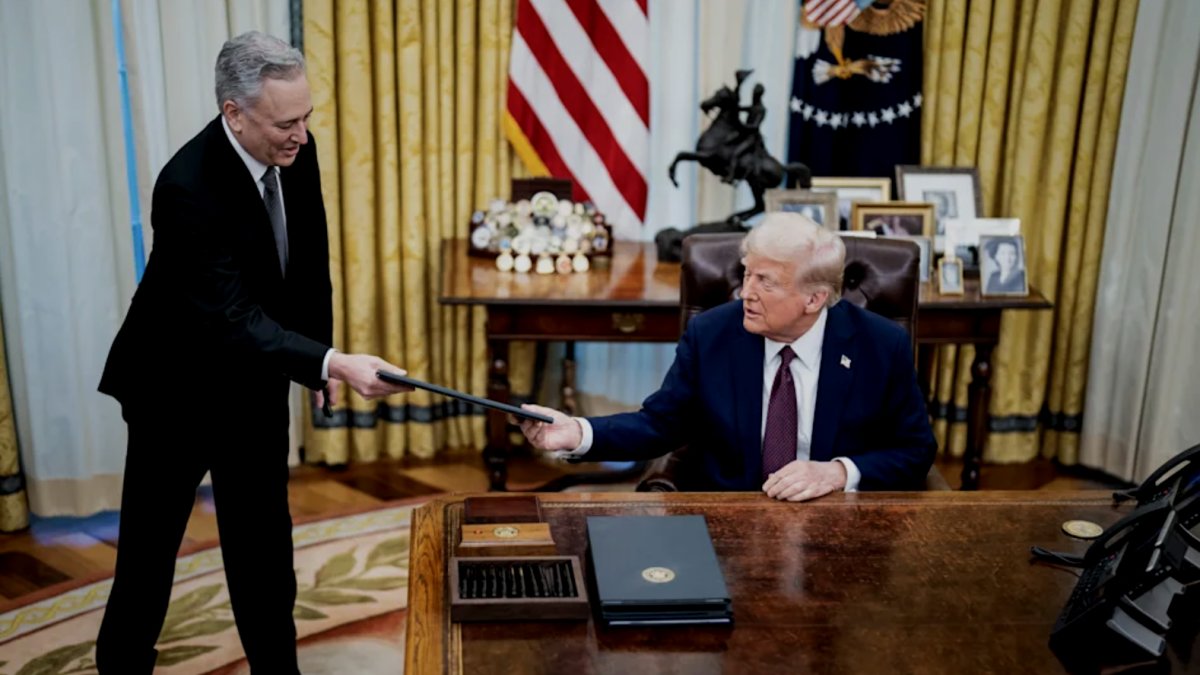
The US crypto sector is facing a major political turnaround. After the Democrats' election victory, the flexible crypto rules that President Donald Trump championed are in danger of coming under pressure.
His own crypto companies may also become the subject of new research. This marks the end of two years in which the sector received particularly strong political support in Washington.
Since his return to the White House, Trump has strongly supported the crypto sector. He made digital coins an important part of his economic policy, received crypto executives in the White House, and campaigned for smoother regulation.
At the same time, the president himself made large sums of money with his crypto projects. It was precisely this combination of political power and business interests that attracted criticism from the Democratic Party.
The mid-term elections are changing the situation radically. The Democrats won the majority in both the House of Representatives and the Senate. As a result, they will have more influence on US crypto legislation from next year.
For crypto companies, this means that their plans for new, favorable rules become more difficult to implement.
An important example is the Clarity Act. This law was intended to clarify the supervision of crypto exchanges and other companies that work with digital coins.
The proposal ran aground in the Senate in September. Democrats objected to the limited protection of investors and the insufficiently strict rules around the business interests of politicians. There were also disagreements about stablecoins and competition with traditional banks.
With a Democratic majority in the new Congress, it seems even more difficult to get the law passed in its current form.
The Democrats don't just want stricter rules for crypto. They can also investigate the financial ties between Trump and the industry.
Especially World Liberty Financial, the crypto company in which the Trump family is closely involved, is under a magnifying glass.
Democratic politicians have long had questions about possible conflicts of interest. Trump benefits financially from crypto projects, while at the same time his government decides on rules that are important for these companies.
Trump denies that his business interests conflict with his work as president.
The election results also give well-known cryptocritics more influence. Senator Elizabeth Warren can become chairman of the important banking committee in the Senate. In the House of Representatives, Maxine Waters, who has previously been critical of Trump's crypto interests, may also be given a larger role.
According to Adam Minehardt of the Hyperliquid Policy Center, the crypto sector will have to defend itself against the new political pressure for the time being.
Sherrod Brown also returns to the Senate. He lost his seat in 2024 after crypto lobby groups spent millions of dollars on campaigns against him. Now he has defeated Republican Jon Husted and can assume an important role in overseeing the regulator of commodities and crypto derivatives.
The election results do not mean that all of Trump's crypto-friendly measures will disappear.
For example, the existing US law for stablecoins remains in force. To reverse this, new legislation is needed. Financial regulators can also continue to develop rules for digital assets.
However, the Congress will have more opportunities to exert influence. Democrats can start investigations, call responsible directors for questioning and put pressure on regulators through the budget.
This creates uncertainty for investors. The Bitcoin price is still well below its previous record, despite the political support the sector has received in recent years.
In addition, the crypto market is struggling with problems that are unrelated to the election results. For example, the recent hack at Binance led to billions in losses and new questions about the security of crypto platforms.
Nevertheless, according to some representatives of the sector, the new political situation also offers opportunities. If crypto companies manage to get support from both Republicans and Democrats, it can ultimately ensure rules that last longer than one presidency.
Ji Kim, director of the Crypto Council for Innovation, emphasizes that the industry is willing to work with politicians from both parties.
The coming months will mainly show whether the industry is willing to make concessions in the areas of consumer protection, supervision and the business interests of politicians.