
This AI doctor is worth $15 billion, but does he work?
OpenEvidence receives 42 million questions per month from American doctors. Advertisers pay the bill, but is the advice reliable?
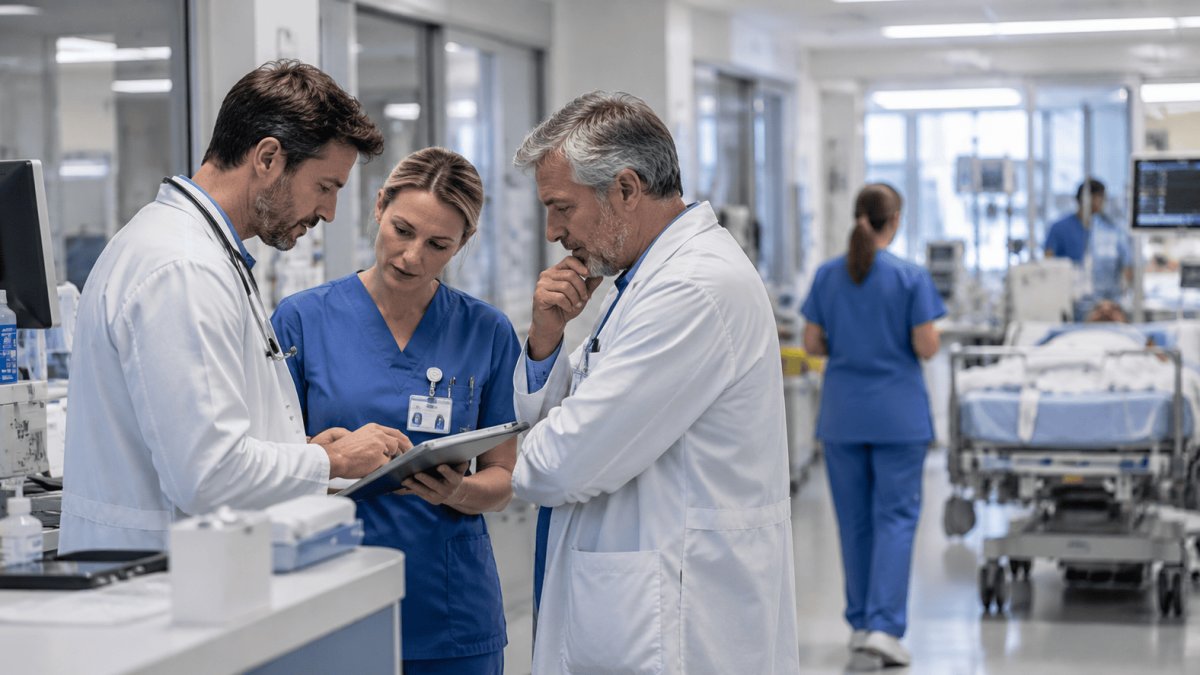
An AI startup barely four years old has grown into a $15 billion company. American doctors use the chatbot en masse when treating patients, while advertisers pay the bill. Researchers are still far from reaching an agreement on the reliability of that advice.
This concerns OpenEvidence, a start-up from Miami that founded serial entrepreneur Daniel Nadler in 2022. According to Nadler, almost two-thirds of the approximately 1 million American doctors now work with his chatbot.
Together, they asked OpenEvidence over 42 million questions last month, he told the Financial Times. Converted, each user asks about 65 questions per month, more than three per working day.
A doctor describes his patient and receives an answer based on medical journals and clinical guidelines. The chatbot only draws on scientifically tested sources, such as the New England Journal of Medicine.
“With OpenEvidence, I can give a lot of context about my patient, find information, and make decisions faster,” says Nina Singh, a physician trainee at the University of California San Francisco.
Hospitals like Mount Sinai and Memorial Sloan Kettering in New York have built the tool into their electronic patient records. This allows doctors to consult him directly from the file.
At NYU Langone, doctors were already using the chatbot on their own. That is why the hospital opted for an official, secure link.
OpenEvidence barely campaigned. Doctors simply recommended the chatbot to each other, which is a rarity in the healthcare sector. “We are the first viral consumer internet app in healthcare,” says Nadler.
Established parties were late. Dutch Wolters Kluwer only released an AI version of UpToDate, its paid reference work for doctors, in October 2025. That was almost two years after OpenEvidence.
Doctors do not pay anything themselves, because the company earns money from advertisements. At the end of 2025, according to a source around OpenEvidence, there were already around $100 million in advertising deals ready for this year.
The same source expects ad revenue to reach $400 million to $500 million by the end of 2026. Investors such as Andreessen Horowitz, Blackstone and Sequoia invested almost $1 billion in it in a year and a half.
In September, OpenEvidence raised another $250 million at a valuation of $15 billion. That's about 30 to 37 times the expected advertising revenue, and critics doubt whether ads justify that price tag.
Nadler is already looking further. He wants to unleash AI on existing professional literature to find new ideas for medicines. According to him, that yields much more than hospitals or advertisers can ever pay.
Meanwhile, the big AI companies are also reporting. OpenAI launched ChatGPT for healthcare and Anthropic released its own healthcare tools. Anthropic is working with OpenEvidence to bring the chatbot to 100 low- and middle-income countries.
That is still unclear, because studies contradict each other. The Mayo Clinic, itself an investor in the start-up, saw the right advice in all five patient cases examined. The chatbot had little influence on the final treatment.
A study in Nature in June was more critical. On benchmarks, standardized tests to compare AI models, OpenEvidence scored worse than general models such as Gemini from Google and GPT from OpenAI.
According to Eric Oermann, neurosurgeon at NYU Langone, there is too little research into loose AI tools and a manual for the clinic is missing. In addition, doctors fear that young colleagues lean on the chatbot before they master the basic knowledge.
Nadler dismissed the benchmarks as friendly competition. According to him, it is already clear which AI tool doctors trust and use.
Dutch doctors will not be able to work with it for the time being. OpenEvidence withdrew from the EU and the UK earlier this year due to the European AI law.
However, the company is taking the next step in the US. In the coming weeks, it will start clinical studies on cancer and rare diseases together with researchers.