
These are the 4 most interesting Dutch AI shares at the moment
Discover the best Dutch AI stocks. ASML, ASMI, Besi and Nebius benefit from the AI revolution. These are the opportunities and risks.
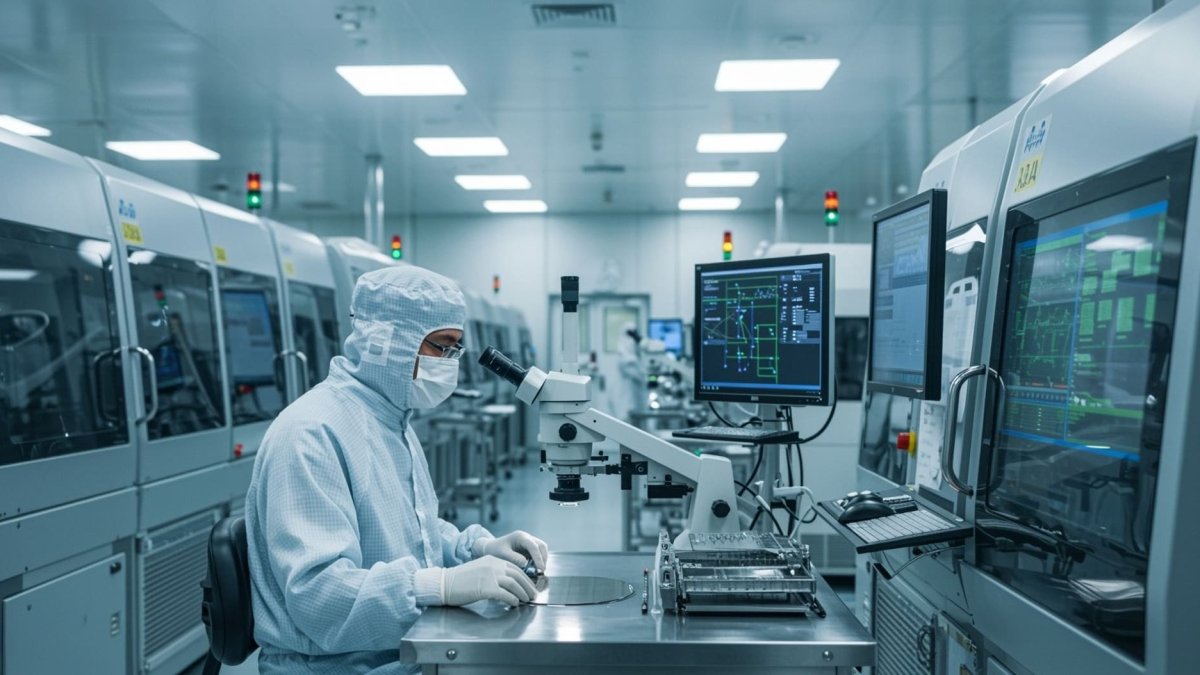
Dutch AI shares are in the spotlight. The hype around artificial intelligence is no longer just about American names such as Nvidia, Microsoft and Meta. Companies can also be found on the Dutch stock exchange that directly benefit from the enormous demand for chips, data centers and computing power.
Especially ASML, ASMI, Besi and Nebius stand out. The first three are well-known chip companies from the Netherlands. Nebius is a much younger AI player, but is growing rapidly due to billions of contracts with major American tech companies. Nevertheless, the differences between these shares are large. Some companies have been earning from the chip sector for years, while others rely mainly on future growth.
ASML is perhaps the best-known Dutch AI share. The company from Veldhoven makes machines that allow chip manufacturers to produce the most advanced chips in the world. Without ASML, companies such as TSMC, Samsung and Intel simply cannot make their most modern chips on a large scale.
ASML's strength lies mainly in its dominant position. The company is the sole supplier of advanced EUV machines. These machines are needed to apply extremely small structures to chips. It is precisely these chips that are essential for artificial intelligence, as AI models require more and more computing power.
Expectations for ASML remain high. Large chip companies are investing hundreds of billions of dollars in new factories. Micron recently increased its investment plans, while Samsung and SK Hynix also want to continue to invest heavily. This is important for ASML, because new factories often also mean new chip machines.
Yet ASML is not a cheap share. Investors pay a hefty premium for the company's market position. This means that disappointing orders or a weaker outlook can immediately put pressure on the price. The coming quarterly figures will therefore be important. Then it must be shown whether the AI hype really remains visible in the order books.
ASMI is less in the spotlight than ASML, but the company plays an important role in the chip chain. The company makes machines with which chip manufacturers apply extremely thin layers of material to wafers. That sounds technical, but it's crucial for modern chips.
The company is particularly strong in a technique called atomic layer deposition. This allows chipmakers to apply layers of material atomic layer by atomic layer. This is important because chips must become smaller, faster and more energy-efficient. This is particularly relevant for AI applications. Data centers consume huge amounts of power, making more efficient chips increasingly important.
ASMI therefore benefits not only from the construction of more chips, but also from their increasing complexity. The more advanced a chip becomes, the more important ASMI machines become in the production process.
The market is counting on further growth due to the demand for AI chips, memory chips and data center hardware. At the same time, ASMI remains sensitive to the investment cycle in the chip sector. If large customers slow down their spending, it can quickly affect new orders.
For investors, ASMI is therefore a share with strong structural opportunities, but also with cyclical risks. The company is deep in the AI chain, but remains dependent on the pace at which chip manufacturers continue to invest.
Besi is smaller than ASML and ASMI, but plays an increasingly important role in the chip sector. The company makes machines for connecting and packaging chips. This step is often less discussed than the production of chips themselves, but is becoming increasingly important.
That difference with ASML and ASMI stands out. Investors do see opportunities for Besi, but are also more cautious. The share has risen sharply in recent years due to the expectation that advanced packaging will become more important. In doing so, multiple chip parts are combined in a smart way, so that they can work faster and more efficiently.
This is important for AI chips. Large AI models require huge amounts of computing power. This is not only possible with one powerful chip. More and more often, multiple components are combined into one powerful system. That's where Besi's technology comes in.
Nevertheless, Besi remains more sensitive to fluctuations. The chip packaging market can cool down faster than the market for the most advanced chip machines. The rating is also high. As a result, investors react sharply to signals that customers are less in a hurry to make new investments.
Besi thus remains an interesting AI share, but not without risk. The company is at an important point in the chip chain, but the price shows that investors are not yet fully convinced of a new rise phase.
Nebius is perhaps the most notable part of this list. The company is based in Amsterdam and builds AI infrastructure. This means that Nebius makes large clusters of powerful graphics chips available to companies that need a lot of computing power.
Nebius was formerly known as Yandex N.V., but the company divested its Russian operations. Since then, Nebius has focused entirely on AI cloud infrastructure. The company calls itself an AI neocloud. Simply put, Nebius leases computing power to large companies that cannot build enough AI capacity quickly enough.
The growth figures are impressive. In the first quarter, sales amounted to $399 million. That was hundreds of percent more than a year earlier. Almost all sales came from AI cloud services.
The great attraction lies in the contracts. Nebius has multi-year agreements with Microsoft and Meta. Together, those contracts represent tens of billions of dollars in future revenue. Nvidia has also invested in Nebius. This gives the company extra credibility in the market.
But it is precisely here that the risks lie. Nebius has to build huge data centers, arrange sufficient power and continue to invest in expensive Nvidia chips. That costs a lot of money. Capital expenditures for 2026 are estimated at tens of billions of dollars.
In addition, Nebius is highly dependent on a few large customers. If Meta or Microsoft needs less capacity, that can be hard. The share was also recently hit by concerns that Meta itself wants to offer more AI computing power. This could reduce the demand for parties such as Nebius.
Nebius is therefore not a defensive AI share. It is a growth story with a lot of potential, but also with considerable risks. For investors who believe that the demand for AI computing power will continue to increase for years to come, Nebius is one of the most exciting Dutch names. But the price movements show that this share is not suitable for everyone.
ASML remains the most dominant name in this list. The company has a unique position in the global chip industry and benefits directly from the AI investment wave. ASMI is slightly less known, but is deeply involved in the production of advanced chips. Besi is interesting due to the growing role of chip packaging, but remains more vulnerable in the short term.
Nebius is the outer leg category. The company is not a traditional chip player, but a pure AI infrastructure party. The chances are great, but so are the risks.
For investors, it is therefore mainly about how much risk they want to take. ASML and ASMI are established companies with strong positions. Besi provides more cyclic tension. Nebius is the most explosive name, but also the most uncertain.