
Saudi oil shows why the next OPEC+ production increase could deliver less than markets expect
Saudi Arabia can send oil from its eastern fields to an overseas customer without putting a tanker through the Strait of Hormuz, the narrow passage connecting the Persian Gulf to the open sea. The crude travels by pipeline across the country to Yanbu, a port on the Red Sea, where a ship collects it. Kuwait,… Read the full story on CryptoSlateUnderstand the crypto stories that matter and what to watch next. Get The Catalyst in your inbox
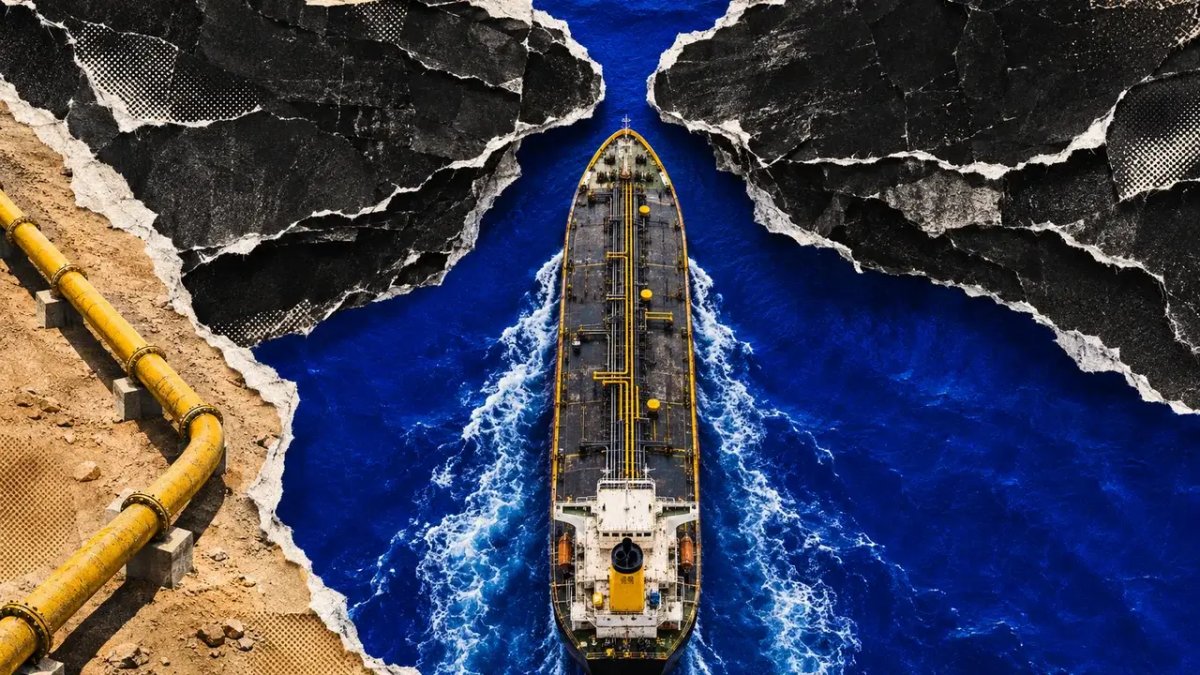
Saudi Arabia can send oil from its eastern fields to an overseas customer without putting a tanker through the Strait of Hormuz, the narrow passage connecting the Persian Gulf to the open sea. The crude travels by pipeline across the country to Yanbu, a port on the Red Sea, where a ship collects it.
Kuwait, just up the Gulf from those Saudi fields, loads its regular overseas cargoes inside the Gulf, so its tankers have to pass through Hormuz to reach customers beyond it. For a buyer choosing between the two suppliers, that difference can determine how easily an order gets delivered.
Both countries belong to OPEC+, the alliance of oil producers that includes Russia and agrees on how much its members should pump.
Whenever the group meets, an increase in production allowances leads to a pretty straightforward calculation: if you give a country permission to pump another 100,000 barrels a day, buyers should have another 100,000 barrels available to buy.
However, last month's numbers from Kuwait show it's not always such a straightforward case.
The International Energy Agency (IEA) estimated Kuwaiti production at 2.03 million barrels a day against an implied target of 2.68 million, leaving it 650,000 below its allowance. Iraq, another member exporting through Gulf ports, pumped 4.6 million against a target of 4.43 million, putting it 170,000 above.
Kuwait already had permission to produce considerably more oil, and easier shipping could help it sell more without a higher quota. Meanwhile, Iraq could receive a bigger allowance that would bring its target closer to what it was already pumping.
To understand what an OPEC+ agreement buys a producer, it helps to separate the negotiation from the journey to the customer.
Ministers start with a baseline, a reference level from which they calculate a country's production cuts. Applying those cuts produces its target, or the amount it's supposed to pump.
The IEA's implied targets account for voluntary cuts and adjustments to offset earlier overproduction, while its output estimates show how much oil countries actually produced.
Even oil that's been pumped doesn't necessarily become an export cargo. Some goes to domestic refineries, which turn crude into fuels such as diesel and gasoline, and some goes into storage.
The amount left for overseas buyers still needs a way to reach a port and a ship that can complete the voyage.
Saudi Arabia pumped 9.99 million barrels a day in October against an implied target of 10.48 million, according to the IEA. Separately, the US Energy Information Administration estimated that the Hormuz disruption took roughly 500,000 barrels a day of Saudi production offline, compared with 560,000 in Kuwait and 60,000 in Iraq.
Those estimates measure production lost to the disruption, so they measure something different from the gap between output and an OPEC+ target. Iraq could lose output at some fields because oil couldn't get out, even while still producing more nationwide than its OPEC+ target allowed.
Saudi Arabia has an advantage in recovering that lost business because its East-West Pipeline carries oil from Abqaiq, near the eastern fields, across the kingdom to Yanbu. Saudi Aramco reported capacity of 7 million barrels a day earlier this year, including about 2 million for refineries.