
Musk, Ripple and other mega-donors pay most expensive midterms since 2018
Tech and crypto have become big backers of American politics, but have a disappointing result to deal with.
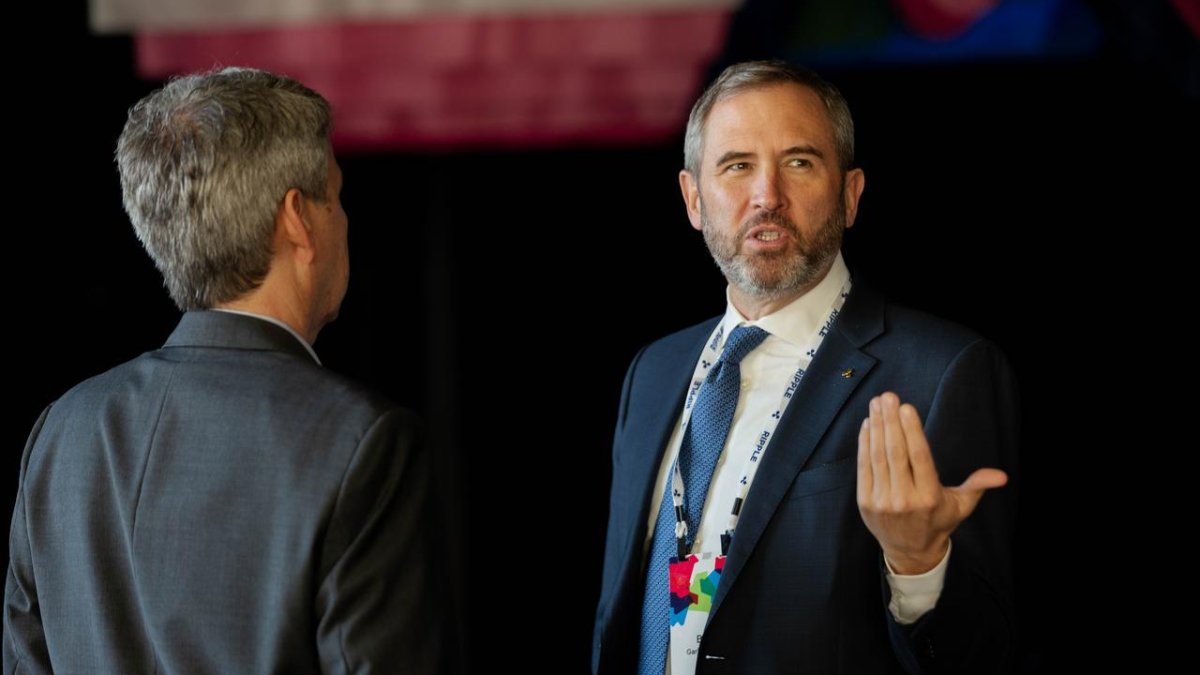
Tech and crypto companies are among the largest lenders of the US midterms. No one can match the donation of tech billionaire Elon Musk, and Ripple is remarkably the biggest contributor to the crypto industry.
Yet both worlds would have preferred a different outcome.
Especially a small group of the super-rich and organizations. A chart Rand Group shared yesterday on X lists 50 donor groups with a combined $2.74 billion in public donations. More than 60 percent of that, about $1.67 billion, goes to Republicans.
The Democrats raise about $832 million from these groups. The remaining 235 million dollars comes from so-called special interests: donors who are not tied to one party, but to their own agenda. Ripple and Coinbase fall into that group.
“The Exponential Age is now funding politics. Tech and crypto have become the biggest check writers in the room from outsiders,” Rand Group wrote on social media platform X.
According to the New York Times, the twenty largest donors together spent about $2 billion in the election, equivalent to about 15 percent of all political advertising this year. This makes these the most expensive midterms since at least 2018.
The Republicans were counting on that money. They hoped that their lead among the tech billionaires would dampen the headwinds of the war with Iran and the high energy prices, which were decisive last night. In our live blog you can read all the developments of the mid-term elections.
Musk would have donated some $445.6 million, almost three times as much as the number two. More than 200 million of that went to Republican Ken Paxton's Senate campaign in Texas.
That money turned out to be wasted: Democrat James Talarico defeated Paxton and becomes the first Democratic senator from Texas since 1990. It was part of a so-called ‘blue tsunami’, in which the Democrats conquered both the House and the Senate.
For the tech sector, the result in the states was particularly painful. Democrats won the governor's races in Texas, Ohio and Georgia, exactly where many AI data centers are planned, and several winners have already argued for a break in construction.
As a result, Wall Street was hit hard with futures on the S&P 500 and Nasdaq 100 dropping to their lowest levels since the summer. The decline has now been completely wiped out, because investors were already counting on this result and now know where they stand.
From the crypto world, Ripple Labs and CEO Chris Larsen together gave around 73.1 million dollars, followed by Coinbase (55.3 million) and the Winklevoss twin behind crypto exchange Gemini (53.2 million).
This year, Ripple, the company behind crypto currency XRP, has become one of the largest political lenders in America. According to The New York Times, Ripple and Larsen are involved in crypto rules, climate policy, artificial intelligence and politics in California.
Much of that money went through Fairshake, a super PAC that funds Ripple along with Coinbase and Andreessen Horowitz. Such a super PAC is an action committee that is allowed to collect and spend unlimited money, as long as it does not cooperate with a candidate.
Fairshake invested some $46 million to stop Democrat Sherrod Brown in Ohio, an outspoken cryptocritic. That was more than the 41 million the group used to get rid of him in 2024, but this time Brown won.
Ripple was thus on both sides of the same race. Larsen would have personally given some $4 million to support Brown, and he criticized Fairshake's plan to campaign against him.
So the Ripple money is not completely lost. Larsen gave more than $22.5 million out of his own pocket this year, mainly to Democrats, who won across the board last night.
That result also hangs over the crypto market. The Democrats will soon provide the committee chairs, including where the crypto rules are written, and will be given the power to vett crypto companies, including those of President Donald Trump.
Bitcoin (BTC) reached its lowest level since mid-September last night, but has already recovered by more than 3 percent. The impact does not seem to be that bad. The most important crypto law, the CLARITY Act, was already stuck in the Senate anyway.
Trump also remains president with his right of veto and regulators can continue with their crypto-friendly rules without Congress.