
Louisiana blocks prediction markets and threatens $370M in revenue from exchanges
The order covers brokerage, clearing and settlement as well as exchanges. Its effects on customer trading remain unconfirmed. Read the full story on CryptoSlateUnderstand the crypto stories that matter and what to watch next. Get The Catalyst in your inbox
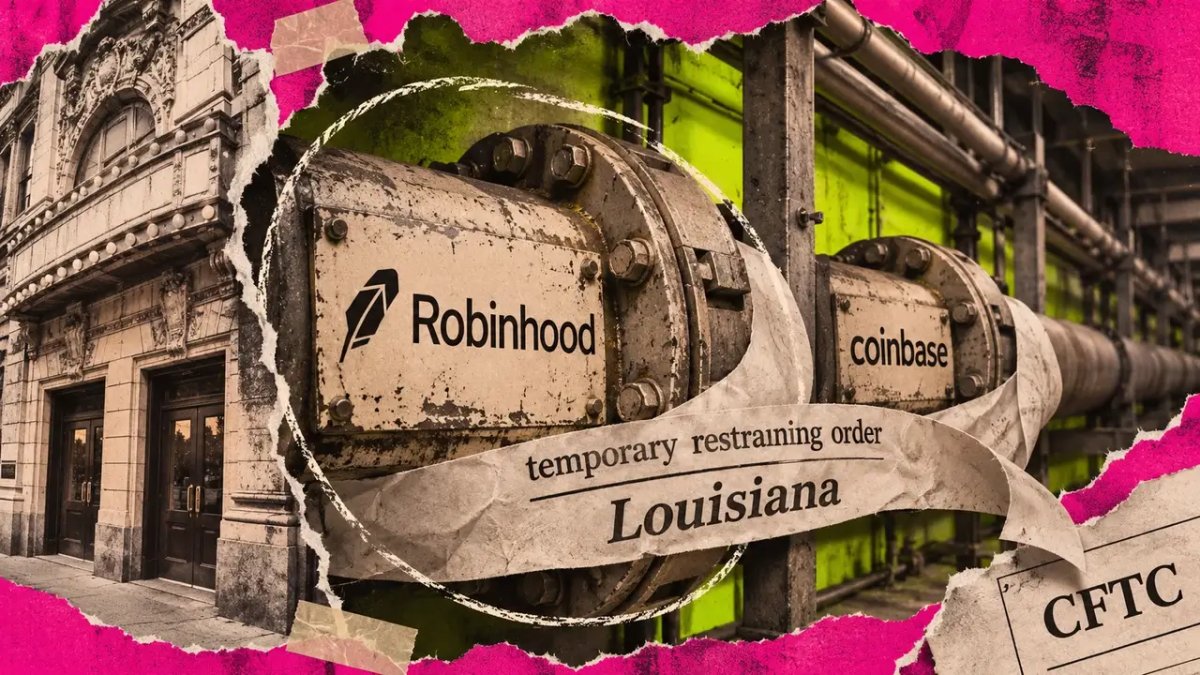
Louisiana's Nov. 12 order related to prediction markets reaches the brokers and clearing firms behind the apps, as well as the exchanges themselves.
Its scope, documented in the CFTC's federal complaint, exposes a shared legal risk for platforms earning income from different kinds of trading.
Robinhood and Coinbase each report prediction-market revenue alongside their crypto businesses. Louisiana's action reaches several layers of the trading chain, including the intermediary serving the customer.
According to the CFTC's complaint, Louisiana obtained an ex parte temporary restraining order on Nov. 12 against entities including registered exchanges, futures commission merchants and derivatives clearing organizations. Ex parte means the initial order was obtained without the other side being heard.
The complaint quotes restrictions on offering, clearing, settling, brokering and otherwise facilitating specified event contracts involving people located in Louisiana without the required state license and permit.
Its description includes sports, elections, and award events within the order's stated statutory scope.
The court-filed copy of the order names Robinhood Derivatives and Coinbase Financial Markets, along with multiple Kalshi entities, ForecastEx and Rothera.
Robinhood's product disclosure identifies Robinhood Derivatives as the intermediary and lists KalshiEX, ForecastEx, Rothera, and Crypto.com Derivatives North America as venues. Coinbase says it offers its contracts through Coinbase Financial Markets and has Kalshi operate them, which determines outcomes.
Robinhood already has several exchange routes. If the same restricted broker remains involved, moving a contract to another venue leaves the intermediary within the order's documented reach. That conditional legal-scope analysis leaves each company's implementation unconfirmed.