
End of an Era: Tim Cook Steps Down as Apple's CEO
Under Tim Cook, Apple's market capitalization grew from $350 billion to nearly $4.67 trillion. Yet his successor faces his toughest test right away.
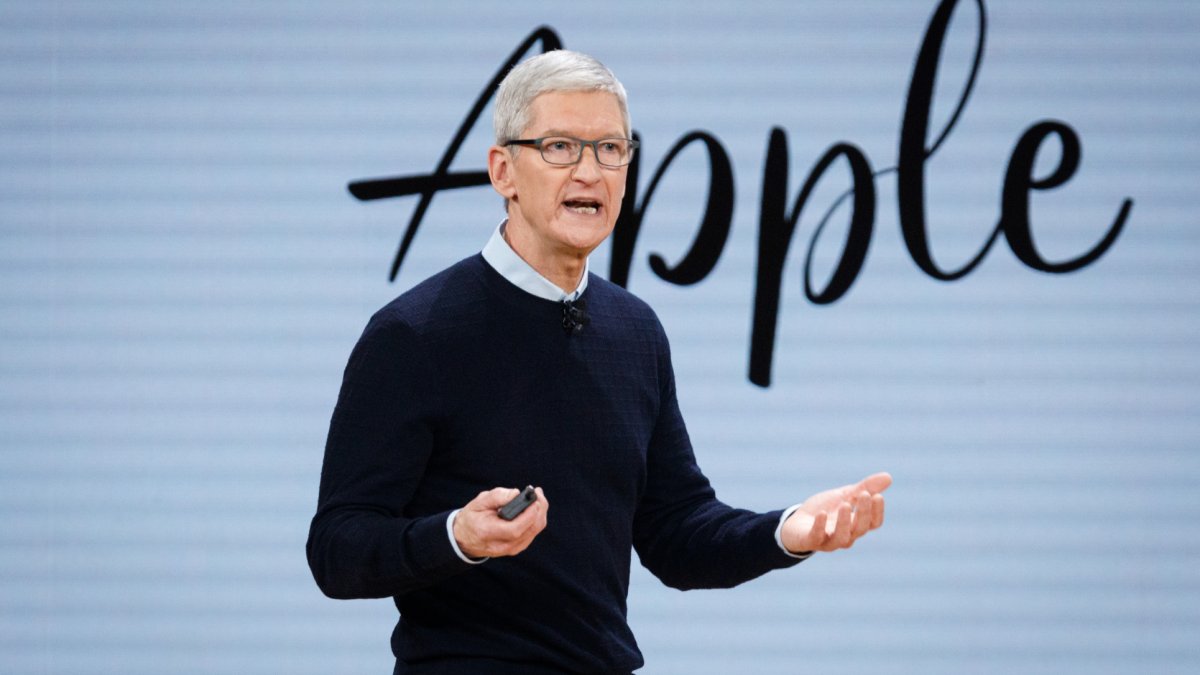
Today marks the end of Tim Cook’s era at Apple—and with it, the longest period of growth in the company’s history. From a company in mourning to one of the largest corporations in the world.
Tomorrow, someone else will take his place. Though Cook is far from gone.
Starting tomorrow, John Ternus (51) will be the CEO. He has worked at Apple since 2001 and has led the hardware division until now.
Everyone already knew this moment was coming. Apple announced the transition in April, following a unanimous decision by the board of directors.
Cook himself will become executive chairman of the board of directors. According to Apple, in that role he will focus primarily on governments and policymakers.
According to Bloomberg, Cook will personally manage relations with U.S. President Donald Trump and the Chinese government—precisely the two areas where Apple is most vulnerable.
Cook was clear with the staff about his successor: “There is no one on this planet I trust more to lead Apple into the future than John.”
Under Cook, Apple grew rapidly. Revenue rose from about $108 billion in 2011 to over $416 billion. That represents an average growth rate of more than 9 percent over fifteen years.
The market capitalization climbed from about $350 billion to nearly $4.67 trillion. In July, it even briefly peaked above $5 trillion. Currently, the iPhone maker is the second-most valuable company in the world, behind chipmaker Nvidia, which is valued at $5.25 trillion.
In the third quarter of 2026, Apple generated $109.4 billion in revenue—more than it did in the entire 2011 fiscal year, noted Bank of America analyst Wamsi Mohan.
Under Tim Cook, Apple also transitioned to using its own chips, and its services division grew to over $100 billion annually.
He laid the groundwork for this long before his appointment. Cook joined the company in March 1998, poached by founder Steve Jobs from computer manufacturer Compaq, and was put in charge of the factories and inventory.
He closed those factories, outsourced the work to others, and built a supply chain capable of delivering on the exact day. That system made the later margins on the iPhone possible.
In 2005, he became the company’s second-in-command, and during Jobs’ periods of illness, he had already temporarily taken over the reins. On August 24, 2011, he was officially named CEO, more than six weeks before Jobs passed away.
At the time, Silicon Valley openly doubted whether Apple could continue to grow without its founder. Cook made a point of not trying to become a second Jobs and instead focused on scale, margins, and services.
A second iPhone wasn’t in the cards. The AirPods and Apple Watch became bestsellers, but the self-driving car was scrapped in 2024. And the Vision Pro glasses are still selling poorly.
Tim Cook’s biggest unfinished business lies in artificial intelligence. After the arrival of ChatGPT in late 2022, Apple began a race to catch up with its own language models—the software behind chatbots.
That’s where the company was in for a rude awakening. Apple Intelligence fell short, and the revamped voice assistant Siri was delayed time and again. Apple is now paying Google to integrate Gemini into Siri.
At the same time, Apple’s top leadership is aging. According to sources at Bloomberg, half of the executive team could leave in the coming years.
The first real test will come in September. That’s when Apple will roll out the new Siri on a large scale and unveil the first foldable iPhone on September 9.
On that stage, Ternus will stand alone for the first time. Cook will be sitting in the front row at most—for the first time in fifteen years, he’ll have no role in the show.