
Circle shareholder sues Trump over UAE crypto deals, citing up to $82 million in potential annual revenue
A Circle shareholder sued President Donald Trump, alleging UAE-linked cryptocurrency payments enriched his family and diverted business from USDC. The complaint, filed Oct. 22 in Washington federal court, challenges a $500 million investment in Trump's World Liberty Financial and a separate $2 billion transaction settled using its USD1 stablecoin. The lawsuit alleges that “No president… Read the full story on CryptoSlateUnderstand the crypto stories that matter and what to watch next. Get The Catalyst in your inbox
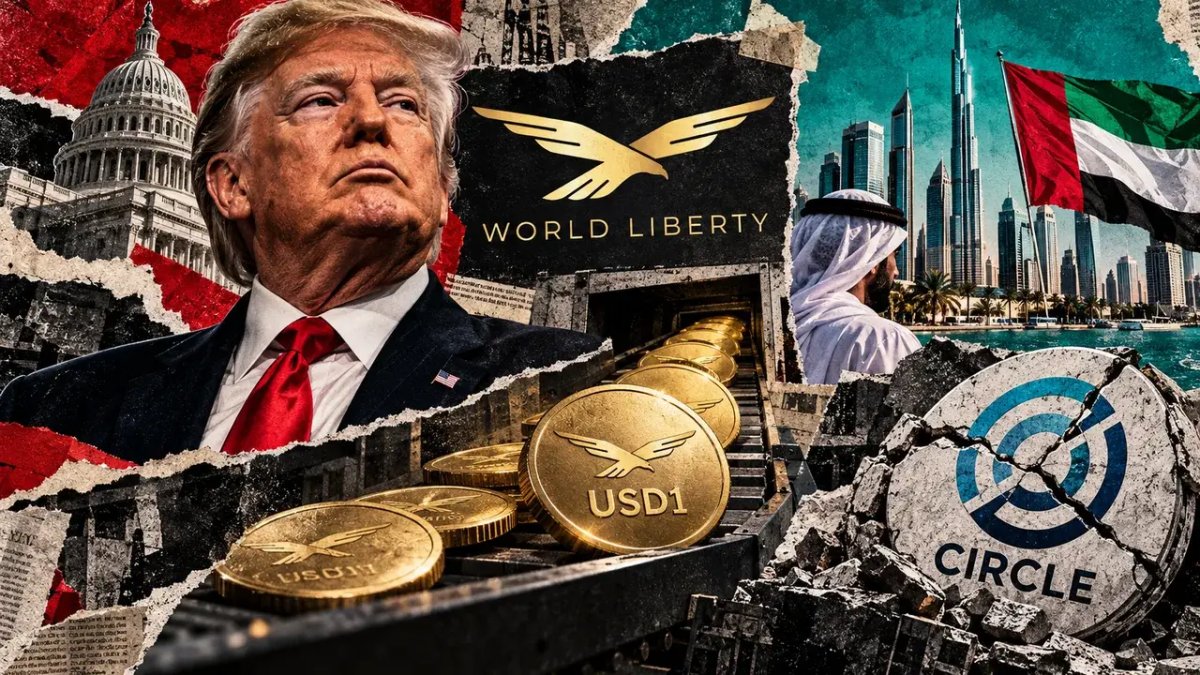
A Circle shareholder sued President Donald Trump, alleging UAE-linked cryptocurrency payments enriched his family and diverted business from USDC.
The complaint, filed Oct. 22 in Washington federal court, challenges a $500 million investment in Trump's World Liberty Financial and a separate $2 billion transaction settled using its USD1 stablecoin.
The lawsuit alleges that “No president in American history has profited from his office so brazenly,” arguing that the payments violated constitutional restrictions on benefits from foreign governments.
J. Benjamin Greenberg, a former Circle employee, brought the case on the company's behalf. The complaint says he currently holds 10,000 Class A shares of the USDC stablecoin issuer.
The parties agreed to the first deal four days before Trump's January 2025 inauguration. Aryam, an investment vehicle allegedly linked to Sheikh Tahnoon bin Zayed Al Nahyan, the UAE national security adviser, agreed to pay $500 million for 49% of World Liberty.
The complaint says $187 million of the $250 million initial installment went to Trump-linked entities. The remaining $250 million was due in July, after Trump returned to the White House.
The complaint cites $263 million in 2025 equity-sale proceeds to two related entities, about $76 million above their share of the initial payment.
The lawsuit treats that difference as evidence that UAE-linked proceeds reached the president's businesses while he was in office, alleging that “millions of dollars from that deal” flowed to Trump after his inauguration.
Greenberg argues that the Constitution's Foreign Emoluments Clause barred the president from accepting the alleged benefits without congressional approval. “Congress has not consented,” the filing states.
Aryam also obtained seats on World Liberty's board, placing executives tied to Sheikh Tahnoon's business network inside the company before it launched USD1.
That token became central to a second transaction. In March 2025, Abu Dhabi-backed MGX announced a $2 billion investment in Binance, saying settlement would occur in a stablecoin without naming one. USD1 did not launch until March 25, almost two weeks after the announcement.
On May 1, World Liberty disclosed that it would use USD1. According to the complaint, its circulating supply rose by about two billion tokens in the preceding eight days, which it attributes mostly to MGX's purchase.
The suit says MGX purchased USD1 with $2 billion in cash before transferring the tokens to Binance. That created reserves backing USD1, generating potential interest income for World Liberty as long as the tokens remained outstanding.