
China Puts the Brakes on Robot Mania: IPOs Now Only Allowed with Actual Revenue
China is imposing stricter requirements on initial public offerings by robotics companies, as concerns about a potential bubble in the sector grow.
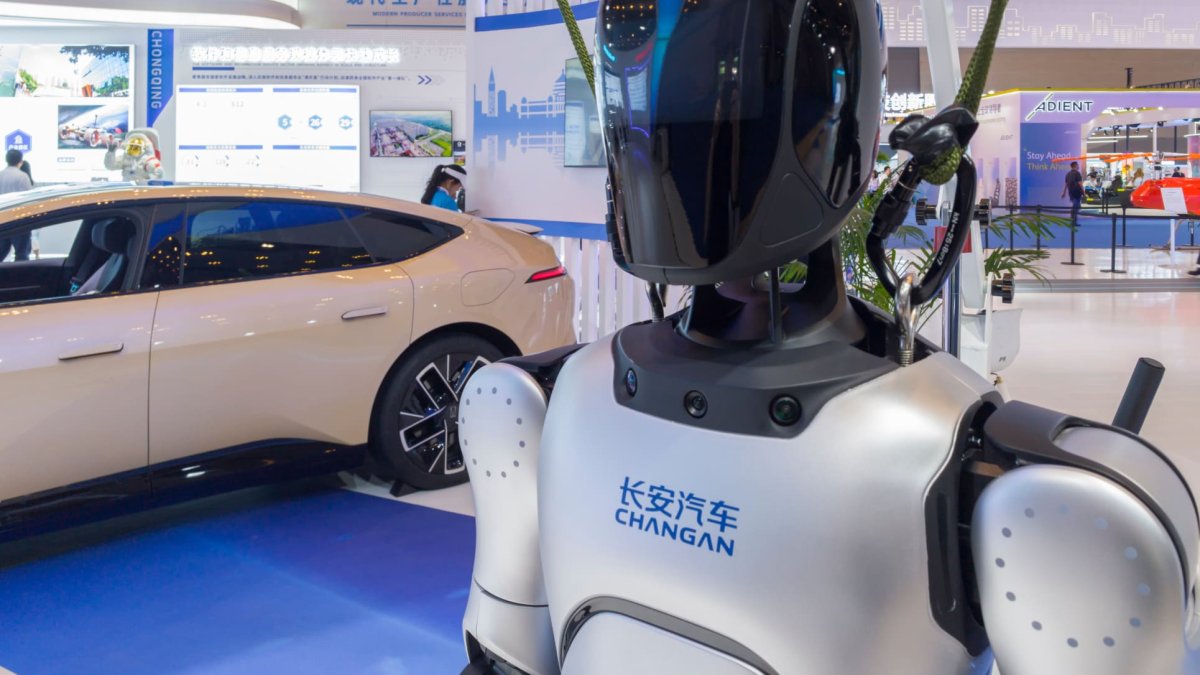
China appears to be taking a more cautious approach to one of the biggest trends in artificial intelligence. The Chinese financial regulator is reportedly imposing stricter requirements on robotics companies seeking to go public. This will put more pressure on companies that have reached valuations in the billions but have yet to prove themselves commercially.
The move comes at a notable time. Investors are pouring record amounts of money into humanoid robots, while a global debate is growing over whether parts of the AI sector are in a bubble.
According to three insiders, the China Securities Regulatory Commission (CSRC) wants Chinese companies in the field of so-called “embodied AI” to meet three key conditions before they can go public.
First, companies must be able to demonstrate sustainable revenue and commercial orders. Promising technology and investor interest alone are no longer sufficient.
In addition, losses must decrease. According to one of the sources, companies must even be able to provide a three-year forecast to that effect.
The third condition revolves around technology. Companies must own key technologies themselves, such as those related to the “brain” or “hands” of a humanoid robot.
According to one of the sources, companies may only need to meet two of the three conditions. Still, it is uncertain how many Chinese robotics companies will actually meet the bar. As a result, insiders now expect only a few IPOs—possibly none at all.
This is striking, given that in Hong Kong alone, at least 24 companies in this sector are said to have submitted documents for an initial public offering (IPO). Since May 2025, technology companies there have been able to submit IPO applications confidentially.
Chinese companies seeking to go public in Hong Kong also need approval from the CSRC. The Hong Kong Stock Exchange declined to comment on the reports. The Chinese regulator also did not immediately provide a statement.
This stricter stance follows explosive growth in the Chinese robotics sector. China now has over a hundred companies developing humanoid robots. The technology is part of China’s broader strategy around “embodied AI,” in which artificial intelligence is integrated into machines capable of moving in the physical world.
Over the past two years, Beijing has explicitly expressed support for this technology. At the same time, Chinese authorities have warned of the emergence of a bubble surrounding humanoid robots.
That warning did not come out of nowhere. According to data firm Xiniu, 47.09 billion yuan—equivalent to approximately 6.95 billion dollars—flowed into the sector in the second quarter. That was more than twice as much as in the first quarter and more than six times as much as a year earlier.
Meanwhile, Unitree has become the best-known example of the Chinese robot craze. The company was granted an expedited IPO process in Shanghai and raised approximately 6.1 billion yuan on August 19—equivalent to about 905 million dollars.
On its first day of trading, the stock soared more than 460 percent and closed at 845 yuan. That euphoria did not last. On Monday, the stock stood at 459.65 yuan, nearly half its initial closing price.
Industry peer Ubtech is also under pressure. Its Hong Kong-listed stock has fallen by more than 40 percent this year. At the same time, the company posted an operating loss of 279 million yuan in the first half of this year.
It is precisely this combination of high valuations and persistent losses that is raising more and more questions. Unitree founder Wang Xingxing warned shortly after his company’s IPO that widespread commercial applications of humanoid robots may still be years away.
As a result, the discussion surrounding robots touches on a much broader question in the financial markets: Are AI companies already making enough money to justify their enormous valuations?
Research by the Rhodium Group this month revealed that Chinese AI companies collectively generate only about 10 percent of the revenue of Anthropic and OpenAI. Furthermore, according to the research firm, the ratio of valuation to revenue for Chinese companies such as Moonshot and DeepSeek is significantly higher than that of their American competitors.
Meanwhile, outside of China as well, significant amounts of money continue to flow into AI. Chipmaker AMD announced Monday that it would acquire World Labs for $8.2 billion in a stock deal. The startup, founded by AI pioneer Fei-Fei Li, develops models that can be used to create virtual three-dimensional environments. Such environments are used, among other things, in the development and training of humanoid robots.