
Can decentralized phone networks power the AI revolution?
Decentralized AI networks want to turn everyday phones into an alternative to centralized computing infrastructure — but skeptics have their doubts.
The sprawling data centers that underpin the AI revolution have become about as popular as baby toys made from asbestos.
Campaigners around the world highlight the massive amounts of energy and water the infrastructure requires, while markets worry about the revenue required to pay back the $38 billion cost of building a single, one-gigawatt AI data center.
But is there another way to power the AI revolution that’s sitting in your pocket right now?
As of October 2026, there are an estimated 7.68 billion mobile connections worldwide, and billions of smartphones are currently lying unused in pockets, on desks and in drawers.
Each one has a processor, memory and an internet connection, and represent a vast pool of computing power just waiting to be put to work.
So could a network of humble smartphones realistically power AI at scale?
Decentralized AI networks are emerging that aim to turn everyday smartphones into a distributed infrastructure layer, and reduce reliance on costly, centralized data centers.
Acurast says it has onboarded more than 335,000 smartphones to its network. Co-founder Alessandro De Carli says that around 40,000 of those are fully active on an average day, providing computing capacity for tasks ranging from web scraping and cybersecurity to AI inference and agent hosting.
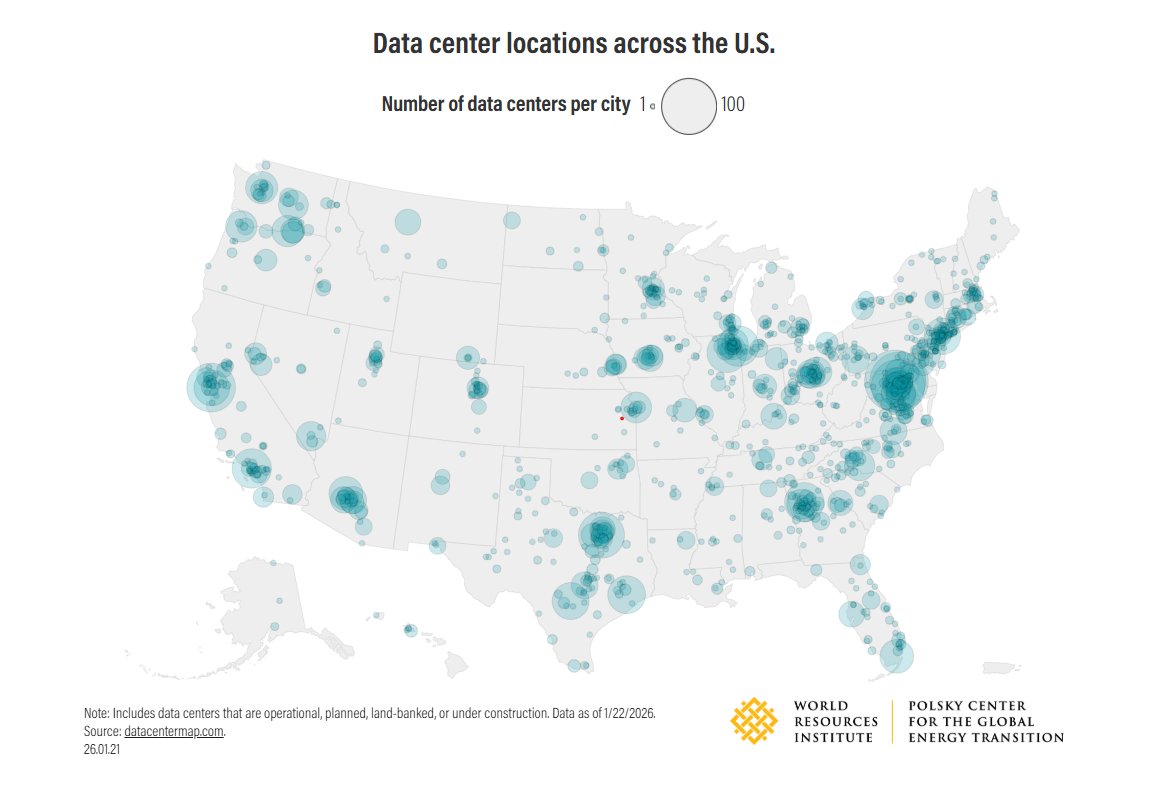
Data center locations across the US. Source: World Resources Institute
Related: DePIN grows into a $10B sector despite token slump, Messari says
He says smartphones are particularly efficient for certain workloads. Their built-in hardware security features “excel” in areas like confidential computing or an “isolated environment” that can install and run executables. They are also well suited to workloads that are “CPU intensive,” or which require wide distribution and “unfiltered access” to the internet,
“Servers are better at multi-threading, but smartphones offer unmatched compute efficiency,” De Carli tells Magazine.
While ordinary smartphones have limited memory, and big servers retain an advantage when handling multiple tasks in parallel, he says many workloads can still fit within the memory available.
Taken as a whole, the active phones on the network “match the compute capacity of about 2,340 high-end data-center servers,” he claims, benchmarked against the ASUS RS720A-E11, a high-density server built for artificial intelligence and high-performance computing (HPC).
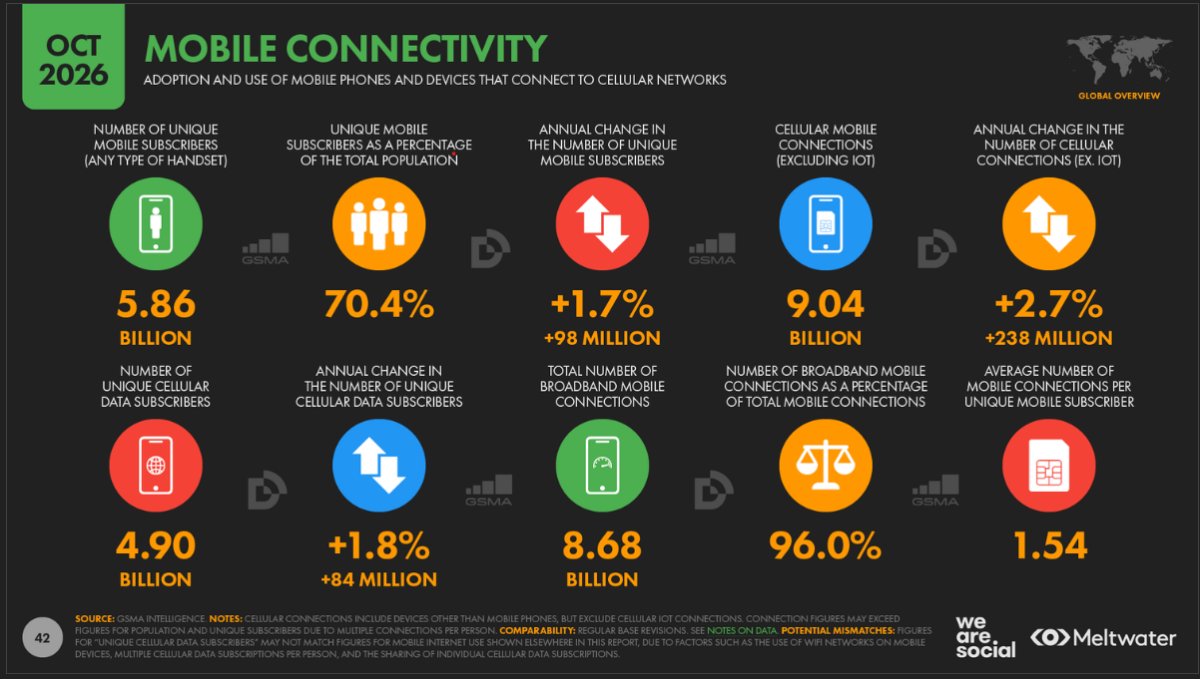
Mobile connectivity in 2026. Source: Datareportal
Another project, Phase, launched Phase Proxy in October, which allows smartphone owners to provide internet connectivity and blockchain validation for AI agents. Founder Kirill Eves explains that, “websites routinely block or rate-limit automated traffic originating from data centers,” so the system employs users’ mobile and residential connections as a proxy instead. Phase plans to charge 0.5 USDT per 1,000 requests and 1GB of traffic.
The next step is Phase Router which will direct simpler requests to models running on phones in the network, or route them instead to major external providers like OpenAI and Anthropic, based on “task complexity, model capabilities, performance and cost.”
The network could eventually expand beyond smartphones to desktops, servers and GPUs, he says.
But Markus Levin, co-founder of decentralized infrastructure provider XYO, says decentralized networks may be better suited to collecting and verifying real-world data rather than running AI models.
Phones and sensors can provide localized information that centralized datasets miss, he says, but only if the data is accurate and resistant to manipulation.
“A useful decentralized AI network should be judged by whether it solves a problem customers will pay to fix, not by its token price or node count,” he says.
One of the biggest challenges with mobile phone networks is coordinating the devices to provide predictable hardware, power and connectivity, in the same way data centers do.
A 2025 study tested small groups of smartphones carrying out image recognition tasks and found that clusters of phones could deliver competitive performance in certain conditions, but the results came from a controlled testing environment.