
Bitcoin’s AI-driven rally faces a hidden danger if the machines get richer but workers don’t
Bitwise CIO Matt Hougan argued in an Oct. 14 memo that nearly every macroeconomic path ends with Bitcoin higher, including an extraordinary AI productivity boom that makes scarce assets more valuable. Two days earlier, the Bank for International Settlements published a working paper that models a fourth path. In it, AI automates work and lifts… Read the full story on CryptoSlateUnderstand the crypto stories that matter and what to watch next. Get The Catalyst in your inbox
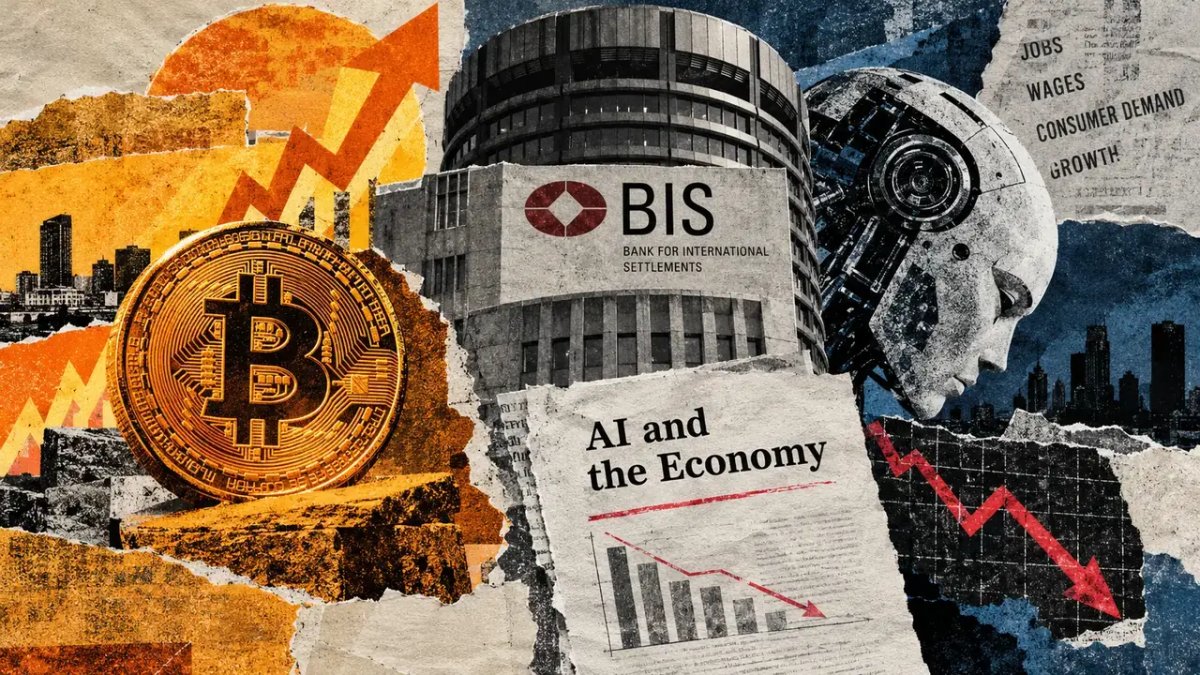
Bitwise CIO Matt Hougan argued in an Oct. 14 memo that nearly every macroeconomic path ends with Bitcoin higher, including an extraordinary AI productivity boom that makes scarce assets more valuable.
Two days earlier, the Bank for International Settlements published a working paper that models a fourth path. In it, AI automates work and lifts output, and consumer demand that funds further innovation thins out until growth fades.
Hougan's memo lays out three outcomes, starting with AI abundance that makes intelligence-based services cheaper and shifts value toward scarce assets.
A bursting AI investment bubble triggers a recession, policy intervention, and monetary expansion that eventually boost demand for Bitcoin. Modest productivity gains support gradual adoption, continued ETF demand, and higher institutional allocations.
He acknowledges interim drawdowns and risks outside the macro environment, and each path assumes that abundance, instability, or monetary expansion ends up as additional demand for Bitcoin.
BIS Working Paper No. 1381, “Transformative AI and demand bottlenecks” by Phurichai Rungcharoenkitkul, noted that AI productivity gains automate more tasks, and investment absorbs a larger share of output.
Consumption shrinks as a share of GDP, the consumer market that pays for innovation thins, and further AI innovation becomes less profitable.
In the calibrated scenario, consumption's share of output falls from about 69% to 62.1% when further innovation stops being profitable. Long-run sustainable growth drops from the 2% pre-AI baseline to about 1.6%.
Actual output growth peaks just under 2.4% about 15 years into the AI era and stays above 2% for about 35 years, as businesses keep accumulating machinery and computing capacity while the innovation engine weakens.
The paper also models a high-growth case where output expands about 5.5% a year 20 years in and keeps accelerating.
The mechanism centers on consumption's share, with total consumption free to keep expanding. If output rises 10% and consumption's share falls from 69% to 62.1%, the consumer market index moves from 69 to 68.31.
That is a 1% contraction inside an economy that produced 10% more. An investment boom can look like strength while the base beneath it narrows.
Related ReadingThe model estimates that labor's share of tasks falls from 60% to 15%-50% over three decades. In the demand-bottleneck calibration, real wages settle about 15% below the path they would have followed absent that level of automation.
That result assumes fixed labor supply, a static set of tasks for workers, and wages tied to marginal productivity, so different assumptions could move it materially.
The natural rate of interest can rise during the investment boom as capital demand strengthens and fall once the bottleneck emerges. The paper's pre-AI reference is 1.65%, its median 20 years out is 1.2%, and a 90% model band spans -0.6% to 4.4%.