
Bitcoin price drops to $60K as Anthropic drops to $87 in tech sell-off
Bitcoin price strength felt pressure from falling US equities as traders reassessed AI prospects after Anthropic’s IPO.

Bitcoin dropped to $60,000 after Friday’s Wall Street open as crypto markets endured contagion from a fresh rout in tech stocks.
Key points:
- Bitcoin failed to recover after hitting new 20-week lows of $60,000 as a tech-stock rout gathered momentum.
- Anthropic stock reached lows of $87.27 on Friday as enthusiasm faded over its record IPO.
- Analysis warned of multiple macroeconomic headwinds set to keep BTC price strength down going forward.
Data from TradingView showed Bitcoin (BTC) circling $60,000, its lowest levels in 20 weeks.
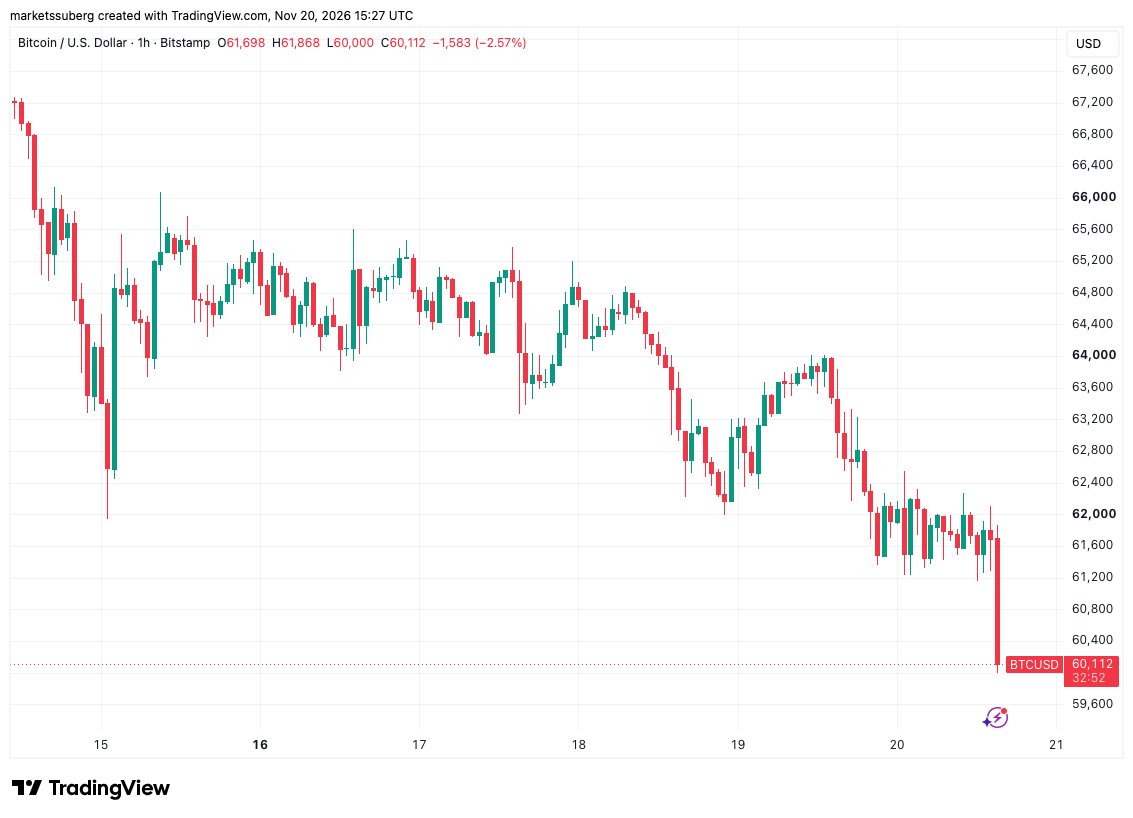
BTC/USD one-hour chart. Source: Cointelegraph/TradingView
US stocks saw continued weakness after reversing during Thursday’s trading session, with Anthropic’s debut on the Nasdaq insufficient to preserve upside momentum. ANT reached highs of $115 before reversing below the $100 mark, falling as low as $87.27 at the time of writing.
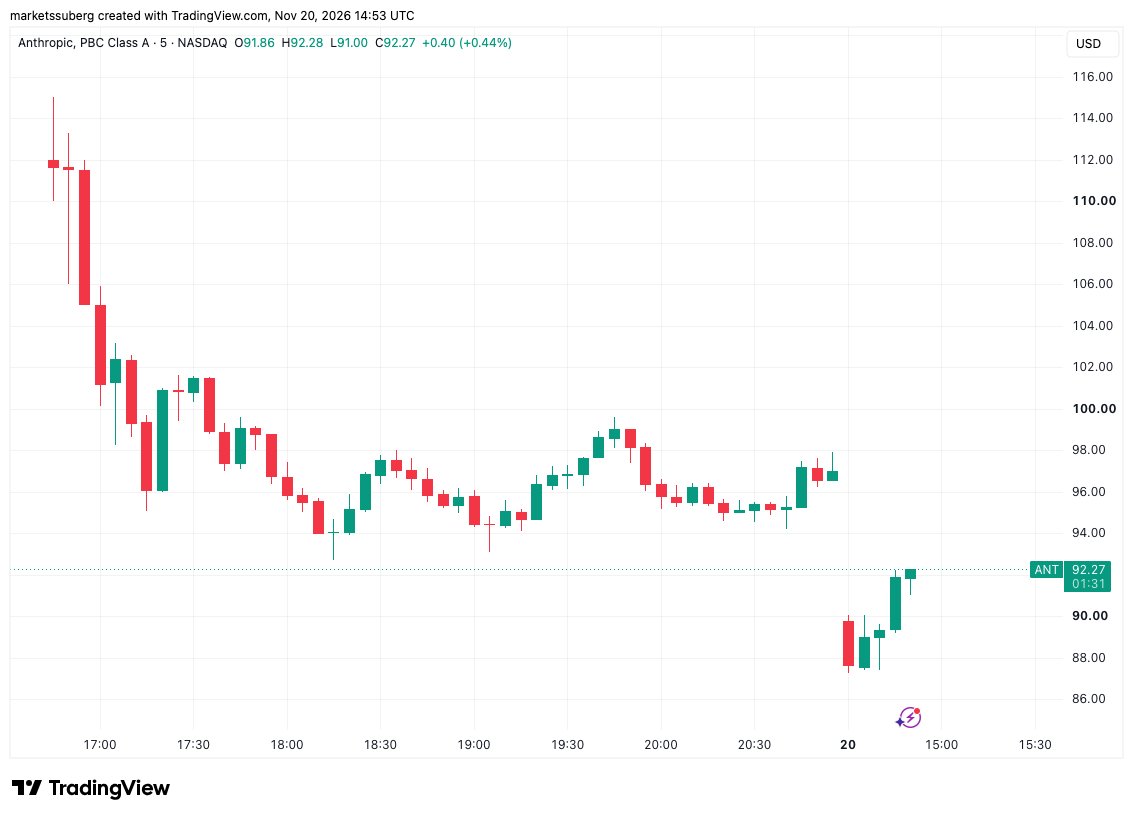
Anthropic stock five-minute chart. Source: Cointelegraph/TradingView
The tech-heavy Nasdaq Composite Index opened 1.2% lower, reaching 23,517 points — its lowest level since mid-April.
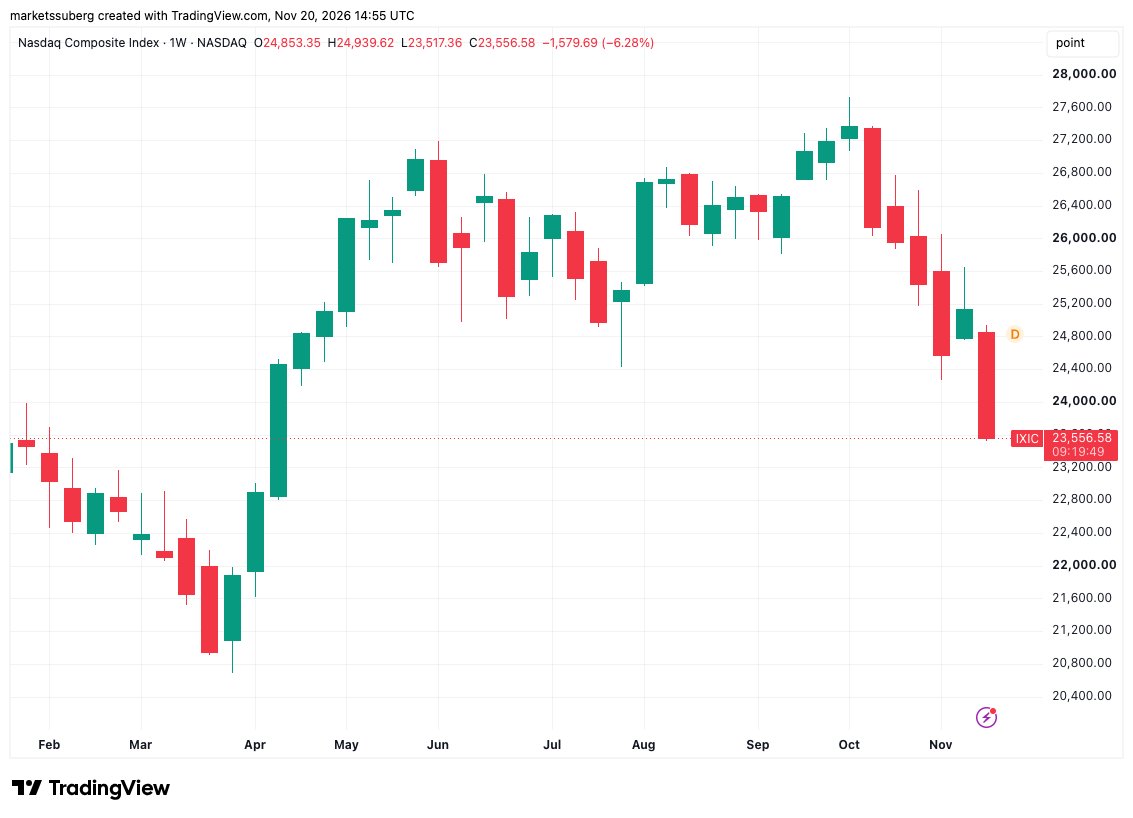
Nasdaq Composite Index one-day chart. Source: Cointelegraph/TradingView
In analysis on the day, crypto trading company QCP Capital drew attention to the lack of momentum in tech stocks despite Anthropic’s record IPO.
“Even Anthropic’s blockbuster IPO failed to restore confidence. Despite opening 34% above its offer price, shares faded to close up just 17%, highlighting a market increasingly unwilling to chase AI valuations,” it wrote.
QCP said that financing concerns remained throughout the AI sector in particular, with markets remaining highly sensitive to that topic throughout 2026.
“AI has become more than an equity growth story. It is increasingly a credit and liquidity story,” it continued.
“As infrastructure spending becomes more dependent on debt financing, weaker investor appetite could push borrowing costs higher, tighten financial conditions and trigger broader deleveraging.”